The Handmaid's Tale: Who is Agnes Jemima?
Have you ever wondered why children are so willing to believe in Santa Claus? They reach an age where they can understand the basics. They know that reindeer can't fly and that it's impossible for a sleigh to cross the world in one night, but they still cling to the fantasy. They're in love with the idea of magic; the rules of the universe bending and shaping for the sake of a good story. Parents around the world recognize that and they use it to their advantage. In Greece, they make up stories about Lamia, a rainbow serpent with the head of a woman that eats naughty children. In parts of Eastern Europe, they use Baba Yaga, a vicious hag that flies around in a mortar wielding a pestle. They believe every word, no matter how ridiculous it is, or how impossible it might seem. They do this because they have to. We are all born with a blank slate, ready to be filled with the knowledge we need to feed ourselves, keep ourselves safe, and maneuver through life. But we have to be willing to receive that knowledge, which is why children are so malleable. When their parents tell them to beware of a predator, they have to accept that message, even if they have no proof that the predator is real. They can't trust their own understanding of things, so they look to someone else to tell them what to believe.
Pamela Anderson Attempts to Repair her Tarnished Image with Documentary: ‘Pamela, A Love Story’
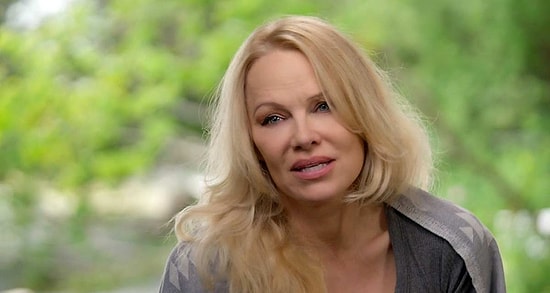
The Playboy model and Baywatch veteran Pamela Anderson, has a documentary simmering, a tell-all story of her life, Pamela, A Love Story, whose trailer came out on Tuesday, January 10. The 55-year-old busty blonde bombshell promises to take control of her own narrative by sharing her perspective on her documentary, which will premiere the same day as her memoir Pamela. See the trailer below:Warning: The flashing images will surprise you at how different Pamela looks compared to her heydays.
‘Crash Course in Romance’ Adds to Netflix’s Catalogue of Korean Dramas in 2023
Joining other Netflix January 2023 releases is the first season of Crash Course in Romance. Crash Course in Romance is a forthcoming romantic comedy from South Korea starring Jung Kyung-ho and Jeon Do-Yeon. The show began filming in 2021’s summer after Netflix announced it earlier that year. Crash Course in Romance joins other Asian shows on the streamer, such as Squid Game, Bling Empire, Single’s Inferno, Never Have I Ever, and Alice in Borderland, among others.
This Netflix Spin-Off Original Series Is Now the Worst Reviewed Ever!
With Netflix’s continuing trend to axe its shows after only one season, it’s unlikely that this original spin-off series will survive to see a second season. This show’s reviews fall somewhere between depressing and humiliating, considering it was highly raved about. Curious to find out which show we’re talking about? Well, read on.
Did AMC+ Capture the Essence of Anne Rice's Mayfair Witches?
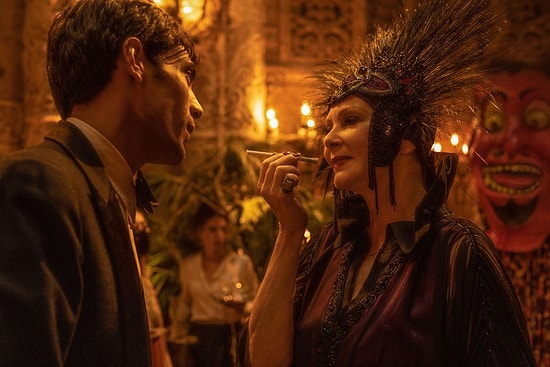
AMC recently began adapting Anne Rice's body of work into what they are calling the Immortal Universe. It started with Interview with the Vampire, which premiered on October 2. The series received a mixed reception. It was set in a later time period, which fundamentally altered the aesthetic, and it departed quite a bit from the original material. Instead of horses and carriages, the characters drove antique cars. Some fans enjoyed the changes, while others found them lacking. Now the focus has shifted to Mayfair Witches, which premiered on January 8. The series is an adaptation of one of Anne Rice's lesser-known works, a trilogy of novels about a family of women who live in New Orleans. It's a bleak, Southern Gothic horror set in an old decaying home on First Street in New Orleans. While it might not have been as popular as the Vampire Chronicles, the books still hold a place in the hearts of fans. It remains to be seen if AMC is up for the task of creating a quality production. The Mayfair Witch trilogy was not written to be adapted into film. The books present serious roadblocks for filmmakers, and in fact, there are portions of the novels that cannot be recreated at all. That means old fans will have to be impressed by new material. We won't know the finished product for some time, but we have been given a single episode, and it does show promise.
Prime Video Shares Critical Role’s ‘The Legend of Vox Machina’ Season Two Trailer
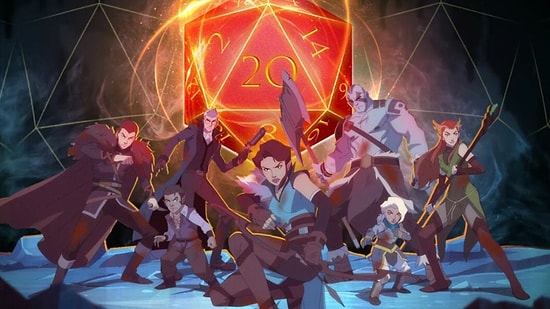
The long wait is finally over as Amazon Prime Video finally drops the official trailer for The Legend of Vox Machina season two. The show debuted on the streamer in January 2022, with the first twelve-episode season. The Legend of Vox Machina is an animated action-adventure and comedy fantasy series created by Critical Role for Prime Video. Season one managed an incredible performance, revealed through a 100% average Tomatometer (alongside a 93% average audience score) on Rotten Tomatoes and 8.4/10 stars on IMDb. Unlike many shows, The Legend of Vox Machina received its second season renewal in November 2019, even before the first one had launched.
Netflix’s Reality TV ‘Bling Empire’ Spawns Spin-Off ‘Bling Empire: New York’
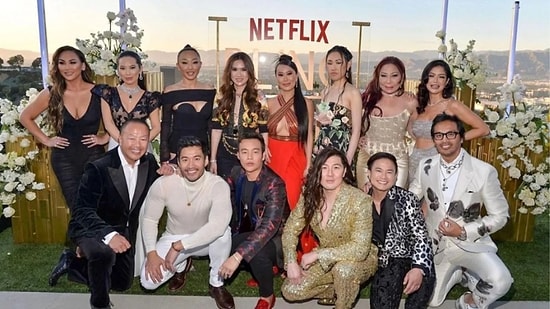
In October 2022, Netflix announced a soon-to-be-added show to its library, Bling Empire: New York, a spin-off of the famous reality TV series Bling Empire, starring Dorothy Wang. The original Bling Empire launched on Netflix in January 2021, focusing on wealthy Asian-American celebrities in LA. Bling Empire attracted massive views across the globe, revealed through a 91% average Tomatometer and 5.8/10 stars on IMDb. The performance might be what trigged the creators to develop a New York version of the show.
Hulu's ‘How I Met Your Father’ Gets January 2023 Season 2 Premiere
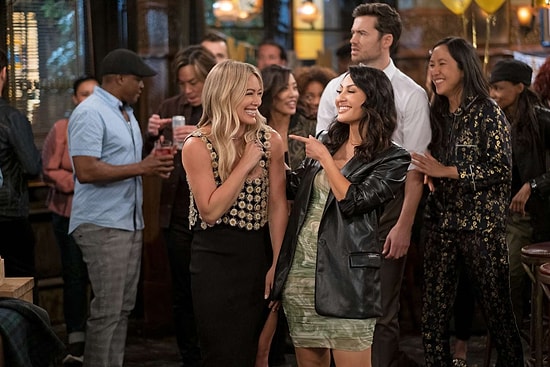
The second installment of How I Met Your Father is just around the corner to keep your heart warm this chilly winter. The season comes a year after the show debuted on Hulu on January 18, 2022, with ten episodes of the first installment. How I Met Your Father is an inspiration from Craig Thomas and Carter Bays' sitcom, How I Met Your Mother which ran from 2005 to 2014. Elizabeth Berger and Isaac Aptaker create the situation-comedy series as a Hulu original. The first season attracted average scores, revealed through a 51% average audience score on Rotten Tomatoes and 5.5 out of 10 stars on IMDb. Hulu offered How I met Your Father a season two renewal in February 2022, when season one was ongoing.

Top 10 Best Action Series to Binge-Watch on Netflix
It's no surprise that Netflix, which has more than 137 million users, is the most widely used streaming service in the world, given the abundance of new series being produced this year as well as the abundance of enduring classic programs being made available on the platform. Additionally, viewers may watch high-quality programming that is exclusive to Netflix through original programming.Here are the top action programs available on Netflix right now. This list of action shows presently available on Netflix is continuously updated with new and popular TV series and offers the greatest action shows right now, whether you're looking for kung fu, comic shows, or realistic criminal dramas.
Netflix’s ‘Wednesday’ Finally Gets Season Two Renewal!
Netflix has officially renewed its super hit series, Wednesday, starring Jenna Ortega, for a second season. The streamer shared the news via its verified Twitter account two days ago, and it already has over 72K likes and 5400 retweets.