7 Things to Watch When Taking Magnesium: Timing, Form and Combined Use
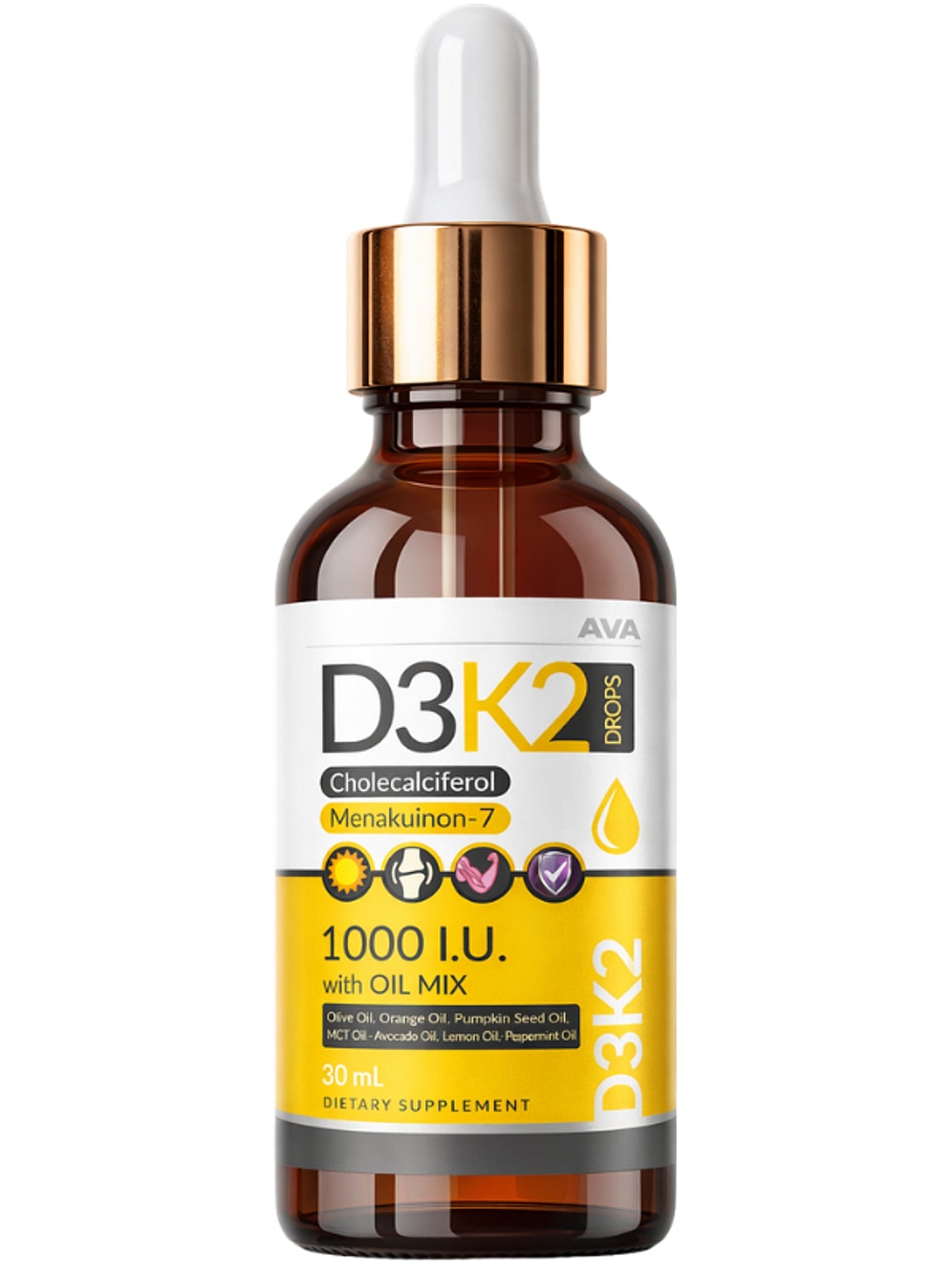
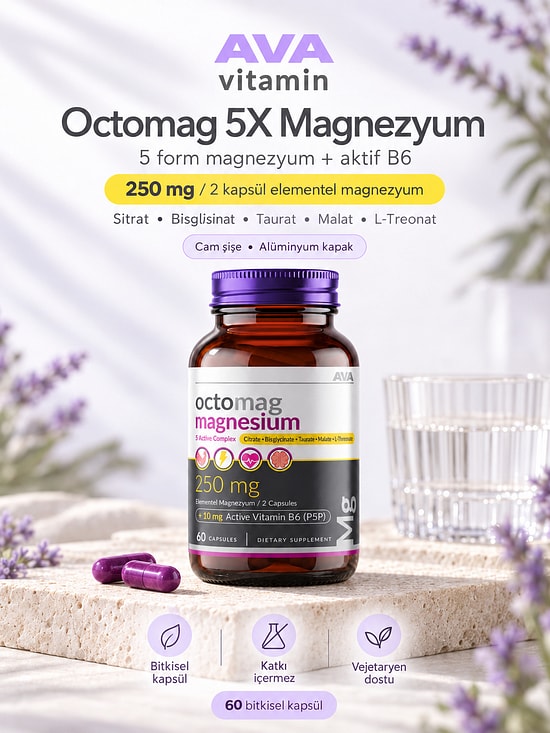
With a magnesium supplement, how you take it matters as much as which product you choose: the amount on the label, the form, the time of day and the gap between it and your other supplements. We break it down in 7 points, using AVA Vitamin Octomag as the example.Last Updated: November 5, 2026⚠️ Important Note: This content is for general information only and is not a substitute for medical advice, diagnosis or treatment. Food supplements are not medicines and are not intended to prevent or treat diseases. If you are pregnant, breastfeeding, have a chronic condition or take medication regularly, talk to your doctor or pharmacist before starting any supplement, including magnesium.There are 7 things to watch when taking magnesium: the amount of elemental magnesium on the label, the form or forms used, whether you take it with or without food, how the daily dose is split across the day, the gap between it and other supplements such as vitamin D, the total amount coming from other products, and the excipients inside the capsule. In AVA Vitamin's Octomag 5X Magnesium Complex, 2 capsules provide 250 mg of elemental magnesium from 5 forms (citrate, bisglycinate, taurate, malate, L-threonate), along with 10 mg of active B6 (P5P); the product page recommends one capsule in the morning and one in the evening, after food. Magnesium and vitamin D can be used on the same day, but the page for AVA's D3K2 drops recommends leaving at least 45 minutes between the two supplements.
Why Did Ottoman Sultan Abdülhamid II Ban a Leo Tolstoy Book?
Two sets of documents in the Ottoman Archives that mention Leo Tolstoy show the beginning and the end of the same ban. In 1901, Sultan Abdülhamid II barred one of the writer's books from entering the country and had copies collected from bookshops. Five years later, when two newspapers in Beirut quoted Leo Tolstoy, Istanbul sent warning after warning. So why? The documents give the reason in a single sentence. We read the Ottoman Turkish originals and put them in chronological order.
Why Does Music Sound So Different in Different Parts of the World?
Have you ever thought about it? In one corner of the world people dance to upbeat rhythms, while somewhere else they listen to slow, emotional melodies. Some songs make a culture we have never known feel familiar, while others take a few listens before they click. The reason is not just that people have different tastes in music.
What Is a Patented Raw Material? Why Does the Source of Supplement Ingredients Matter?
What do the ® and ™ marked ingredient names on supplement labels mean, what does 'clinically studied' mean, and where do vitamin raw materials come from? We explain, using AVA Vitamin's D3K2 and Octofish as examples.Last Updated: November 6, 2026⚠️ Important Note: This content is for general information only and is not a substitute for medical advice, diagnosis or treatment. Food supplements are not medicines; they are not intended to prevent or treat diseases and are not a substitute for a normal diet. A raw material being patented, or having studies behind it, does not mean the product is right for you; decide which supplement to use together with your doctor.A patented raw material is an ingredient developed by a specific manufacturer, sold under a registered name, and whose production method or name is protected by a patent or trademark registration. Its importance comes from being able to trace who produced the raw material, where, and to which standards. A clinically studied raw material, on the other hand, is one about which scientific studies have been published; these studies belong to the raw material, not to the final product, and on their own they are not a basis for any health claim. Vitamin and mineral raw materials are produced in different countries around the world. AVA Vitamin states that it uses 17 registered raw materials from 10 different countries across its 8 products, and that it openly shares the origin of each one on its website. For example, Ava D3K2 uses Quali®-D of Swiss origin and K2VITAL™ of Norwegian origin, while Octofish uses an Omega-3 concentrate of Spanish origin; the products are manufactured in Türkiye.
13 Quick Ways to Make Your Home Look Cleaner Before Guests Arrive
The doorbell is about to ring, your guests are on their way and the house looks like a battlefield? Don't panic. When there's no time for a top-to-bottom clean, a few small tricks can make your home look tidy in no time. None of them takes hours; most are a matter of minutes. Let's take a look!
Why Did Abdülhamid II Ban a Leo Tolstoy Book? What the Ottoman Archives Reveal
Two sets of documents in the Ottoman Archives that mention Leo Tolstoy show the beginning and the end of the same ban. In 1901, Sultan Abdülhamid II kept one of the writer's books out of the empire and had the copies already in bookshops collected. Five years later, when two newspapers in Beirut quoted Leo Tolstoy, Istanbul sent one warning after another. Why? In the documents, the official reason takes up a single sentence. Here is what the Ottoman papers say, in chronological order.
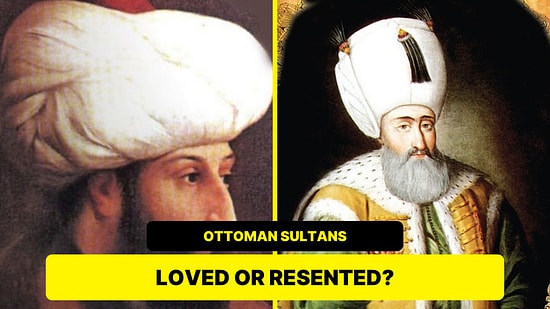
Even Mehmed the Conqueror and Suleiman Made the List: Ottoman Sultans the People Resented and Loved
Today we remember Mehmed the Conqueror (Fatih Sultan Mehmed) and Suleiman the Magnificent (Kanuni Sultan Süleyman) for their great victories. But what did ordinary people think of them in their own time?A sultan's place in the history books and his place in the eyes of his subjects were not always the same. Fratricide, land reforms, sweeping changes: these are what angered the people, and also what won them over. Let's start with the sultans who were not so popular.
What Do The Small Numbers On Turkish Lira Banknotes Do?
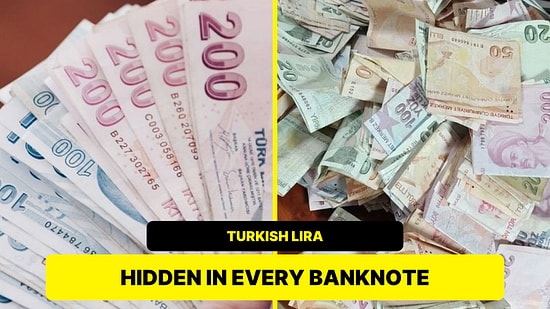
Look closely at the banknotes in your wallet and you will see that each one carries its own unique number made of letters and digits. The Central Bank of the Republic of Türkiye prints these serial numbers twice on the back of every note, once in black ink and once in red. Tiny text that can only be read with a magnifying glass and numbers that appear when held up to the light are also there to protect against counterfeiting.
Why Does Every Turkish ID Number End In An Even Digit?
Take a close look at an eleven-digit Turkish identity number (T.C. Kimlik Numarası) and you will notice that the last digit is always 0, 2, 4, 6 or 8. The question was taken to the Turkish Parliament in 2009 through a written parliamentary question, and the Ministry of Interior confirmed that no ID number ends in an odd digit. The ministry explained that the numbers carry no information about the person, are generated by a mathematical algorithm, and that the last two digits serve as a check field. The even last digit is no coincidence: it is a direct result of that check calculation.
Earworms: Why Does a Song Get Stuck in Your Head for Days, and How Do You Get It Out?
You hear a song on the radio in the morning, or catch just a few seconds of it in a TikTok video. Hours pass, even days, and the melody keeps looping in your head. In the shower, at work, even while you're trying to fall asleep, the same chorus keeps playing.So why do some songs stick to our brains like chewing gum while others vanish right away? What is behind the annoying yet fascinating experience scientists call an 'earworm,' or involuntary musical imagery (INMI)? And most importantly: how do you get rid of it?Here is the science behind the musical trick your brain plays on you.
Nature Study On Cacti Finds The Picture Changes Once Severe Drought Is Factored In
A study published in the journal Nature modelled the future of cacti in the Americas while also accounting for severe droughts. The team examined around 650,000 observation records and 993 cactus species. For the same species, the result obtained with average climate conditions alone is very different from the result once drought is added. The researchers also drew attention to a second factor that threatens cacti.
In A 114-Year-Old Istanbul Inn, Tea Still Travels Between Floors By Basket And Pulley
In Kuru Kahveci Hanı, a 114-year-old han (a historic commercial building) in Istanbul's Eminönü district, tea and coffee orders are delivered with a hand-operated basket and pulley system that has been in use for years. Necmi Cebeci, 73, who has run the building's tea room for about 55 years, sums up the pace of the work in a few words: “A machine would not last.”