


What Does Walking Fast Mean in Psychology?


Those who weave their way through crowded sidewalks, overtaking everyone else, are immediately noticeable. Even when there's no pressing appointment to get to, the pace never slackens. Whether browsing in a bookstore, strolling in a park, or even while engaged in a phone conversation, the speed of their steps remains consistent. According to experts, the pace at which one walks provides a remarkably consistent pattern of behavior that can't be chalked up to mere coincidence. Studies in the field of psychology have revealed that brisk walking offers compelling insights into cognitive processes.

Individuals who walk at a brisk pace are driven by intrinsic motivation.
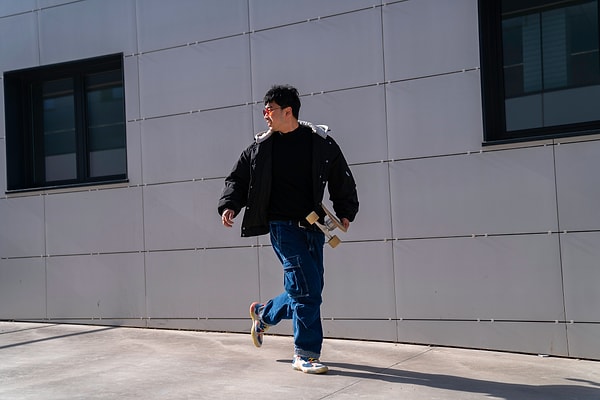
Spanish psychologist Leticia Martín Enjuto emphasizes that the habit of fast walking develops independently of environmental conditions. Whether in a quiet village or a bustling city center, the pace remains consistent. It's not external factors, but the internal rhythm that dictates the direction. Walking is seen not as an effort to adapt, but as an expression of personal rhythm.
According to Enjuto, the same scenario manifests itself in work and daily life. The tendency to work unsupervised, the desire to act independently of social approval, and adherence to internal standards come to the fore. Psychological literature reveals that individuals who are driven by internal motivation tend to have a high level of independence.
A fast-paced lifestyle can be seen as a method of managing anxiety.
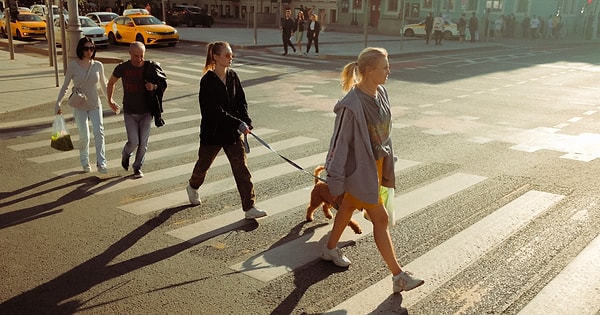
British psychologist Richard Wiseman suggests a strong correlation between walking speed and the level of mental alertness. According to Wiseman's observational studies on the pace of walking in large cities, as speed increases, so does the state of mental readiness. Even without a clinical anxiety diagnosis, internal pressure is balanced with movement.
Experts believe that brisk walking can serve as a form of relaxation. Mental intensity is discharged through physical activity. For the same reason, individuals with these characteristics can remain calm in emergency situations. The challenging moments, however, are those requiring a slower pace.
In fast-paced profiles, the perception of time can operate more intensely.
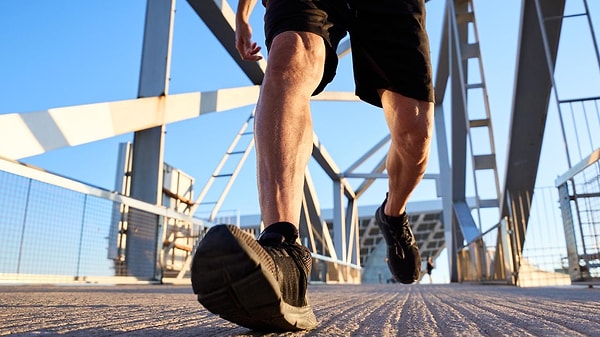
Even the smallest delays throughout the day can seem magnified. Queues, traffic, slow-moving crowds can increase mental tension as they disrupt the rhythm of our steps. Therefore, the need isn't so much about 'saving time,' but rather about 'maintaining flow.' Slowing down can be challenging as focus can scatter when movement ceases.
The sensitivity to efficiency adds to this picture. Slow-moving processes, unnecessary repetitions, and lengthy preparation stages can breed impatience. The desire to get ahead on the sidewalk or the effort to maintain pace often happens subconsciously.
Keşfet ile ziyaret ettiğin tüm kategorileri tek akışta gör!
 Test
Test
 Gündem
 Magazin
 Video
Video



Send Comment