


The Turkish Stock Market’s "Secret" 3-Year Chart: Are You Actually Richer?

Headlines scream 'Record-Breaking Rally' in Istanbul. But for international investors holding Dollars or Euros, the graph tells a radically different story. We peel back the currency curtain to reveal the real winners and losers of the Borsa Istanbul (BIST 100).
If you have been tracking emerging markets lately, you’ve likely seen the flashing green arrows coming out of Turkey. The BIST 100 index has been one of the world's most talked-about performers, shattering record after record in local currency terms.
To the local observer, the chart looks like a rocket ship taking off.
But you don't pay your rent in Turkish Lira. You pay it in Dollars, Euros, or Pounds. And when you switch the chart settings from TRY to USD, the 'vertical takeoff' suddenly looks more like a volatile rollercoaster ride.
Here is the reality check on the last 3 years of Turkish stocks, and what it means for your portfolio.


The Great Optical Illusion: TRY vs. USD
To understand the Turkish market, you have to hold two contradictory thoughts in your head at the same time:
In Lira, the market has surged over 400-500% in the last three years.
In Dollars, the market has fought tooth and nail just to recover to its historical averages.
Why the discrepancy? Inflation and Currency Devaluation.
For local investors, the stock market became a mandatory shelter. With inflation soaring, keeping cash under the mattress meant losing money every day. So, millions of locals poured their savings into stocks, driving prices up.
However, for a foreign investor, the Turkish Lira depreciated against the Dollar almost as fast as the stocks went up. This created a 'running up the down escalator' effect. You gained 50% on the stock, but lost 40% on the currency exchange.
The 3-Year Timeline: A Tale of Three Eras
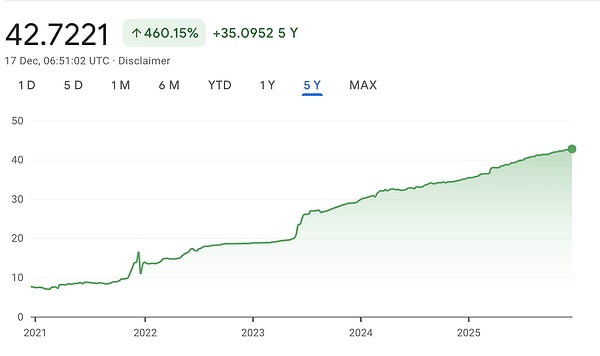
If we zoom out to the 3-year USD chart, we don't see a straight line up. We see three distinct 'seasons' of investing:
1. The Inflation Rally (2022 - Early 2023)
This was the golden era for volatility lovers. Turkey was arguably the best-performing stock market in the world, even in Dollar terms. The logic was simple: Companies were repricing their goods instantly due to inflation, inflating their revenues, while their stock prices were still catching up.
2. The Election Uncertainty (Mid-2023)
As Turkey approached its critical general elections, foreign capital hit the 'pause' button. The USD chart dipped as uncertainty peaked. Post-election, a massive currency adjustment took place. The index soared in Lira, but in Dollars, it became cheaper overnight.
3. The Return to Orthodoxy (Late 2023 - Present)
This is the current phase. Turkey returned to traditional economic policies, raising interest rates to fight inflation.
The Good News: Credit rating agencies (Fitch, S&P, Moody's) started upgrading Turkey's outlook.
The Bad News: High interest rates mean money is expensive. The 'easy money' period is over. The USD chart has stabilized, hovering between the $270 - $320 (index value) range, looking for a catalyst to break out.
So, Did Anyone Actually Get Rich?

Yes, but not by buying the whole index. The 'secret' to the last 3 years wasn't buying Turkey; it was buying specific Turkish sectors.
While the general USD index struggled to double, specific sectors provided massive Alpha (excess returns) in Dollars:
The Exporters (Aviation & Automotive): Companies like Turkish Airlines (THY) or Ford Otosan earn in foreign currency. They were immune to the Lira's fall. Their charts look beautiful in USD.
The Banks: After years of being undervalued, Turkish banks rallied hard in late 2023 and 2024 as the economy normalized, offering significant returns to those who timed it right.
The Verdict: Is It Time to Buy?
If you look at the 'Secret USD Chart,' you realize one thing: Turkish stocks are not expensive.
Despite the massive headlines, the BIST 100 trades at a significantly lower Price-to-Earnings (P/E) ratio compared to peers like India or Brazil.
The 'easy rally' driven by inflation is over. The next phase of the Turkish market belongs to the stock pickers those who can identify companies with strong exports, low debt, and solid cash flow.
Don't let the nominal records fool you. Keep your eyes on the USD chart; that’s where the real story is being written.
Disclaimer: The information provided in this article is for educational and informational purposes only and does not constitute investment advice, financial advice, trading advice, or any other sort of advice. You should not treat any of the article's content as a specific inducement to make a particular investment or follow a particular strategy. Please consult with a financial professional before making any investment decisions.
Keşfet ile ziyaret ettiğin tüm kategorileri tek akışta gör!
 Test
Test
 Gündem
 Magazin
 Video
Video



Send Comment
Business Minds Media is an International Business Magazine and Top Business Magazine in the industry. Business Minds Media is your premier source for authent... See More