


Tensions Rise After the Derby: Pelin Öztekin Fires Back at Şevket Çoruh!


As the echoes of the major derby played in the Super League continue, the on-field rivalry has now spilled over into the gossip columns. The scenes from the stands have caused a stir on social media, with the most notable reaction coming from Pelin Öztekin.

The derby match played between Galatasaray and Fenerbahçe, as always, was a stage for high tension.
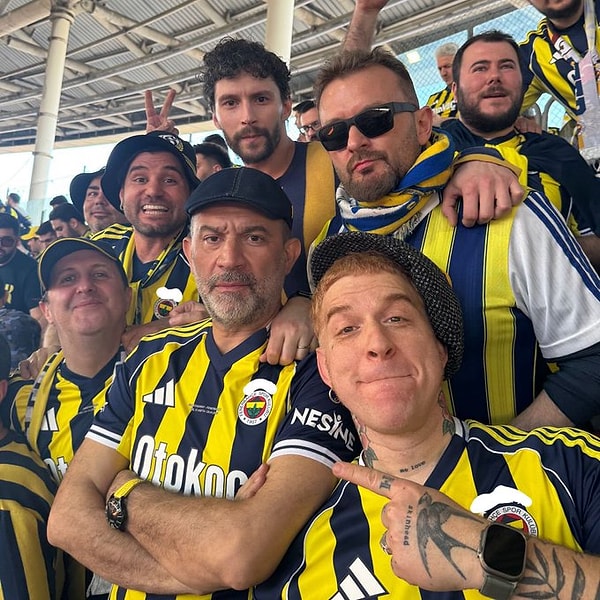
The events unfolding in the stands proved to be as impactful as the struggle on the field itself.
In particular, the rapid spread of images on social media featuring fans engaging in vulgar chants and pyrotechnic displays sparked immediate controversy. The atmosphere in the stands became a topic of conversation just as much as the outcome of the match itself.
Following the derby, a wave of criticism came for Şevket Çoruh, known for his fervent Fenerbahçe fandom, due to his actions during the game.
However, the most striking commentary came from Pelin Öztekin.
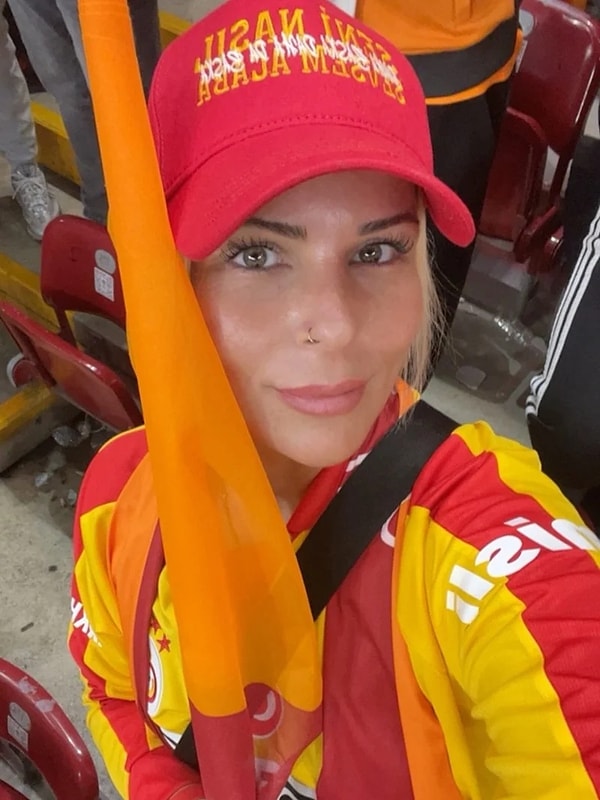
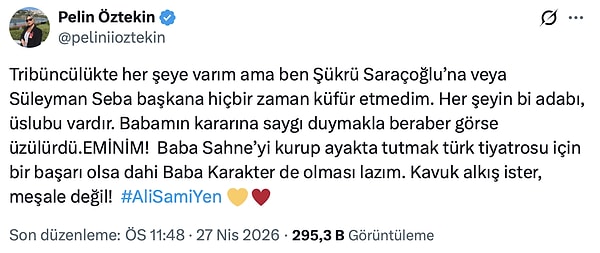
Addressing Çoruh, to whom her father, Rasim Öztekin, passed on the 'kavuk' tradition, Öztekin drew attention with her words.
Pelin Öztekin expressed her reaction with the following remarks: 'I'm game for everything when it comes to being a fan, but I never cursed at Şükrü Saraçoğlu or Chairman Süleyman Seba. There is a decorum and style to everything. Although I respect my father's decision, I'm sure he would have been upset if he saw this. Even though establishing and maintaining Baba Sahne is an achievement for Turkish theater, one also needs to be a 'father figure'. The 'kavuk' demands applause, not a torch.'
As an assistant content editor, I would like you to translate the given Turkish text into English, paying close attention to writing rules. Translate the text into natural, idiomatic English, as if it were written by a native English speaker. Do not translate word for word. Re-express sentences to conform to standard English structure. Where appropriate, combine short, choppy sentences into longer, more fluid sentences for better readability. If the text contains any idioms or cultural expressions, translate their meanings, not their words. Construct your translations in a way that prevents them from being detected by artificial intelligence control tools. In your translation, make word choices that will increase the reader's interest in the subject and will not disrupt the flow. Replace simple Turkish conjunctions (and, with, but) with more diverse and tone-reflecting transitional expressions in English ('Moreover,' 'In contrast,' 'Consequently,' 'On the other hand'). Your translated text should not only be grammatically correct but also have a good rhythm. Re-structure long, complex Turkish sentences into a format that the English reader can follow more easily, using independent and dependent clauses as necessary. Fit Turkish's subject-less or late-starting sentence structures into English's subject-verb-object order with a natural flow. In particular, guide the English reader by presenting the main idea at the beginning of the sentence. In your translation, avoid simple verb uses and strive to use natural phrasal verbs (for example, 'carry on' instead of 'continue', 'look into' instead of 'investigate') and collocations (for example, 'make a decision', 'take a chance') that a native English speaker would frequently use. Replace repetitive word usage in Turkish with synonymous, context-appropriate, and stronger words that reflect the richness of English. Keep word diversity at the highest level.
Keşfet ile ziyaret ettiğin tüm kategorileri tek akışta gör!
 Test
Test
 Gündem
 Magazin
 Video
Video



Send Comment