


Secret Beneath Lake Hazar Unlocked: Sunken Ancient City and Castle Wall Remains Documented


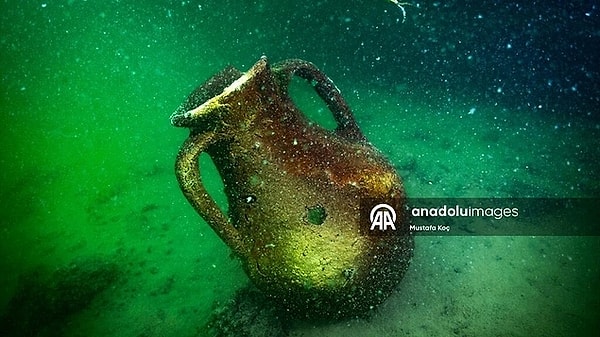
Hazar Lake in Sivrice district of Elazığ is once again in the spotlight with the historical heritage it has kept hidden under its surface for centuries. This time, volunteer divers are diving into the underwater settlement known as the 'Sunken City', capturing images of remnants such as a castle, walls, stairs, room entrances, and a cemetery. The submerged history is being recorded.
Here are the details

Divers are Documenting History Underwater
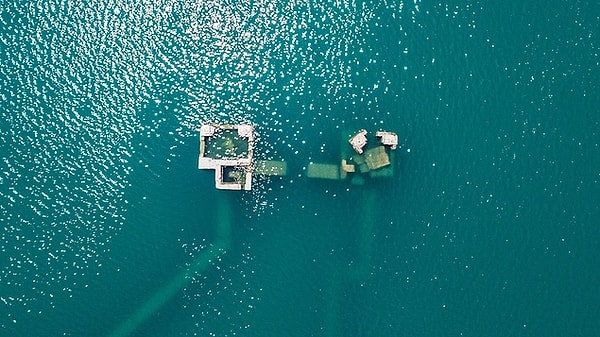
In the new study conducted for the 'Sunken City' in Lake Hazar, 4 volunteer divers are examining the current state of the submerged settlement. Traces of the past such as castle structures, walls, stairs, room entrances, and cemeteries are being recorded one by one during the dives.
The team aims to compile these records to both document the current state of the sunken city and to capture new clues about depths that have not yet been comprehensively examined.
1.5 Kilometer-long Walls Unearthed
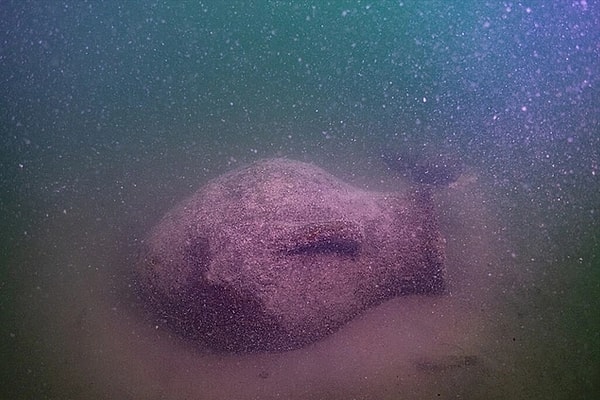
Before we delve into the new discoveries, let's take a look at what has been discovered so far. Because under the Caspian Sea, known today for its natural beauty, there is a settlement where people once lived. The most striking structures revealed so far in the Sunken City are the castle and the surrounding walls.
During the studies conducted in 2018, it was determined that these walls, which were detected and continue underwater, are approximately 1.5 kilometers long. This massive finding proves that not only a few structural remains but a rather large and organized settlement area is located under the lake.
Its Name Appears as "Dzok" in Historical Sources
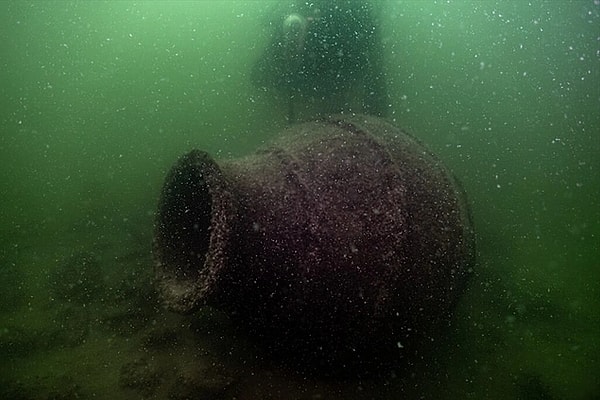
The traces of the Sunken City are not only under the water, but also appear in historical sources. In the work of Mateos of Urfa, the region is referred to as 'Dzok' in narratives related to the year 1025.
The sources report that the region was an important holy center for Christianity, and that a monastery was located here in later periods, and a settlement developed around it. It is stated that the area under the Hazar Lake carries traces from different periods ranging from the Byzantine period to the Seljuk and Ottoman periods.
Carrying Traces of 4 Thousand Years
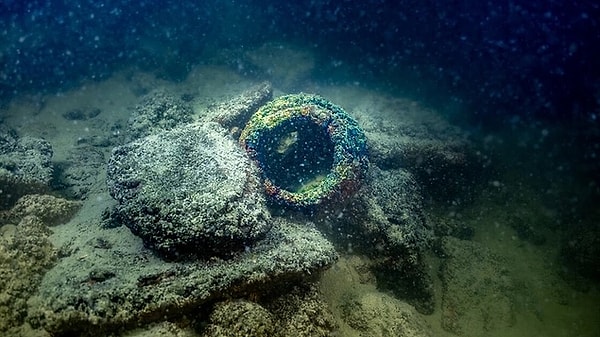
One of the most striking details about the history of the Sunken City is that the archaeological traces found in the region date back approximately 4,000 years.
However, since comprehensive archaeological excavations have not yet been conducted underwater, it has not been definitively established when the first settlement in the region began. In the limited underwater research conducted so far, the abundance of remnants from the 11th century is particularly noticeable.
They Had to Move Their Houses When the Waters Rose
So, how did this great city end up underwater? According to historical accounts, until the early 1800s, the lake's water level did not threaten the settlements. However, the rapid and unstoppable rise in the 1830s caused all structures to be submerged in water.
Consequently, the local people had to build new houses at points further away and higher from the shore, thus moving their living spaces. Today, the structures lying in the depths of the Caspian Sea conceal unique traces of the daily life once carried out here.
Each remnant to be brought to light with new dives will shed a little more light on the story of this unique city.
Keşfet ile ziyaret ettiğin tüm kategorileri tek akışta gör!
 Test
Test
 Gündem
 Magazin
 Video
Video
Read More







Send Comment