


Nuclear Nightmare Deep Underwater: Over 200,000 Radioactive Barrels Found Leaking


The nuclear threat that has been lying thousands of meters deep in the Northeast Atlantic for decades has been captured on camera up close for the first time. Over 200,000 barrels of radioactive waste, dumped into the ocean by European countries in the second half of the 20th century, have been brought back into focus following the latest deep-sea exploration conducted by scientists.

Under the umbrella of the NODSSUM project (Nuclear Ocean Waste Areas Research and Monitoring), a grand operation was carried out between May and June 2026. Approximately 30 scientists embarked on the Pourquoi Pas ship to the region.
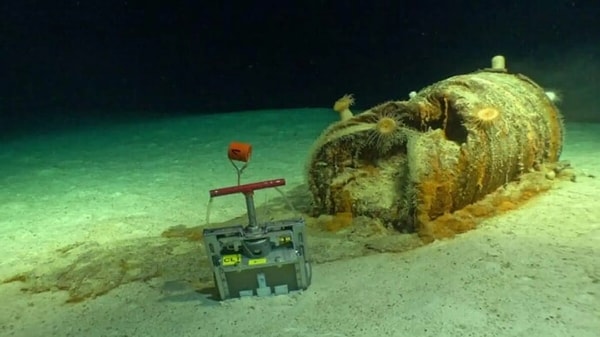
Researchers conducted 20 separate dives to a depth of approximately 4,700 meters (15,400 feet) using a manned submarine named Nautile.
This first detailed examination in decades revealed that some barrels had completely decayed, allowing their contents to seep into the surrounding sediment. Measurements taken indicated levels of radioactive materials such as cobalt60 and niobium94 isotopes, which are rarely found in the natural environment and are products of nuclear facility production, as well as cesium137 and americium241, were found to be above background levels.
Javier Escartín, one of the research leaders from ENS, along with Patrick Chardon from Clermont Auvergne University, confirmed the answer to the project's most critical question, "Did radionuclides escape into the environment?" as "Yes".
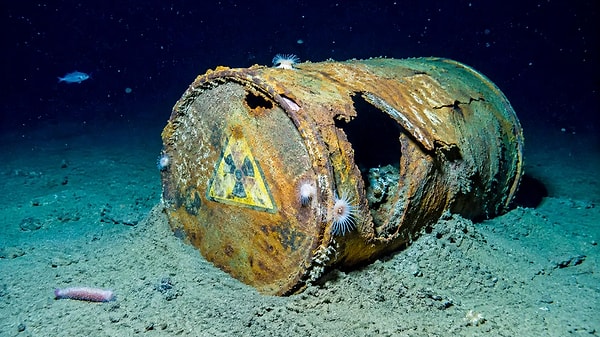
According to the studies conducted, these low-level wastes, which were mixed with concrete or bitumen and placed into metal containers, were never designed to be permanently stored. The disposal strategy of the time was based on the assumption that over time, the waste would slowly leak and disperse in the vast ocean waters.
Last year, thanks to the detailed mapping conducted with the Ulyx robot, the locations of 3,355 containers were identified. In addition to this, hundreds of water and sediment samples were collected, along with 34 samples of fish and shellfish.
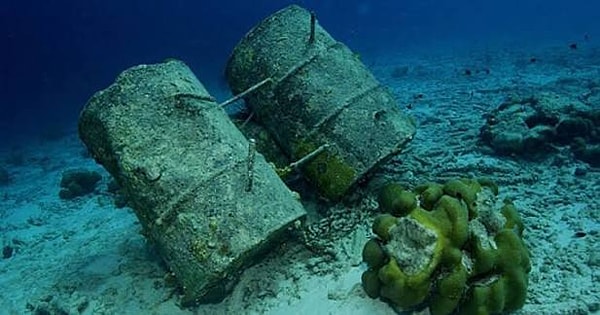
With the 2026 dives confirming the existence of the leak, the extent of the radioactive spread and its effects on marine life will become clear after months of laboratory analysis.
On the other hand, it was observed that the radioactive barrels, which form the only hard surface on the soft mud-covered seabed, have been colonized by sea anemones, sponges, and crabs. It is still unknown whether these organisms are absorbing these materials into their bodies. The OSPAR Convention, which oversees the protection of the Northeast Atlantic, is using these initial findings to update the risk map of old waste sites.
Keşfet ile ziyaret ettiğin tüm kategorileri tek akışta gör!
 Test
Test
 Gündem
 Magazin
 Video
Video



Send Comment