


Solved 90-Year-Old Math Problem in 88 Hours: OpenAI AI Breakthrough Sparks Controversy Online


Groundbreaking developments continue to occur in the field of artificial intelligence. OpenAI announced that it has solved the NavierStokes problem, one of the biggest and most complex puzzles in the world of mathematics that has remained unsolved for 90 years, with its developed artificial intelligence systems. The company claimed that approximately 10,000 artificial intelligence agents worked together to solve the problem in 88 hours, while also making significant claims.
Here's what you need to know about this historic mathematical event with a prize of 1 million dollars

What is This Navier-Stokes Problem?
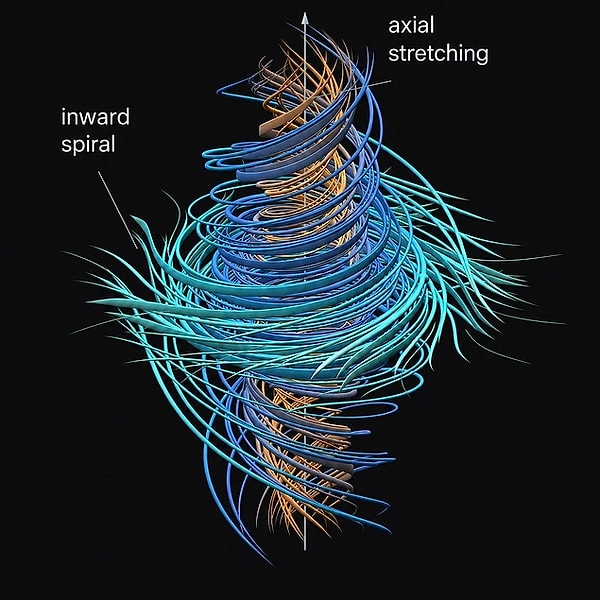
Dating back to the 19th century, the NavierStokes equations are used to explain how air, water, blood flow, or the wind around an airplane moves (fluid dynamics).
However, whether these equations always produce smooth solutions in three-dimensional flows has been considered one of the biggest open questions in mathematics for about 90 years. At the heart of the problem is a seemingly simple but extremely difficult question to answer:
'Does a fluid motion that starts smoothly and regularly get out of control over time, reaching infinite speed (infinite density/singularity) and causing the equations to collapse?'
If such a situation is possible, it means that the speed of the fluid can become infinite within a finite time. This implies that the way the equations describe the fluid may become inadequate at a certain point.
This question was included among the 7 Millennium Problems identified by the Clay Mathematics Institute in 2000. There is a prize of 1 million dollars for each of these problems. However, OpenAI stated that it will not claim the prize for the solution it announced.
How Did OpenAI Manage to Solve the Problem?
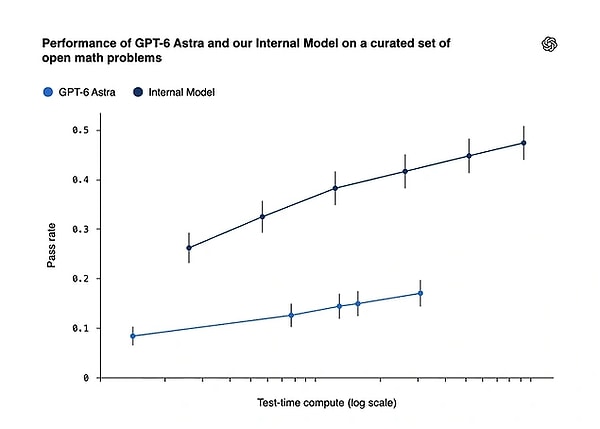
The company announced that the system working on the NavierStokes problem consists of approximately 10,000 autonomous agents operating simultaneously.
These concurrently operating artificial intelligence agents explored different solution pathways in various groups. The results obtained were then compared with each other, and the useful ideas were brought together.
According to OpenAI, the system revealed the solution about 88 hours after the start of the study, on September 5.
Moreover, the process did not end there. OpenAI announced that the solution was later verified by GPT6 Astra for 17 hours and the mathematical proof was formalized in a system called Lean.
What Does the Solution Found by Artificial Intelligence Say?
The solution presented by OpenAI suggests that a fluid, initially smooth, can generate singularity within a finite time under certain conditions.
According to the company's statement, in the solution, the vortex at the center of the fluid increasingly curls inward and spins faster as it elongates. During this process, the region shrinks while the speed of the fluid increases; however, the energy of the system remains finite.
In other words, the result presented by artificial intelligence supports the 'yes, such a singularity can occur' side of the problem that has been waiting for an answer for decades.
Therefore, OpenAI argues that the study has solved the NavierStokes Millennium Problem.
Millennium Problems in Focus
According to OpenAI's statement, the system was not only run on NavierStokes, but also on other Millennium Problems. In all trials, agents sent 4.9 million messages and used approximately 300 billion output tokens. In the NavierStokes study, approximately 2.7 million messages and 130 billion output tokens were used.
But the last word has not yet been said.
The proof provided by OpenAI needs to be independently reviewed and accepted by the mathematical community.
Storm-Brewing "Leak" Allegations!

With the announcement of the development, debates in the scientific world flared up.
Tristan Buckmaster, a mathematics professor from New York University, brought up question marks by stating that they were working on a similar problem with researcher Levent Alpöge from rival artificial intelligence company Anthropic, and their work was related to OpenAI's Codex system.
Buckmaster said he did not know whether their data was used and did not make a direct accusation.
OpenAI researcher Sebastien Bubeck categorically denied the allegations. OpenAI defends that the researchers' work was not accessed and the solution was developed independently. However, the company also states that it cannot completely rule out that the anonymized data of people who have used their products in the past may have indirectly contributed to the development of models.
OpenAI also states that its own solution is different from the work of the aforementioned researchers in terms of both method and outcome.
Keşfet ile ziyaret ettiğin tüm kategorileri tek akışta gör!
 Test
Test
 Gündem
 Magazin
 Video
Video
Read More






Send Comment