


Psychologists Explain: 3 Common Mindsets of People Who Don't Tip Delivery Drivers


Although the decision not to leave a tip after home-delivered orders might initially seem like 'stinginess', experts see it differently. Behavioral economics and psychology research reveal that this situation is not due to a lack of gratitude, but rather the perception of service and social norms.

With food and parcel deliveries becoming an indispensable part of daily life, the debate over "whether or not to tip the courier" has once again taken center stage.
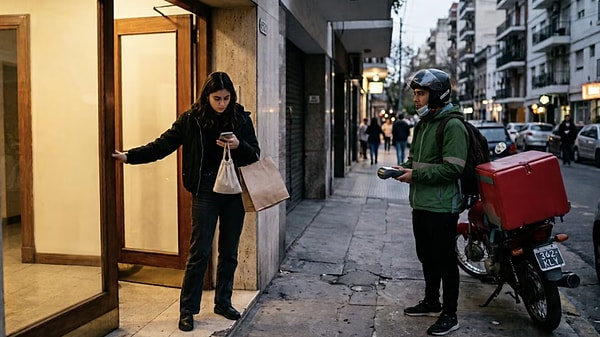
While individuals who refrain from tipping are often accused of stinginess in society at large, scientists and psychologists point out that there are far more complex social and psychological processes at work behind this behavior.
According to experts in psychology and behavioral economics, not everyone interprets the obligation to reward a service in the same way. Researchers emphasizing that a person who does not tip is not necessarily stingy, suggest that the issue is directly related to how individuals perceive the service and the principle of 'reciprocity'.
Social Exchange Theory, which explains human relationships in terms of a give-and-take balance, proposes that individuals anticipate reciprocating when they receive a benefit.
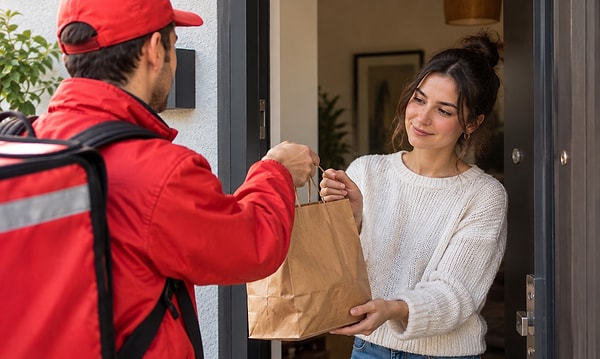
However, the process doesn't always unfold the same way in delivery services.
Experts point out that some people perceive the amount they've already paid for their order and the shipping fee as the full compensation for the service, thereby not considering tipping as an additional responsibility. This differing perception is evident when one person leaves a tip out of gratitude for the same delivery, while another sees no necessity in doing so.
Ofer H. Azar, one of the researchers who delves deeply into the behavior of tipping, emphasizes that the decision is not solely based on economic calculations.
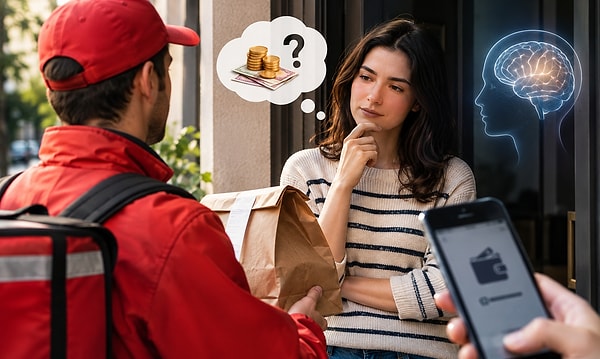
According to Azar, people tip for various reasons; expressing gratitude, adhering to social norms, empathizing with the worker, or understanding the income model of couriers. Since these motivations vary from person to person, not tipping cannot be directly classified as a negative character trait.
An intriguing study titled 'Tipping Food Delivery Workers: A Field Study,' published in 2025, revealed some interesting findings. It was observed that additional gestures made during delivery and the principle of reciprocity did not significantly increase tipping rates.
The research findings scientifically disproved the general assumption that individuals who do not tip have a 'weak sense of reciprocity.' It confirmed that numerous personal, logical, and social dynamics underlie the decision not to tip.
Keşfet ile ziyaret ettiğin tüm kategorileri tek akışta gör!
 Test
Test
 Gündem
 Magazin
 Video
Video



Send Comment