


What Is Ikebana? The Japanese Art of Arranging Flowers


In Japan, putting flowers in a vase can be a discipline of its own. Ikebana, the Japanese art of flower arranging, treats a few stems, branches and leaves as a way to express feeling, taste and a sense of harmony with nature. Here is what it means and how its main styles differ.


The word ikebana is usually translated as "living flowers" or "giving life to flowers".
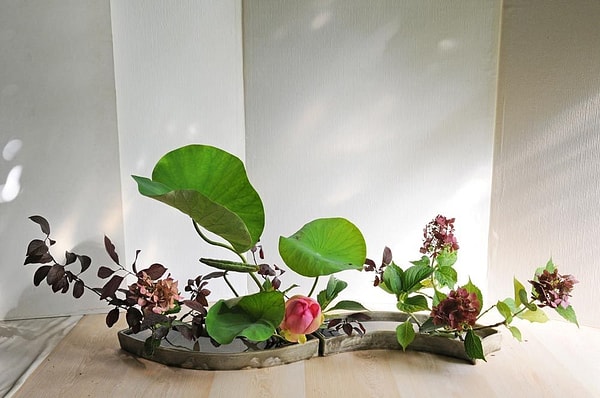
It combines ikeru (to keep alive, to arrange) and hana (flower). Its history is said to reach back as far as the 6th century, and it has long been seen as a way of expressing emotion and an aesthetic view in cooperation with nature.
Unlike a dense bouquet, an ikebana piece often uses very few elements and leaves plenty of empty space. The shape of a branch, the line of a leaf and the container all matter as much as the blooms.
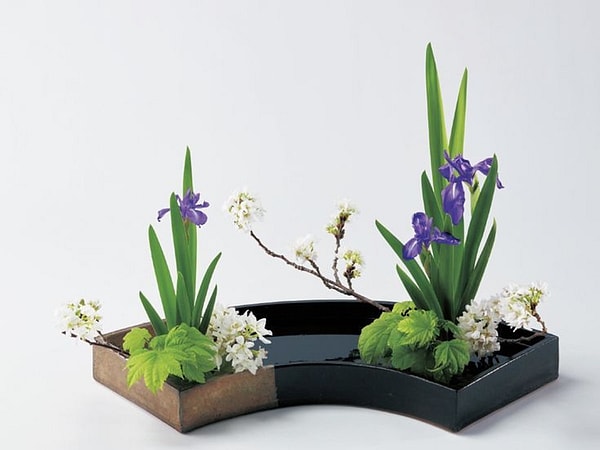
Many arrangements are built on three main lines: heaven, earth and humankind.
Three lines, three meanings
In this classic structure the longest branch stands for heaven, the middle one for earth and the shortest for humankind. The way the three relate to each other gives the arrangement its balance.
Faded flowers have a place too
Ikebana does not insist on perfect, fresh blooms. Dry or wilting flowers can be used on purpose, as a reminder that sadness and fading are part of life just as joy is.
Two of the best-known styles are moribana and nageire.
Moribana
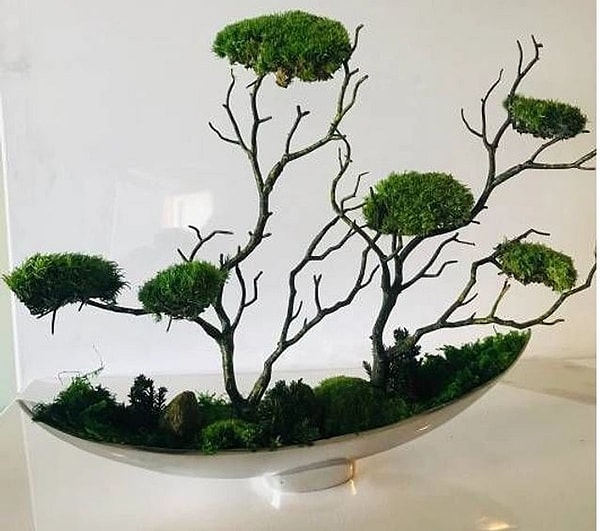
Moribana is arranged in a low, shallow container, with stems held in place on a pin holder. The result spreads out horizontally and often suggests a small natural landscape.
Nageire
Nageire uses a tall vase with a narrow mouth. The stems are not forced upright by artificial supports; they are allowed to lean and rest in the vase more naturally, which is why it is often recommended to beginners.
Over the centuries ikebana split into schools, each with its own philosophy.
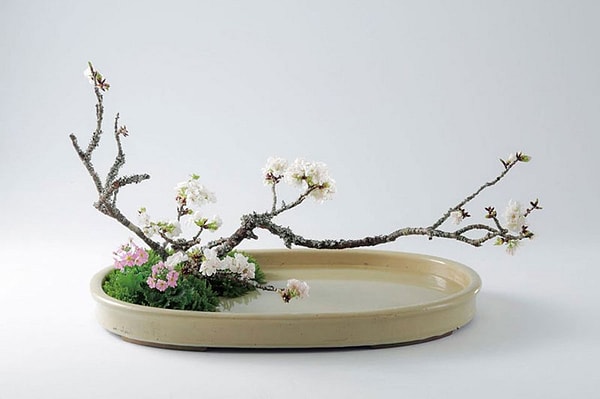
Ikenobo is regarded as the oldest school and is closely linked to the traditional, more technical side of the art.
Ohara was founded in the late 19th century and became known for the moribana style and its focus on natural scenery and the change of the seasons.
Enshu is another historic school, known for arrangements built around at least three main branches whose angles and positions carry meaning.
Whichever school you follow, the idea stays the same: a few carefully chosen stems can say more than a crowded vase.
Keşfet ile ziyaret ettiğin tüm kategorileri tek akışta gör!
 Test
 Gündem
 Magazin
 Video



Send Comment