


Why Does Popcorn Pop, And Why Do Some Kernels Stay Hard At The Bottom Of The Bowl?


A popcorn kernel starts out small and rock-hard, then bursts open and turns into something completely different. How does that happen, and why do a few kernels always refuse to pop? Here is the simple kitchen science behind a movie-night favorite.


Every popcorn kernel holds a little water and a lot of starch, and heat turns that water into steam.

Popcorn has been around for thousands of years, and the way it pops comes down to what is inside each kernel: water and starch, sealed in a tough outer hull.
How the pop happens
When the kernel is heated, the water inside turns into steam.
The hull traps that steam, so pressure builds up inside the kernel.
As the pressure rises, the starch softens.
At around 180°C (about 350°F), the hull can no longer hold the pressure and bursts.
When the hull bursts, the soft starch spills out and puffs up to many times its original size.

The moment the hull gives way, the steam expands and the softened starch foams outward, then sets almost instantly as it cools. That is where the fluffy white shape of popcorn comes from. A popped kernel can end up dozens of times bigger than it started.
The variety matters too. Popcorn comes from a specific type of corn, known scientifically as Zea mays everta, whose hull is strong enough to hold the pressure until it bursts.
Kernels that stay hard at the bottom of the bowl usually did not have enough water inside.
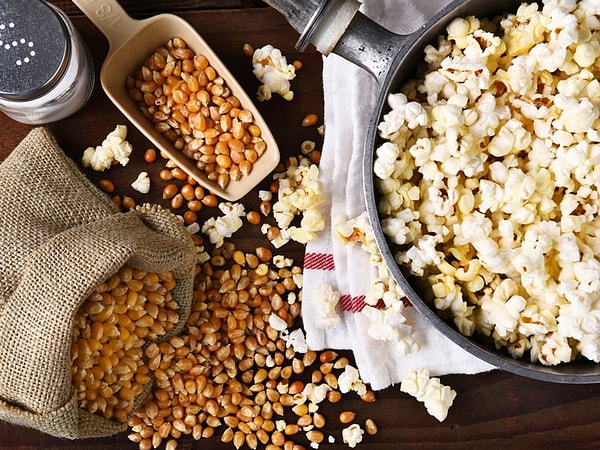
A popcorn kernel needs roughly 14 percent moisture to pop well. If the water content drops below that level, the kernel produces less steam, and the pressure never gets high enough to break the hull. No matter how long you keep cooking, those kernels will not pop.
So the next time you find a few hard kernels left in the bowl, you know the reason: not enough water to build up the steam.
Keşfet ile ziyaret ettiğin tüm kategorileri tek akışta gör!
 Test
 Gündem
 Magazin
 Video



Send Comment