


Content Creator Tests Japan's Famous White Sock Experiment in Antalya


The cleanliness standards of cities are typically gauged by municipal reports and statistics, yet the most candid way to comprehend the actual cleanliness of a city is to tread its streets barefoot or, even worse, in pristine white socks. The infamous 'white sock walk' trend, which challenges the near spotless image we're accustomed to seeing on Tokyo streets, has now made its way to Turkey. Antalya, the jewel of tourism, hosts millions of domestic and foreign tourists each year, and the hygiene quality of its streets has been put to the rigorous Far East test. How dirty can crowded squares, walkways, and streets bustling with human traffic get throughout the day?
A social media influencer decided to replicate the famous challenge from the streets of Japan on Antalya's busiest avenues. He started his stopwatch and began to walk, shoes in hand, wearing brand new, stark white socks on the city streets teeming with the most human traffic. The results of this walk, conducted in the heart of Antalya amidst the colossal crowd where tram lines and shops are lined up, quickly garnered a great deal of attention.

You can watch it from here;
The outcome isn't too shabby!
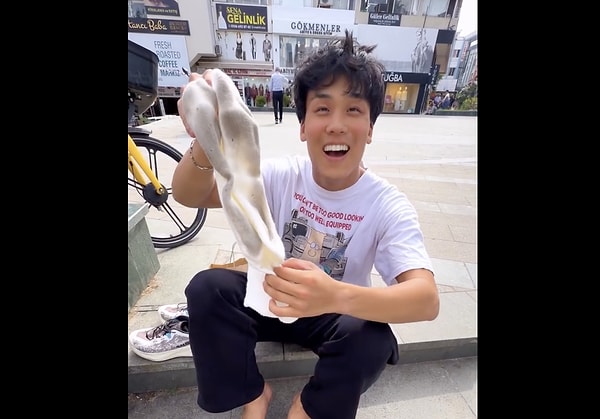
The route for the walk was specifically chosen to include central streets and squares, where pedestrian traffic is at its peak. Upon finishing the experiment, the phenomenon who sat down to inspect the bottom of his socks was met with a view that wasn't all that bad. However, the result was still not quite like that in Japan.
The impeccable cleanliness of Japan is rooted more in a profound life philosophy than in advanced technology. The concept of hygiene starts at school; children are instilled with the responsibility of cleaning their classrooms and toilets from a young age. Following the metro attacks in 1995, trash cans were removed from the streets. This led to the ingraining of a habit among the public to 'take your trash home with you'. The social stigma attached to eating and drinking while walking helps to prevent street stains. Moreover, as Shintoism and Zen Buddhism associate dirt with evil, environmental cleanliness is considered a communal act of worship and a moral duty. Thanks to the collective resolve of society, the streets transform into immaculately clean shared spaces, preserved with individual responsibility and deep respect at all times.
Keşfet ile ziyaret ettiğin tüm kategorileri tek akışta gör!
 Test
Test
 Gündem
 Magazin
 Video
Video



Send Comment