


Digging Under Asphalt Reveals Shocking Historic Pier Where One Million People Were Chained


The 'Porto Maravilha' excavation project, initiated to modernize and transform the port area in the city of Rio de Janeiro, Brazil, led to a monumental discovery that shook the world's history. Right beneath the layers of fill material that construction machinery was digging to build modern structures, a historical stone dock, buried under urban pavements and asphalt for 168 years, was found: the Valongo Wharf (Cais do Valongo).
This stone structure, dating back to 1811, is not merely an ancient relic; it is recognized as the most significant and substantial physical evidence of the forced arrival of enslaved Africans to the American continent. Following the discovery, UNESCO wasted no time in adding this site to the World Heritage List.

According to data from the National Institute of Historical and Artistic Heritage, the Valongo Wharf was commissioned for construction by the General Police Directorate of the Rio de Janeiro Court of the period.
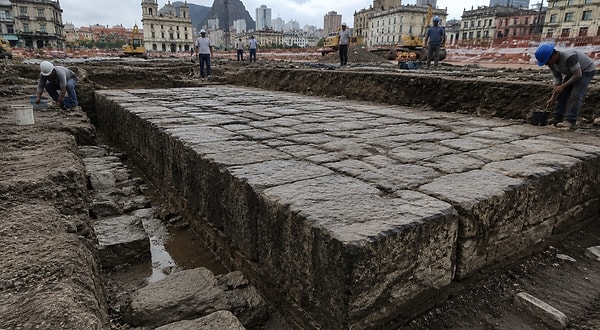
Its construction had a chilling purpose: to remove the slave trade and human trafficking taking place in Rua Direita (now Rua Primeiro de Março), the heart of the kingdom's capital, Rio, from the sight of the city's elites and relocate it to a more distant area, the Valongo district.
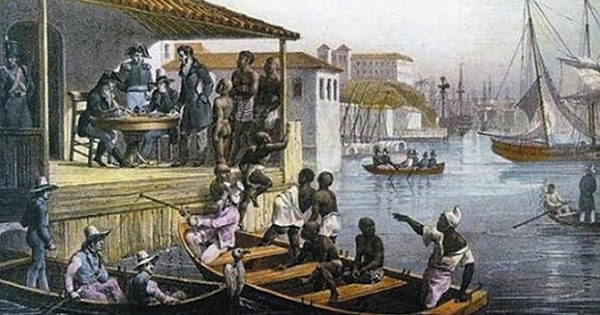
While the surface was abuzz with horn sounds, pedestrian traffic, and commerce, hidden beneath was the route of one of the greatest tragedies in human history. Over the course of more than three centuries of the slave system, Brazil welcomed approximately 4 million enslaved individuals onto its soil. A staggering 1 million of this horrifying figure set foot on land solely from this dock.
One of the most striking features of this pier, dating back to the early 19th century, is its pristine state, untouched by any form of alteration or reconstruction.
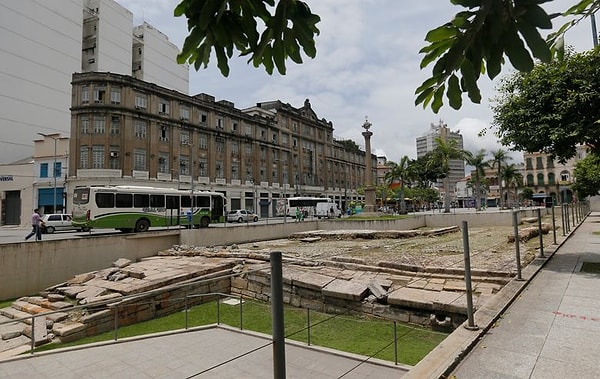
According to UNESCO experts, the wharf's decades-long concealment under infill soil acted as a sort of time capsule, preserving the ancient landing ramp, the original drainage system, and the stone pavements. The city's expansion, the filling with soil, and the constant reshaping failed to erase this shameful chapter from memory; instead, it ensured its intact survival to this day.
Millions of people who disembarked at this wharf were bought and sold in the slave market that operated there, and then dispatched in chains to the coffee and sugar cane fields, mines, and farms that formed the backbone of the Brazilian economy.
This discovery completely transformed the perspective on the port area of Rio de Janeiro.
The area has transcended from being a mundane urban transformation project to becoming a global symbol of Afro-Brazilian cultural heritage and resistance. This region, known as 'Little Africa' (Pequena África), has merged the Valongo Wharf with other points carrying the memory of the African diaspora, such as Pedra do Sal and the Pretos Novos Cemetery.
The Rio Municipality has taken this archaeological site under protection by opening it to public visitation. Today, this historic dock is regarded as the most significant stop on the 'Historical and Archaeological Tour Route of African Heritage Celebrations.' Valongo, proving what can be hidden beneath the concrete streets of modern metropolises, defies time as the most vivid monument of forced migration that has left its mark on Brazil's social and economic formation.
Keşfet ile ziyaret ettiğin tüm kategorileri tek akışta gör!
 Test
Test
 Gündem
 Magazin
 Video
Video



Send Comment