


Rare Look Inside North Korea: Tourist Shows What Broadcasts on Hotel TV


North Korea, one of the world's most secluded and isolated societies, continues to pique curiosity with the intricacies of its daily life. The nature of social life behind closed doors, the use of mass communication tools, and the way the public is informed are topics frequently debated. Especially, state-controlled media outlets and television culture are among the most striking elements in understanding the societal structure of closed regimes.
A tourist, through a video filmed in his hotel room in North Korea, demonstrated what is broadcasted on the country's television channels. Alongside state-controlled news broadcasts and propaganda channels, it was observed that there are also channels broadcasting in different languages.

You can watch it from here;
These channels are not actually intended for the people of North Korea. Many channels and broadcasts in foreign languages are exclusively for tourists.
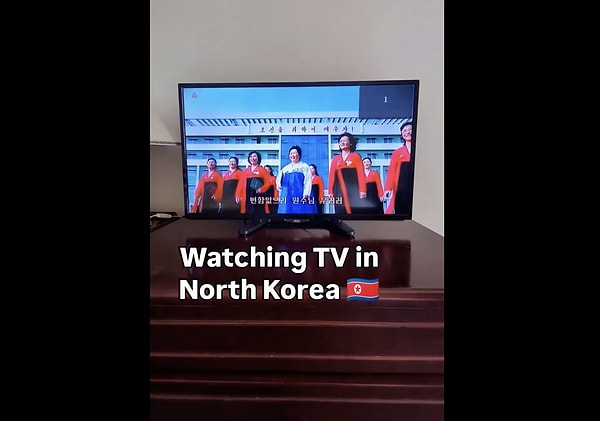
The North Korean state implements an extreme control policy over media and mass communication tools, keeping them entirely under its own control. The number of television channels available to the public in the country is extremely limited, with the majority of broadcasts consisting of state news, military parades, leader-focused propaganda programs, revolutionary music, and documentaries praising the regime. In order to provide an information flow that is completely independent from the outside world and fully controlled, the viewing of foreign channels in public spaces has been strictly prohibited.
However, the situation takes on a slightly different dimension in tourist hotels and areas where foreign guests stay. As seen in the published video, when switching between channels, not only local Korean state channels appear, but also Russian series and entertainment programs, Chinese news channels like CCTV, foreign language broadcasts featuring international developments, and even Korean music and propaganda video channels. This situation indicates that the regime provides foreign visitors with access to foreign broadcasts within certain limits, but even this is restricted to a limited number of allied country channels. These sharp transitions between channels starkly reveal both the information isolation implemented by the regime domestically and the controlled screen experience offered to those coming from outside.
Keşfet ile ziyaret ettiğin tüm kategorileri tek akışta gör!
 Test
Test
 Gündem
 Magazin
 Video
Video



Send Comment