


6 Places Called Cursed: What the Records Say Behind the Legends


Some places are known less for their scenery than for the frightening stories told about them: an abandoned island, a canal where dolls hang from trees, a fort that visitors may not enter after sunset, a bridge where dogs are said to leap. Some of these tales rest on real history, while others grew into legend over the years. Here are six places called cursed, and what is actually known about them.


Poveglia Island in Italy was a plague quarantine station, but the “cursed island” stories are much newer.
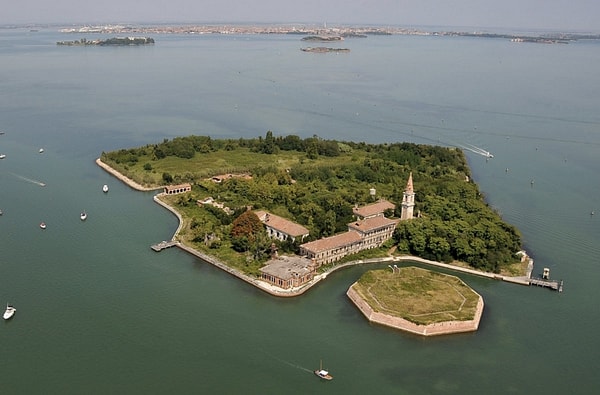
Poveglia lies in the Venetian Lagoon. It was declared a restricted area for quarantine in 1793 and served as a plague quarantine station between 1805 and 1814. In 1922 its buildings became a sanatorium for elderly patients, and after it closed in 1968 the island was largely abandoned.
The haunted reputation spread much later. A paranormal TV show that filmed there in 2009 billed it as the world's most haunted island, and claims followed that more than 100,000 plague victims are buried there and that gruesome experiments took place in the old hospital. No reliable historical evidence confirms these claims.
Mexico's Island of the Dolls is tied to a story that no official record supports.
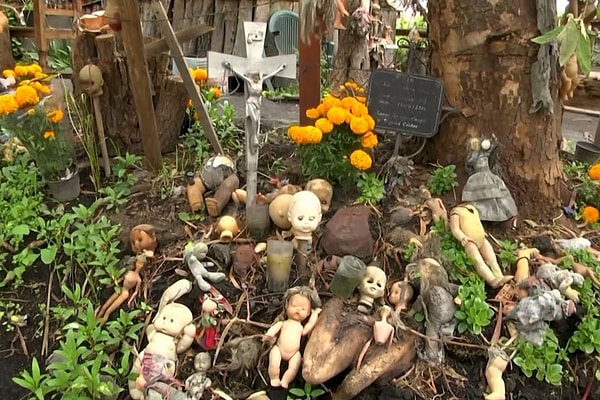
In the canals of Xochimilco, south of Mexico City, a small island is known for thousands of old, broken dolls hanging from the trees. Its story goes back to Don Julián Santana, who began living there in the 1950s.
According to local legend, Santana witnessed a young girl drown in the canal but could not save her, and came to believe her spirit lingered on the island. He hung the first doll he found in the water from a tree to calm her, then spent years collecting more from the canals and rubbish. Today the island is said to hold about 4,000 dolls.
There is no official record of the girl's death, and accounts of Santana's own death in 2001 differ: some say he drowned, others that he had a heart attack.
Bhangarh Fort in India is best known for a rule: no entry before sunrise or after sunset.
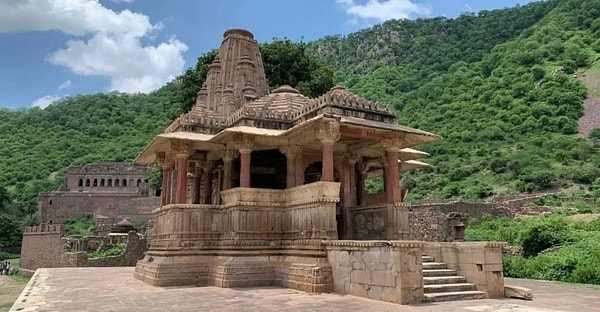
Bhangarh Fort in Rajasthan was built in the 17th century and is now largely in ruins, with palaces, temples and deserted streets. Its fame comes from curse legends told for centuries.
In the best-known one, a sorcerer named Singhiya fell for Princess Ratnavati and prepared a love potion for her. She noticed the trick and poured it onto a rock, which rolled onto the sorcerer and killed him. Before he died, he is said to have cursed the fort and the town around it. In another legend, an ascetic named Baba Balau Nath allowed the fort to be built on one condition: that the shadow of its buildings never fall on his home. When that warning was ignored, the town was cursed.
The most striking real detail is the entry rule. Visitors are not allowed in before sunrise or after sunset, and India's official tourism sources confirm the restriction.
Three more places where legend outruns the record: a Romanian forest, an Irish castle and a Scottish bridge.
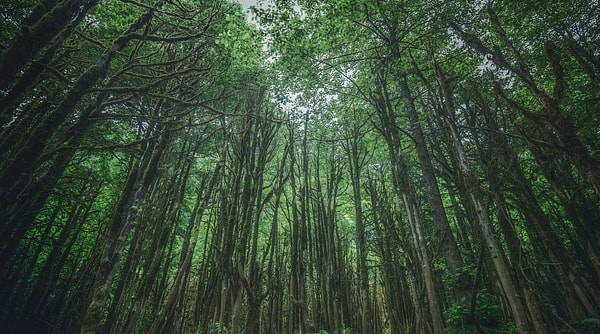
Hoia Baciu Forest, Romania
Near the city of Cluj-Napoca, Hoia Baciu is sometimes nicknamed Romania's Bermuda Triangle. Its name is said to come from a shepherd who walked in with about 200 sheep and never came back, but no historical record confirms this. The forest's best-known feature is a circular clearing where, the stories say, nothing grows.
On 18 August 1968, technician Emil Barnea photographed what he described as a bright, disc-shaped object in the sky there, and the photos became famous among UFO enthusiasts. They do not prove the object was extraterrestrial. Some visitors report nausea, anxiety, a feeling of being watched and problems with electronics; these are personal accounts, not evidence of anything supernatural.
Leap Castle, Ireland
Leap Castle in County Offaly is tied to the O'Carroll clan and a history of feuds. Its origins are dated to the early 16th century, though opinions differ about the age of the part that stands today. Its darkest legend concerns the “Bloody Chapel”: an O'Carroll is said to have killed his own brother, a priest, at the altar during Mass. The castle also has a small chamber called an oubliette, from the French for “to forget,” where prisoners are said to have been left to die, and some claim many skeletons were removed from it during renovations. Not all of this is confirmed by historical documents, and the castle's own history page presents the ghost stories as paranormal claims rather than proven events.
Overtoun Bridge, Scotland
Near Dumbarton, the bridge finished in 1895 is known locally as the place where dogs jump. Since the 1950s there have been reports of dogs leaping over the parapet, some falling about 15 metres and dying. Folk tales blame the ghost of a woman in white. Experts look for more down-to-earth explanations: animal behaviour expert David Sands suggests that the scent of animals such as mink in the undergrowth below may draw dogs, especially long-nosed ones, to the wall, and that the drop may be hard to judge from a dog's point of view. Research has not established a definitive cause, and the often-repeated claims that hundreds of dogs have jumped and at least 50 died are not backed by a reliable, comprehensive record.
Keşfet ile ziyaret ettiğin tüm kategorileri tek akışta gör!
 Test
 Gündem
 Magazin
 Video



Send Comment