


5 Chilling Witch Legends From Around The World, From Baba Yaga To Grýla


When people think of witches, pointy hats and brooms usually come to mind. But the witch legends told around the world are far creepier than that. From the forests of Russia to the caves of England, from a farm in Tennessee to the mountains of Iceland, these stories have been passed down for generations, and some were once taken as fact.
Here are five of the most spine-chilling witch and folklore legends from different corners of the world.


1. Baba Yaga: The Witch Who Lives In A Hut On Chicken Legs
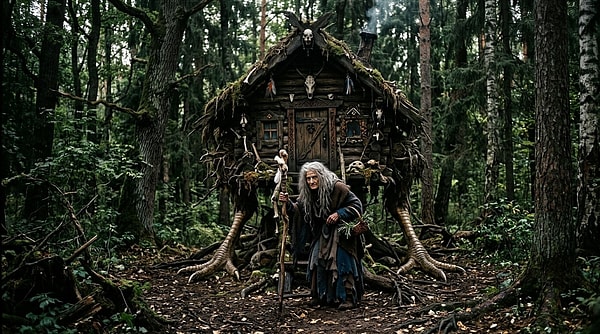
One of the best-known figures in Russian and East Slavic folklore, Baba Yaga lives deep in the forest in a hut that stands on chicken legs and can spin around. According to the legend, she flies in a mortar, steers it with a pestle and sweeps away her tracks with a broom.
She is said to snatch and eat children, but the most interesting thing about her is that she is not a one-dimensional villain. In some tales she tests those who come to her door with hard tasks and helps the ones who pass. In others she even turns into a mysterious guide who helps heroes find their way.
One of the earliest known written traces of Baba Yaga appears in a Russian grammar book from 1755, though she is thought to have lived in oral folk tales long before that.
2. The Bell Witch: A Spirit That Would Not Leave One Family Alone
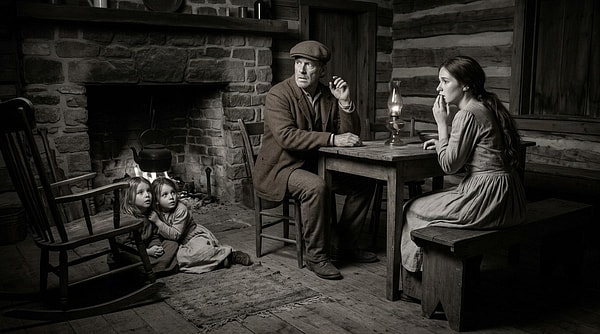
Events said to have taken place between 1817 and 1821 near what is now Adams, Tennessee, grew into one of America's best-known supernatural stories. According to the tale, farmer John Bell's family was tormented by an unseen presence. Knocking, chain sounds and whispers were heard in the house. The presence, which called itself 'Kate,' targeted John Bell and his daughter Betsy in particular.
John Bell died on December 20, 1820. The legend blames the presence for his death and even says he was mysteriously poisoned.
The historical basis of the story is disputed, though. The first known printed account dates to 1886, and the fullest version comes from a book written by Martin Van Buren Ingram in 1894. No document from the time of the events survives.
3. The Witch Of Berkeley: The Woman Carried Away From Her Chained Coffin
This story appears in the 12th-century work Gesta Regum Anglorum by the English monk and historian William of Malmesbury. In it, an old woman from Berkeley in Gloucestershire, said to have practiced witchcraft, realized she was about to die and made an unusual request of her children.
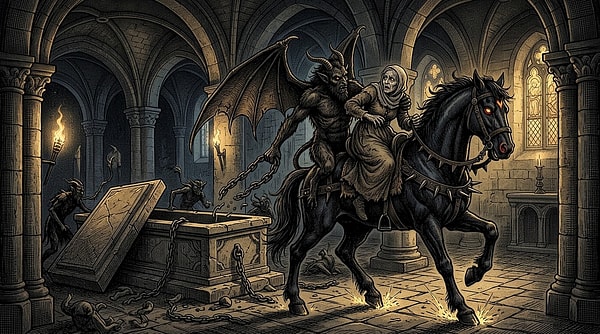
She asked for her body to be sewn into a stag's skin, placed in a stone coffin and bound with three heavy iron chains. She also asked that it be guarded in a church for three nights, believing this would keep evil spirits from taking her body.
But in the tale, evil spirits got into the church the first two nights and broke two of the chains. On the third night a far more terrifying creature appeared. It snapped the last chain, pulled the woman out of her coffin and carried her off on a black horse with iron spikes on its back.
4. Grýla: The Icelandic Troll Who Takes Naughty Children
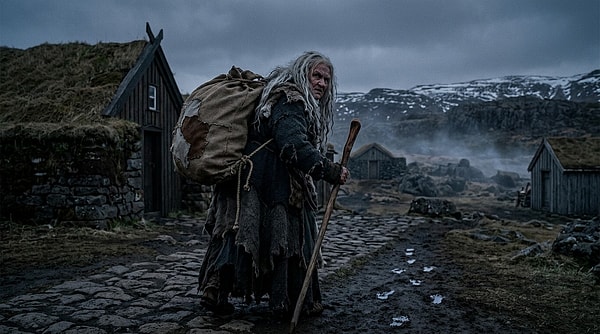
One of the scariest figures in Icelandic folklore, Grýla is described as a giant female troll who lives in the mountains. As Christmas approaches, the legend says, she comes down to the villages, stuffs naughty children into her sack, takes them to her cave and cooks them in her cauldron.
Grýla is known as the mother of the 13 Yule Lads (Jólasveinar), who have become one of Iceland's Christmas symbols. Her husband Leppalúði and the Yule Cat, said to eat children who do not get new clothes for Christmas, complete this frightening family.
Grýla's roots go back to Icelandic stories from the 13th century. But the names and traits of the 13 Yule Lads we know today took shape over time. As Icelandic folklore expert Terry Gunnell has explained, in older accounts the number of these characters and their family ties varied from region to region.
5. Black Annis: The Blue-Faced Witch Waiting In Her Cave
In this legend from Leicestershire, England, Black Annis is described as a terrifying witch with a blue face and iron claws. She is said to live in a cave she dug with her own claws in the sandstone slopes of the Dane Hills. At night she hides in an oak tree at the cave's entrance and hunts children and lambs.
According to the stories, when people heard Black Annis grinding her teeth, they locked their doors and kept away from the windows. She became so tied to local fears that her name turned into part of the area's folklore.
Black Annis also appears in 1764 legal documents as part of a land name, 'Black Anny's Bower Close.' That record is one historical trace showing the legend was known in the area then, but it does not prove the witch ever lived.
Maybe that is why some legends are never forgotten, even when they are not real!
Keşfet ile ziyaret ettiğin tüm kategorileri tek akışta gör!
 Test
 Gündem
 Magazin
 Video



Send Comment