


Eco-Friendly Packaging Made From Food Waste Extends Tomato Shelf Life by 20 Days


A research team led by Prof. Fumihiko Tanaka and Assoc. Prof. Fumina Tanaka from the Faculty of Agriculture at Kyushu University has embarked on an innovative project to transform agricultural waste into high-tech food packaging. In a study published in the Food Research International journal, a new biodegradable film was developed using nanoparticles derived from waste pumpkin peels, which extends the shelf life of food.

Researchers, who typically discarded pumpkin peels, have now subjected them to a hydrothermal process involving high heat and pressure. Following this, the material is cooled and freeze-dried, resulting in the production of "carbon quantum dots" (CQD) approximately 10 nanometers in size.
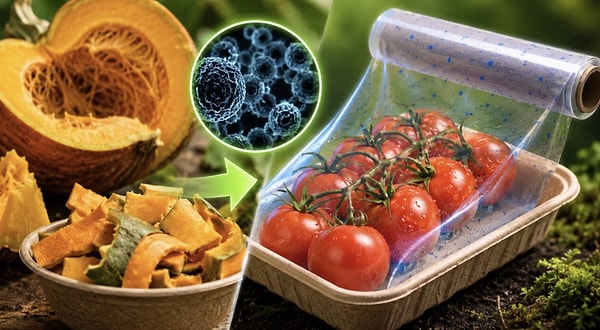
These carbon particles were integrated into a mixture of carboxymethyl cellulose (CMC) and gelatin, transforming them into a biodegradable composite packaging film.
The developed packaging material stands out with both its mechanical and protective barrier properties:
In a formulation where 3% of carbon particles were added, the tensile strength of the film increased by 147% compared to the control material.
The film gained the ability to protect foods from the harmful effects of light by blocking 72.5% of UVA radiation and 94.3% of UVB radiation. In DPPH tests, the film demonstrated 88.58% antioxidant activity.
While nanoparticles reduced water vapor permeability by 12.32%, they also increased the contact angle with water, thereby strengthening the moisture barrier.
In the preservation experiments conducted in a laboratory setting, cherry tomatoes were monitored for a period of 20 days.
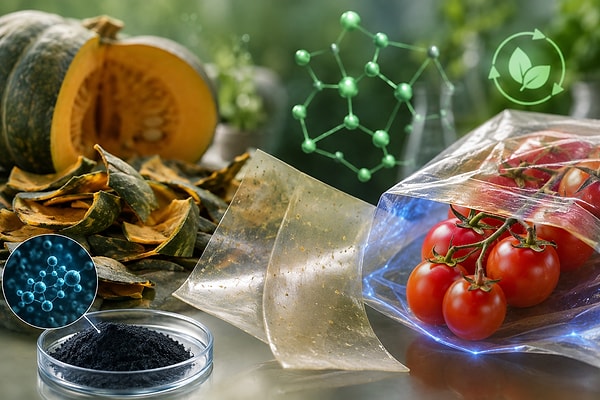
When compared to traditional polyethylene and standard bioplastics, it was observed that tomatoes wrapped in a film containing 3% CQD demonstrated a significant reduction in microbial growth, and a slowing down of weight loss and softening. Moreover, the packaging, which emits blue fluorescent light under ultraviolet light, exhibited the highest performance in preserving the quality of the product.
In toxicity tests carried out on human cell lines (Caco2) with the developed material, it was determined to be safe within certain concentration limits. However, the researchers emphasize the need for more comprehensive safety evaluations before the packaging is commercially launched.
In the next phase, the team plans to use the technology directly as a fruit coating, optimize it for different foods, and enhance protection against more aggressive fungi by adding natural essential oils to the packaging.
Keşfet ile ziyaret ettiğin tüm kategorileri tek akışta gör!
 Test
Test
 Gündem
 Magazin
 Video
Video



Send Comment