


Agricultural Miracle in Volcanic Ash: The 300-Year Story of Lanzarote's Waterless Vineyards


On the island of Lanzarote, which is affiliated with Spain, the fields are not green, but pitch black. These barren lands, which resemble the lunar surface in a science fiction movie when viewed from the outside, are experiencing one of the world's most extraordinary agricultural miracles. So, how did the villagers transform this barren land into a massive vineyard?
Here are the details.

Engineering Born from Disaster
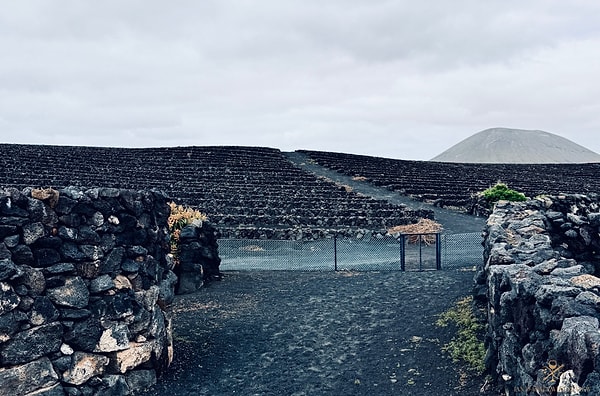
Everything began with the Timanfaya Volcano, which erupted in 1730 and left the island under ash and lava for a full 6 years. The islanders, seeing the lands where they had been sowing grain for centuries covered with layers of black volcanic stone and gravel (rofe or picón) meters thick, initially thought that life on the island was completely over.
Instead of abandoning the island, they tried to clean up the black ashes, but the layer was so thick that it was impossible. Then, the islanders discovered something incredible: When they dug the black ash and reached the fertile soil underneath and planted vine, they saw that the volcanic stones absorbed the dew and moisture that occurred at night like a sponge and transferred it to the roots.
Step by Step Volcanic Viticulture: How Does the System Work?
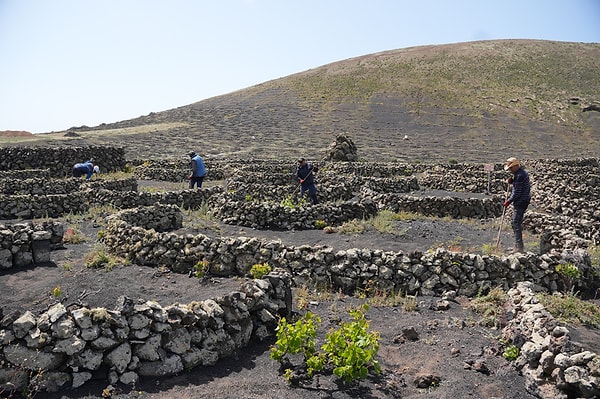
Today, there is a fascinating logic of nature behind this method, which is considered a 'global agricultural heritage' and is protected by UNESCO and the UN Food and Agriculture Organization (FAO):
Giant pits (Hoyos): Large pits in the shape of an inverted cone, 1 to 3 meters deep, are dug by excavating the black pebble layer on the surface. Vine seedlings are planted directly into the fertile soil at the bottom of this pit.
Moisture shield and heat control: On an island where it hardly ever rains, black ash absorbs the moisture formed at night and nourishes the soil beneath, while during the day it refracts sunlight to prevent water evaporation.
Wind shields (Zocos): To prevent harsh and drying winds blowing from the Atlantic Ocean from damaging delicate vines, protective walls in the shape of a half moon are built around the pits from volcanic stones.
Defying Technology, 100% Human Power
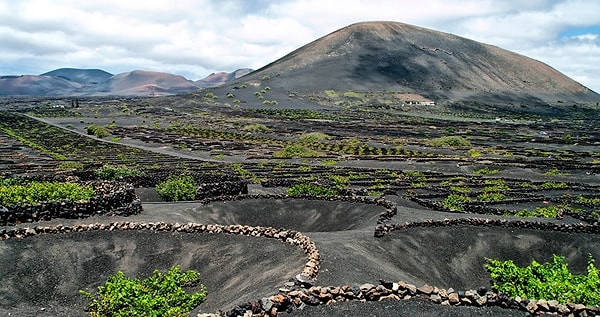
Due to its crater-like and rugged terrain, no tractor or heavy farming machinery can operate in the vineyards of Lanzarote. From planting to maintenance, from pruning to harvesting, everything is still carried out entirely by human power, just as it has been for centuries.
In this region, home to the oldest wine producers of the Canary Islands, the characteristic aromatic Malvasía Volcánica grape, which can withstand these harsh conditions and is unique to this area, is grown.
300-Year-Old Lesson for the Drought of the Future
At a time when traditional farming areas around the world are in crisis due to global warming and drought, this 'dry farming' method, which the people of Lanzarote developed 300 years ago following a natural disaster, is teaching a lesson to the modern world. It shows that miracles can even arise from the pitch-black ashes when one adapts to the conditions offered by nature, instead of fighting against it.
Keşfet ile ziyaret ettiğin tüm kategorileri tek akışta gör!
 Test
Test
 Gündem
 Magazin
 Video
Video
Read More





Send Comment