


Danger Doesn't Stop When Turned Off: Stanford Study Exposes Leaks in Closed Gas Stoves


You've checked multiple times, turned off the stove, and finally left the kitchen. But is everything really over at that moment?
Research conducted at Stanford University reveals a striking detail about gas stoves. It is stated that a certain amount of gas leakage can occur even when the stoves are not in use, and some pollutants can mix into the air of the house during cooking. So, does the stove leak gas after it's turned off? How much gas does it leak?
Here are the details.

You've Turned Off the Stove But Gas Leakage Can Continue
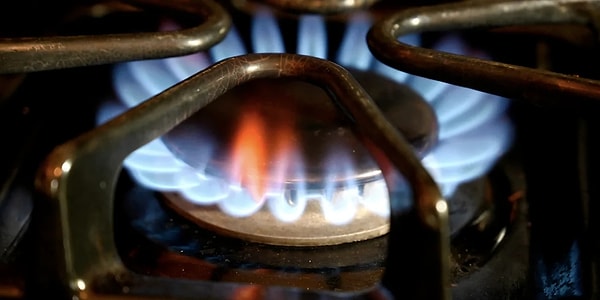
Researchers from Stanford Doerr School of Sustainability determined that gas stoves can emit methane even when they are not in use.
In the measurements made by Prof. Rob Jackson, one of the authors of the research, and his team, it was observed that a significant portion of methane emissions from gas stoves occurred when the stove was off. It is indicated that this could be due to small leaks at connection points and in gas lines.
Therefore, while turning off the stove knob is important, potential small leaks in the gas system also emerge as a matter that needs to be taken into consideration.
Benzene Can Be Released While Cooking!
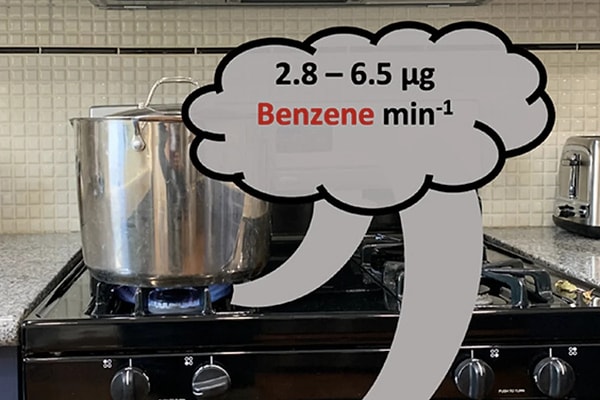
Another topic examined by Stanford researchers was benzene, which emerges during cooking. In the study conducted by researcher Eric Lebel and his team, it was determined that benzene was released into the air of the house with the operation of gas stoves. Benzene is known as a chemical that causes concern for health in terms of long-term exposure.
Researchers state that the levels of benzene measured after the use of gas stoves in some homes can reach remarkable dimensions.
Ventilation in the Kitchen is More Important Than You Think
Another point highlighted in the research related to gas stoves is nitrogen dioxide (NO₂). This pollutant, which can increase in quantity during cooking, can reach higher levels especially in small kitchens that are not ventilated enough.
Therefore, experts recommend using the hood while cooking and, if possible, opening the window to ensure air circulation in the kitchen.
A Simple Measure from Stanford
There is no need for those who use gas stoves to panic. One of the simplest measures revealed by the research is good ventilation.
Running the hood while cooking,
Ensuring it vents to the outside, if possible,
Ventilating the kitchen for a while after cooking can help reduce the pollutants that can accumulate indoors.
The studies of Stanford researchers show that gas stoves, which are an ordinary part of our daily life, can have more impact on the air of the house than we think. Therefore, it is important to pay attention to the air in the kitchen as well as the stove while cooking.
Keşfet ile ziyaret ettiğin tüm kategorileri tek akışta gör!
 Test
Test
 Gündem
 Magazin
 Video
Video
Read More






Send Comment