


Wigs Against Lice, Towers Against Mosquitoes: 12 Facts About Hygiene In Ancient Egypt


Why did priests in ancient Egypt shave their entire bodies every other day? The answer lies in lice. From wigs to eyeliner, most Egyptian cleanliness habits were born from a mix of beauty and health concerns.


From shaving to eyeliner, grooming in ancient Egypt was about health as much as looks.
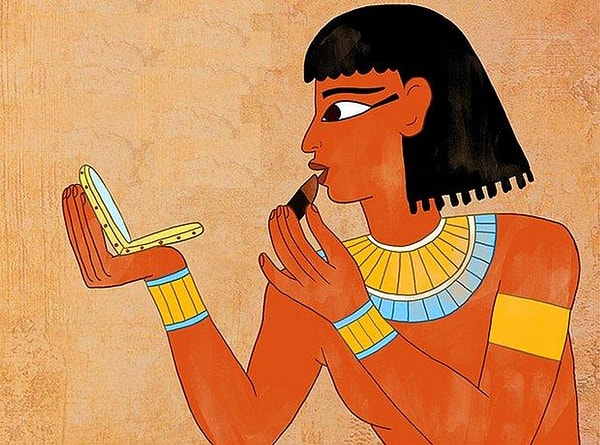
1. The Shortest Route Against Lice Was Shaving
The Greek historian Herodotus writes that Egyptian priests shaved their whole bodies every other day so that no lice or other impurity would cling to them. Short-cropped or shaved heads were common among ordinary people too, and the wealthy wore wigs woven from human hair on top. The lice did not give up, though. Nits have been found in the hair of mummies and fine-toothed lice combs in tombs.
2. They Even Had Recipes For Body Odour
The medical text known as the Hearst Papyrus recommends crushing lettuce, myrrh, incense and a plant whose name has not been deciphered and rubbing the mixture on the body to prevent the smell of sweat. The cones seen on heads in wall paintings were long thought to be only an artistic symbol. In 2019, real wax cones were found in tombs at Amarna. The idea that they melted and released perfume is still unproven, and the excavation team leans more towards a religious meaning.
3. Eyeliner Was Far More Than Decoration
The black eye paint worn by men and women alike was made from galena, a lead mineral, and the green one from malachite. According to the Metropolitan Museum of Art, Egyptians believed this paint prevented eye diseases, and the dark colour also reduced the glare of the sun. In 2010, a laboratory study using samples from containers in the Louvre showed that lead compounds increased the immune response in skin cells. It is worth noting that today we know lead is toxic.
4. Priests Washed Four Times A Day
According to Herodotus, priests washed with cold water twice during the day and twice at night. Wealthy houses at Amarna had a stone slab set in a corner. A person would crouch on the slab while a servant poured water over them. There is no trace of such a room in the homes of ordinary people, whose bathing place was most often the Nile.
Perfume, laundry, toothpaste and manicures all had their place in Egyptian life.
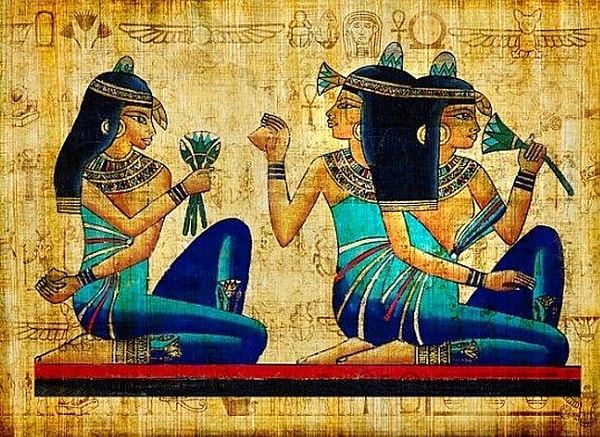
5. The Most Famous Scent Burned In The Temples
The mixture called kyphi was used both as incense and as medicine. Plutarch writes that it was made from 16 ingredients, and recipes from the Ptolemaic period survive on the walls of the temples of Edfu and Philae. Honey, wine, raisins, myrrh and juniper are a few of the ingredients mentioned. The perfume named after the city of Mendes in the Nile Delta was also famous in antiquity, and in 2012 the remains of a perfume workshop were found there.
6. Laundry Was A Man's Job, And A Risky One
In the Middle Kingdom text known as the Satire of the Trades, which mocks professions one by one, the washerman is described as a man working on the riverbank with crocodiles for neighbours. Linen garments were cleaned by beating and rubbing them in water and then wringing them out.
7. A Toothpaste Recipe Was Written On Papyrus
The oldest known written toothpaste recipe appears on a Greek papyrus from the 4th century AD kept in the Austrian National Library in Vienna: rock salt, mint, dried iris flower and pepper were mixed with saliva and rubbed on the teeth. In earlier periods the real problem was wear rather than decay, because sand and stone dust in bread ground the teeth down. Dental care was a speciality of its own. The titles of Hesy-Re, who lived in the 27th century BC, include 'chief of dentists'.
8. The Palace Even Had Chief Manicurists
A tomb found at Saqqara in 1964 belongs to two men named Niankhkhnum and Khnumhotep. Both held the title 'chief of manicurists' in the palace of the 5th Dynasty pharaoh Niuserre, and the walls of the tomb show barbers, manicurists and pedicurists at work.
The Nile gave life, but it was also a source of disease.
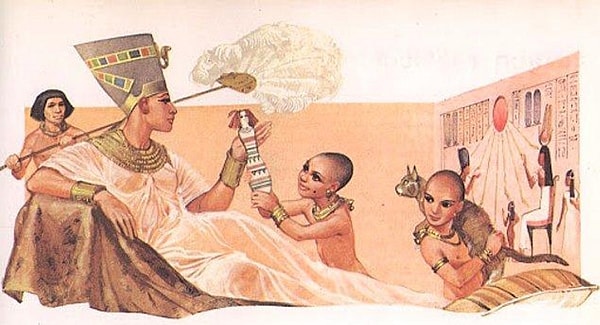
9. Oils And Ointments Were An Everyday Need
In the hot, dry climate, ointments were prepared from plant and animal fats to keep the skin from drying out. Scented oils were so valuable that alabaster ointment jars were placed in Tutankhamun's tomb.
10. Three Days Of Purging Every Month
Herodotus writes that Egyptians purged themselves for three consecutive days every month with emetics and enemas, because they believed diseases came from the food people ate. The same historian counts the Egyptians as the healthiest people in the world after the Libyans. Modern medicine does not recommend regular use of laxatives.
11. The Nile Was Both Lifeline And Source Of Disease
Water for drinking, bathing, dishes and laundry often came from the same river. In 1910, pathologist Marc Armand Ruffer found calcified eggs of the bilharzia parasite in the kidneys of two mummies from the 20th Dynasty. The parasite, transmitted through freshwater snails, is still found in many warm regions of the world today.
12. Towers And Fishing Nets Against Mosquitoes
According to Herodotus, those who lived above the marshes climbed towers to sleep at night, because the wind kept mosquitoes from reaching that height. Those who lived in the marshes spread the net they fished with by day around the bed at night and slept under it. If the historian is to be believed, the insects could bite through a cloak but would not even try to get through the net.
Keşfet ile ziyaret ettiğin tüm kategorileri tek akışta gör!
 Test
 Gündem
 Magazin
 Video



Send Comment