


Born With Around 300 Bones, Left With 206: 15 Research-Backed Facts About Babies


A newborn's skeleton is made up of around 300 pieces of bone and cartilage, while an adult has 206. From kneecaps to tears, here are 15 things about babies, each checked against pediatric sources and peer-reviewed studies.


Babies are born with around 300 bones, and that number drops to 206 by adulthood.
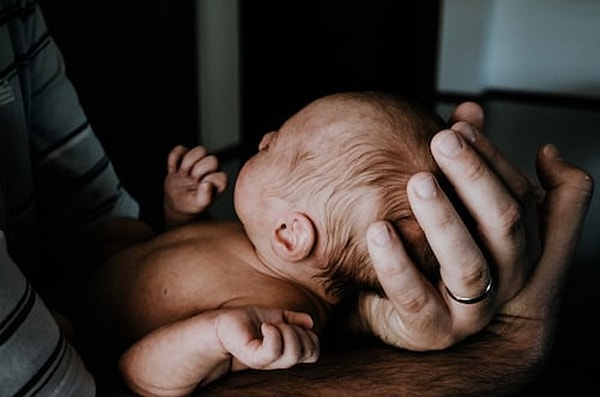
1. Babies Are Born With Around 300 Bones
According to Cleveland Clinic, a newborn has between 275 and 300 bones, while adults have 206. The difference comes from the many pieces that start out as cartilage, then harden and fuse together as the child grows. The soft spots on the skull are part of the same process and close gradually within a year or two.
2. Kneecaps Are Not Yet Bone At Birth
Older articles claim babies are born without kneecaps, but the picture is a little different. The kneecap is there at birth, only it is made of cartilage and does not show up on an X-ray. It usually starts turning into bone between the ages of 3 and 6, and the process can last into early adolescence.
3. Newborns See Your Face Best From 20 To 30 Centimetres
Hearing and smell are fairly well developed at birth, but vision is not as sharp. A newborn's visual acuity is between 20/200 and 20/400, and the distance they see most clearly is almost the same as the distance between a baby in arms and the parent's face. Everything farther away is blurry.
4. They Cry Without Tears In The First Weeks
Tear glands are not yet mature at birth. Production begins to increase at around 2 weeks, but families mostly notice tears between 1 and 3 months.
5. Putting Everything In The Mouth Is A Way Of Exploring
In the developmental milestones listed by the US Centers for Disease Control and Prevention (CDC), a 4-month-old brings hands to the mouth and a 6-month-old puts objects in the mouth to explore them. So a toy going straight from the floor to the mouth is not stubbornness, it is a stage of development.
6. The Taste Of The Carrot A Mother Eats Can Reach The Baby
In a study published in the journal Pediatrics in 2001, babies whose mothers regularly drank carrot juice in the last three months of pregnancy ate carrot-flavoured cereal months later with fewer grimaces. The researchers think flavours from the mother's diet pass into the amniotic fluid and breast milk and shape the baby's palate early on.
7. They Remember A Lullaby Heard In The Womb Months Later
In a University of Helsinki study published in PLOS ONE in 2013, mothers frequently played the lullaby Twinkle Twinkle Little Star to their babies during the last three months of pregnancy. In measurements taken right after birth and at 4 months, these babies' brains responded more strongly to the melody than those of babies who had never heard it.
8. Their Cries Carry The Melody Of Their Mother Tongue
In 2009, researchers from the University of Würzburg analysed the cries of 30 French and 30 German newborns. The French babies, only a few days old, cried more often with a rising melody and the German babies with a falling one, which matches the stress patterns of the two languages. The finding was published in Current Biology, but summing it up as 'babies cry in their mother tongue' would be an overstatement. What changes is the melody of the sound.
9. The First Real Smile Takes 6 To 8 Weeks
Newborns sometimes smile even in their sleep, but those smiles are reflexes. Smiling in response to someone usually begins at 6 to 8 weeks. Laughing out loud comes at around 4 months on average.
10. A Mother's And A Baby's Heart Rhythms Can Synchronise
In 2011, Ruth Feldman and her team at Bar-Ilan University observed mothers and their 3-month-old babies during face-to-face play. In moments when they made eye contact, shared the same emotion and vocalised to each other, the two heart rhythms moved closer together, with a lag of less than a second.
11. They Spend Most Of The Day Asleep
According to the National Sleep Foundation, newborns sleep 14 to 17 hours a day. For babies aged 4 to 12 months, the American Academy of Sleep Medicine recommends 12 to 16 hours including naps. This sleep does not come in one piece but in short stretches.
12. They May Shed The Hair They Were Born With And Grow New Hair
Many babies start losing their first hair at 2 to 3 months. The drop in hormone levels after birth plays a part, and the back of the head rubbing against the mattress makes the bald patch more visible. New hair usually comes in between 6 and 12 months, and its colour or texture can differ from the first.
13. In The Womb They Are Covered In Fine Hair
This fine hair is called lanugo and appears between weeks 16 and 20 of pregnancy. Most babies shed it before birth. The shed hair is swallowed with the amniotic fluid and comes out in meconium, the baby's first stool. Lanugo is seen more often in premature babies and disappears on its own within a few weeks.
14. Their Heads Are Huge Compared With Their Bodies
At birth, the head makes up about a quarter of the body's length. In an adult this falls to around 15 percent. The brain is also only about a quarter of its adult weight at birth and grows rapidly in the first years to close the gap.
15. Eye Colour Can Change Until The First Birthday
Melanin, which gives the eye its colour, starts being produced as the baby is exposed to light, while genes decide how much is made. The change usually becomes noticeable between 3 and 9 months. According to Cleveland Clinic, it can take up to the age of 3 for the permanent eye colour to settle.
Keşfet ile ziyaret ettiğin tüm kategorileri tek akışta gör!
 Test
 Gündem
 Magazin
 Video



Send Comment