


Tahini Halva After Fish: What Turkish Folk Wisdom Says And What The Evidence Shows


In Turkey, a plate of tahini halva at the end of a fish dinner is treated as part of the meal. Yet no scientific reason for this habit has ever been put forward. What exists instead is a collection of explanations passed from person to person.


From fried anchovies to sea bass, the table often closes with the same dessert.
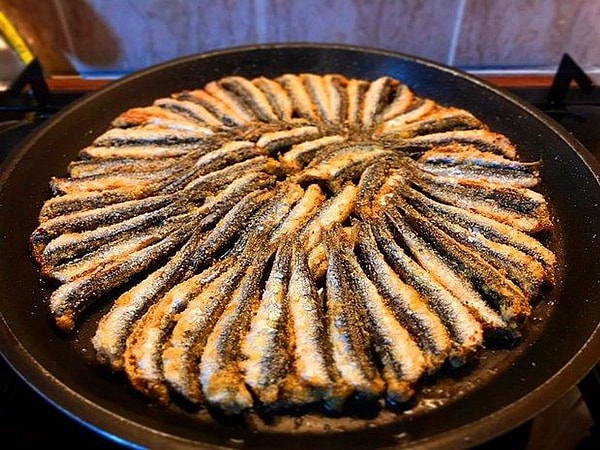
Whether the fish is cooked at home or ordered at a fish restaurant, seeing a slice of tahini halva on the last plate surprises no one in Turkey. The question 'Why halva?', which newspapers ask again from time to time, has no single, definite answer. Some explanations grew out of a joke, some out of old kitchen beliefs, and some have simply been copied around the internet without a source.
The Best-Known Explanation Is Actually A Joke
A common saying goes: 'Halva is eaten after fish so the fish understands it is dead.' The joke rests on the place of halva in Turkish culture. According to a study by Gül Yılmaz and Sinem Akman published in the journal Gastroia in 2019, halva is also made for births, holy nights and send-offs to military service, but society associates it most strongly with death. For anyone who knows funeral halva, the joke writes itself.
The other explanations are folk beliefs, and none is supported by scientific evidence.
No Milk Or Yogurt After Fish
A widespread belief holds that eating a milk dessert or yogurt after fish causes poisoning. There is no study showing that eating fresh fish together with dairy is harmful. The known danger is histamine, which builds up in fish that has not been chilled properly. According to the US Food and Drug Administration (FDA), this substance is not destroyed by cooking or freezing, and the symptoms come from the fish itself. That is why buying fish fresh, chilling it right away and cooking it without delay matters far more than the choice of dessert.
Hot And Cold Foods
According to an old folk belief, fish is a 'cold' food, while halva, made with sesame, tahini and sugar, counts as 'hot'. Eating one after the other is thought to restore the balance and ease digestion. Similar classifications exist in many folk cuisines. There is no scientific evidence that halva aids digestion or provides such a balance.
The Heavy Metal Claim Has No Source
It is often written online that tahini removes the heavy metals in fish from the body and balances stomach acid. No study confirms these claims, and most of these articles rely on neither research nor a named expert. What is known is this: tahini halva is made from sesame paste and sugar, so it is a dessert rich in fat and sugar and high in energy.
Halva's own story is much older than this habit.
The word comes from the Arabic root 'hulv', meaning sweet, and halva recipes appear in Arabic texts from the 13th century. According to the 'Matbah-ı Âmire' entry in the TDV Encyclopedia of Islam, Topkapı Palace had a separate helvahane next to the privy kitchen, where sherbet, jam and medicinal pastes were prepared alongside halva.
In Ottoman documents the word halva is used not for a single dessert but for many sweets made with flour, fat, honey or sugar. The helva sohbetleri, winter-night gatherings in palaces and large mansions where halva was served, continued in Edirne until 1990.
Keşfet ile ziyaret ettiğin tüm kategorileri tek akışta gör!
 Test
 Gündem
 Magazin
 Video



Send Comment