


Why Can't We Sleep in Alien Beds? Science Explains the Hidden Cause Behind the "First-Night Effect"


You went to a hotel for a holiday, the bed is comfortable, the room is quiet, and you have no stress for the next day, but if you still can't sleep, you're not alone. The scientific world has explained the reasons that make it difficult for you to fall asleep on the first night when you go to a new place. Moreover, the reason for this insomnia could be much more interesting than you think. Scientists call this situation the 'first night effect'.
Here are the details.

Why Can't We Sleep Anywhere Other Than Our Own Bed?
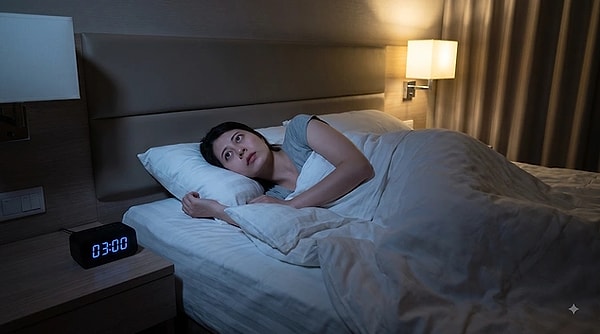
When you go to a new place, even when you settle into a hotel room for a holiday, everything may seem perfect at first glance. The bed is comfortable, the room is quiet, the lights are off, and there is no significant work waiting for you the next day. Despite this, you may not be able to sleep for hours, wake up several times in the middle of the night, or open your eyes earlier than usual in the morning.
Moreover, it doesn't make much difference whether the place you stay is a hotel room or a close friend's house. Many people staying in a different place can have a similar experience. The surprising reaction of our brain to a new environment is behind this. Here is the scientific world's explanation for this situation:
Your Brain Monitors the Environment Even While Sleeping
Scientists describe this situation as the 'first night effect'. It can be difficult to fall asleep on the first night spent in a new environment, you can wake up more frequently during the night, and the total sleep time can decrease. This situation has been observed in dozens of different studies.
Sleep researcher Anna Wick from the University of Freiburg in Switzerland says that this effect could be an adaptation mechanism that keeps the brain alert even while sleeping in a foreign environment. So the problem is not always the discomfort of the bed.
Your brain may not fully recognize the place you are in yet.
Why is the Brain More Alert in a New Place?

Ahmad Mayeli, a psychiatry professor and sleep researcher from the University of Pittsburgh, points out that people can sleep on average 20 to 30 minutes less in a new environment.
Moreover, the issue is not just about the reduction in sleep duration. In Mayeli's research, it was observed that the frontal region of the brain, associated with deep sleep, was more active in a new environment. This suggests that the brain can maintain a certain level of wakefulness even during sleep.
The point Mayeli draws attention to is quite striking: Even though our brain knows that hotel rooms in the modern world are safe, it has not completely given up the tendency to be cautious in a foreign environment. In other words, while you are sleeping, your brain may continue to check the environment, asking 'Is everything okay here?'
Why Is The First Night Harder, Then Why Does It Get Easier?
So why especially the first night? Because by the second night, the brain is already familiar with many details of the room. The sound of the air conditioner, the noise coming from the corridor, the feel of the bed, the light of the room, and other stimuli in the environment do not feel as foreign as they did on the first night.
Anna Wick from the University of Freiburg also points out that existing evidence shows that the first night effect decreases on subsequent nights. Therefore, it's not surprising that you can fall asleep much more easily the next night in a place where you tossed and turned all night on the first night.
Everything Cannot Be Explained by the Brain Being on Alert
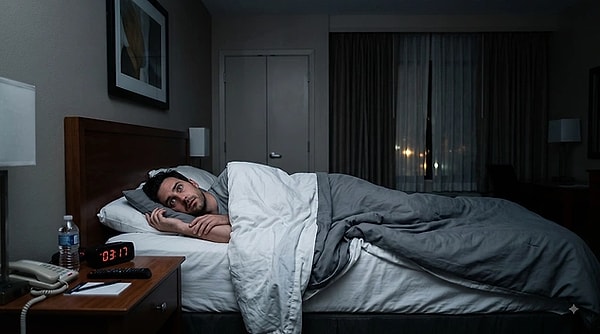
However, the only reason you can't sleep in a new place is not just the brain checking the environment. Psychologist Lisa Strauss, who studies sleep disorders, points out that even the journey itself can negatively affect sleep. Moreover, you don't even need to change the time zone for this.
A long journey, change of usual sleep time, a flashing light in the room, different sounds or tensions in the place you are can disrupt sleep. Especially emotionally exhausting situations like visiting family can also be added to this.
There is even an interesting detail: Some people can sleep better on the first night in a new place. A tiring journey that lasts all day or the feeling of getting away from the stress of daily life can suppress the first night effect in some people.
The Thought of “What If I Can't Sleep Again?” Makes It Even Harder
There is also a mental aspect to it.
According to Strauss, the first night effect can be more pronounced in people who are more prone to anxiety. Because when a person starts thinking 'I won't be able to sleep here' before getting into bed, this expectation can turn into a self-fulfilling cycle.
First, you think you won't be able to sleep.
Then you look at the clock.
As you realize you can't sleep, you worry more.
As anxiety increases, your mind works more and it becomes even harder to fall asleep.
So sometimes what keeps you awake is not the new bed, but the fear of insomnia itself.
So How Do I Get Rid of The First Night Effect?
It may not always be possible to completely eliminate it. However, a few simple methods recommended by experts can facilitate the transition to sleep in a new place.
Don't change your sleep time: Try to go to bed as close to your home sleep time as possible, even if you are on vacation.
Make the room familiar: You can use a familiar item you brought from home, like a favorite pillow or blanket.
Get used to the bed before going to sleep: Instead of trying to sleep immediately, you can do a calm and familiar activity like reading a book in bed for a few minutes.
Keep the room dark and cool: Create a suitable temperature and dark environment for sleep.
Leave the screen in advance: Moving away from the phone and other screens before going to bed can support the sleep routine.
Don't force your mind: Instead of the thought 'I must sleep immediately', try to allow your body to rest.
Imagine an image that makes you feel safe: Strauss suggests that people with anxiety imagine a familiar environment where they feel safe and comfortable.
The first night effect is not a matter of concern for most people. Ahmad Mayeli from the University of Pittsburgh points out that one or two hours of sleep lost in a single night can usually be compensated. However, the situation can change if there is an important meeting, exam, competition or other event the next day.
Therefore, Mayeli's suggestion is quite simple:
If you have an important day, reach your destination the night before.
This way, you can give your brain time to get used to the new environment.
Keşfet ile ziyaret ettiğin tüm kategorileri tek akışta gör!
 Test
Test
 Gündem
 Magazin
 Video
Video
Read More






Send Comment