


They Turned Train Tracks into a Solar Farm: 11,000 Trains Passed, Not a Single One Broke


So far, we have used railways only to get from one place to another. But what if the rails were also a power plant? A project implemented in Switzerland managed to break the mold. Removable solar panels placed between the train tracks underwent rigorous tests for a full year. Despite more than 11,000 trains passing over it, the system worked flawlessly, leading European and Asian countries to pursue this technology.
So, how does the system that covers the rails with solar panels work? Is there any danger? How is maintenance performed? Here are the details.

World First: Solar Panels That Can Be Attached and Detached Like a Zipper
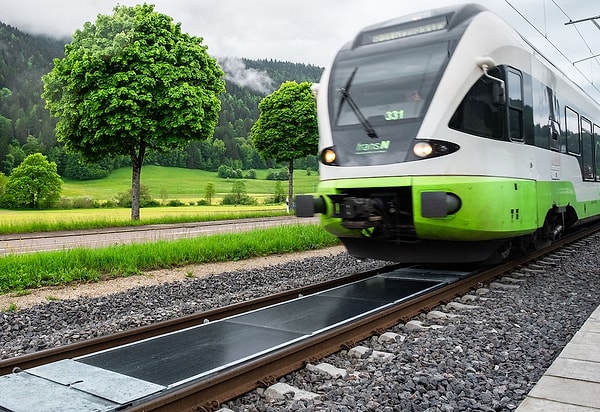
The idea of placing solar panels between the rails had also been voiced in Germany or Japan before. However, what makes SunWays unique in the world is that the system operates on a 'plug and play' principle.
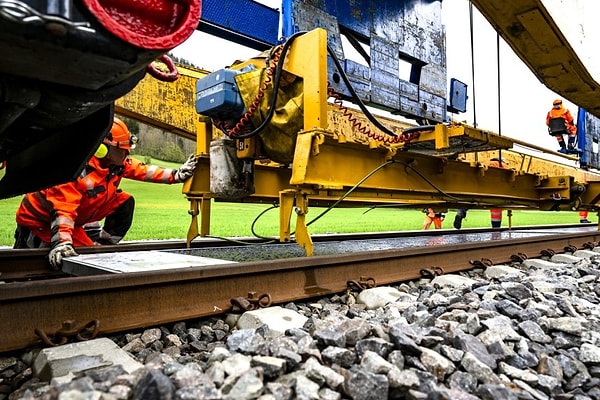
Because railways require constant maintenance. Therefore, if you fix the panels to the rails, you cannot maintain the rails. The Swiss team developed a special machine together with a company called Scheuchzer. This machine lays the panels between the rails at a speed of 300 meters per hour, almost like a zipper.
Moreover, when a fault occurs on the rails, a 6-meter module consisting of three panels can be removed in just 10 minutes.
Tested for a Year: Over 11 Thousand Trains Passed Over It!
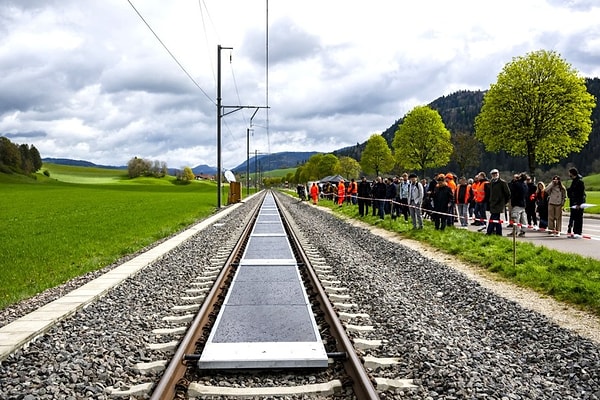
At the beginning of this environmentally friendly and rational project, there were two questions in everyone's mind: Would the vibrations created by the trains shatter the panels? Or would the sunlight reflected from the panels blind the drivers and cause accidents?
A year-long testing process eliminated both of these concerns. TransN, the company operating the line, announced that they did not receive any complaints about reflections from a single driver. More importantly, the problem of the panels getting dirty resolved itself. While it was expected that the panels positioned at ground level would be covered with snow, mud, and dust, the strong air current created by the fast-moving trains cleaned the panels like a vacuum cleaner. This surprise 'wind effect' also significantly reduced the maintenance costs of the system.
Countries Lined Up!
Following the successful completion of the tests, European and Asian countries lined up. While the French national railways (SNCF) sat down at the table for the technology; Italy, South Korea, and Indonesia took action to start the project on their own lines.
So, How Far Can The Produced Energy Be Carried?
There is a small hitch when it comes to distance. With the current infrastructure, it is possible to transmit the electricity generated on the rails up to a maximum of 500 meters efficiently and economically. Additional infrastructure investments are required along the lines for the system to reach its full potential and carry energy much further.
Still, this distance limit does not overshadow the interest in the project. In this case, it seems that railways will not only carry passengers and cargo, but also the clean energy of the future.
Keşfet ile ziyaret ettiğin tüm kategorileri tek akışta gör!
 Test
Test
 Gündem
 Magazin
 Video
Video






Send Comment