


The Eighth Wonder of the World: Gaddafi’s Crazy Water Project in the Desert


The 'Great Man-Made River', a colossal network buried beneath the Sahara Desert in Libya, stretches over 4,000 kilometers and shatters preconceptions as the largest irrigation project in human history. This gargantuan system, financed entirely by oil revenues without a single penny of international credit during Muammar Gaddafi's era, serves Libyans rainwater that fell approximately 40,000 years ago, during the Ice Age when Neanderthals roamed the earth.

The Sahara Desert, one of the world's most arid landscapes, plays host to an astonishing subterranean river, pushing the boundaries of modern engineering.
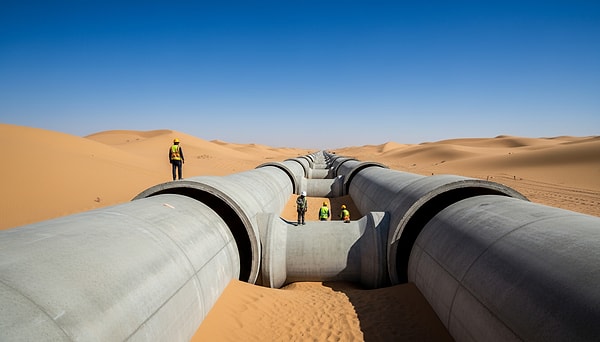
Initiated in 1984 and taking over 20 years to complete, the 'Great Man-Made River' project channels colossal water reserves from hundreds of meters beneath the desert to cities along the Mediterranean coast via extensive piping. Recognized by the Encyclopaedia Britannica as the 'largest irrigation project ever constructed by human hands', this monumental structure commands attention with its staggering cost of 25 billion dollars, surpassing even the budget for the expansion of the Panama Canal.
The figures that make this project unparalleled in modern engineering are of the kind that stretch the human imagination to its limits:
When the system reaches its maximum capacity, it can transport a whopping 6.5 million cubic meters of water per day. To put it in perspective, this volume is enough to fill up 2,600 Olympic swimming pools in just 24 hours.
Each of the precast concrete pipes laid underground has a diameter of a full 4 meters. This width implies that a car could easily pass through the pipe without any difficulty.
In just the initial phase of the project, a staggering 85 million cubic meters of soil was excavated. This volume surpasses even the amount of soil used in the construction of the world's largest dams.
The lifeblood of the system is the Nubian Sandstone Aquifer, which seeped underground about 40,000 years ago, during a time when the Sahara Desert was blanketed with rivers, lakes, and lush green savannas.
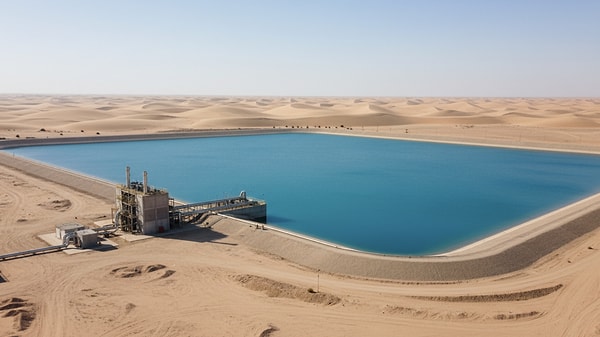
This colossal subterranean ocean, which runs beneath the borders of four countries - Libya, Egypt, Chad, and Sudan - is pumped out through 1,300 wells located 500 to 800 meters beneath the desert surface.
While neighboring countries like Saudi Arabia and Jordan are spending billions of dollars to build massive energy-consuming seawater desalination plants, Libya has cleverly opted for a different approach: they've harnessed the natural topography. Since the water sources in the south are situated at a higher altitude than the northern coasts, a significant portion of the water flows northward on its own accord, without the need for electric pumps, thanks to gravity.
The agricultural revolution in Libya was ignited when the system reached Benghazi in 1991, and subsequently extended to the capital, Tripoli, in 1996.
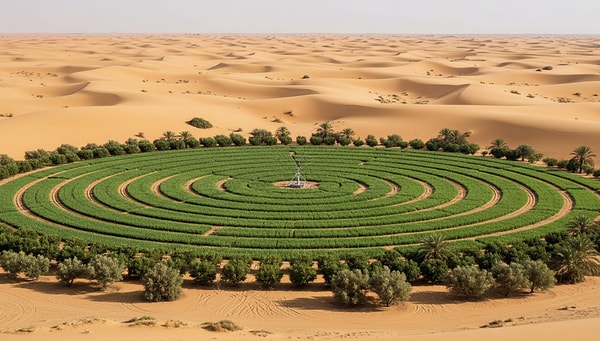
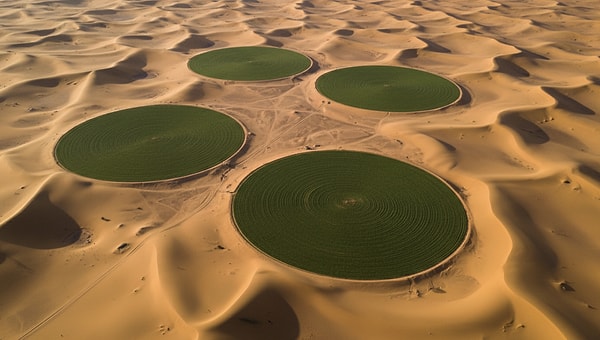
Wheat, barley, and fruit have begun to be cultivated in desert lands that have never seen water before, liberating cities from their dependence on external resources.
However, much like oil, this glacial water is a fossil resource that is never replenished by existing rainfall. Scientists predict that at the current rate of extraction, these waters will be exhausted in 60 to 100 years. Warnings are being issued that this timeframe could significantly shorten if Egypt or Sudan also increase their water extraction in the region.
During the Second Libyan Civil War, spanning from 2014 to 2020, a colossal river system was sabotaged, with hundreds of its wells dismantled and pump stations bombed. However, thanks to a brilliantly devised "backup system" by engineers in the 1980s, the system did not collapse entirely.
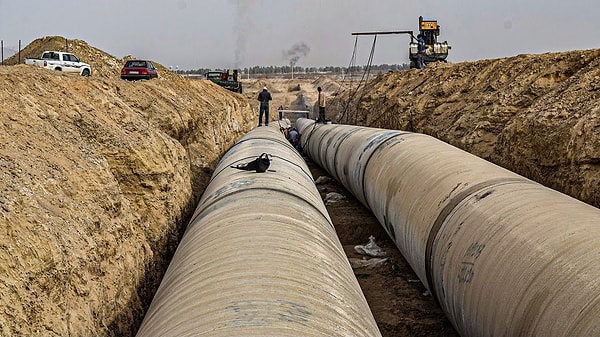
Despite suffering severe damages, it still remains as the largest source of fresh water for Libya's population of 7 million today.
This colossal project, which stands as the greatest testament to humanity's ability to shape nature when provided with will and resources, also serves as a global warning to the entire world: Even the most flawless engineering of the world has an expiration date if the resources it consumes are not renewed.
Keşfet ile ziyaret ettiğin tüm kategorileri tek akışta gör!
 Test
Test
 Gündem
 Magazin
 Video
Video



Send Comment