


Revolutionary Solar Panels Installed Under European Highways for Clean Energy


Europe is making a groundbreaking move in line with its carbon-neutral mobility goals. Traditional highways are being transformed into smart transportation networks that generate their own energy, equipped with solar panels, artificial intelligence, and wireless charging systems.

Across Europe, the aging road infrastructure is undergoing a massive modernization drive, completely transforming itself with a focus on sustainability and technology.
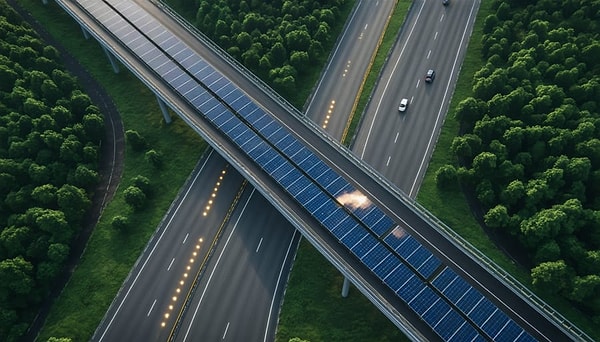
Highways, which have been perceived merely as passive heaps of concrete that vehicles pass over, are now transforming into massive clean energy power plants, thanks to the special photovoltaic (solar energy) panels installed on them.
With the advent of new technology, roads are being coated with special layers of tempered glass and polymer modifications, which are resistant to heavy traffic loads, non-slip, and self-cleaning. These smart surfaces, which directly convert sunlight into electricity, store the energy they produce in lithium-ion battery groups strategically placed along the road. The harvested clean energy is utilized in a wide range of areas, from powering street lamps to meeting the electricity needs of nearby residential areas.
One of the most revolutionary advancements brought about by smart roads is the wireless charging technology, set to consign "range anxiety" to the annals of history.
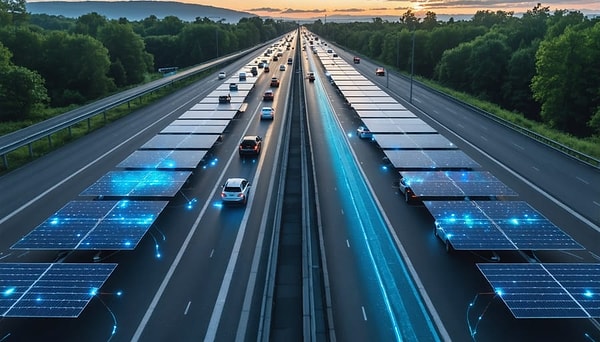
Thanks to systems integrated beneath the road surface, electric vehicles (EVs) can charge wirelessly while on the move.
Pilot applications implemented across Europe have already started to yield striking results:
The Netherlands (SolaRoad): A 70-meter solar-powered bicycle path has exceeded expectations by generating over 9,800 kWh of energy annually.
France (Wattway): Panels installed on the road surface in the Normandy region successfully power street lights and charging stations.
Sweden (eRoadArlanda): A rail system embedded in the road surface near Stockholm Airport provides continuous charging for commercial vehicles in transit.
Germany (A9 Autobahn Test Area): The digital highway between Munich and Nuremberg serves as a live laboratory for autonomous driving, utilizing artificial intelligence and vehicle-to-infrastructure (V2I) communication technologies.
Even though only 15% of the European highway network has advanced smart features, the contribution of this transformation to the environment and economy is colossal.
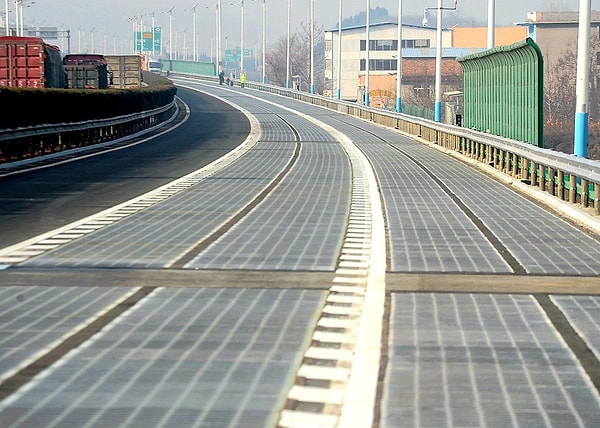
According to research, a single kilometer of smart road can reduce annual carbon dioxide emissions by a whopping 250 tons. Thanks to artificial intelligence-supported sensors, weather conditions, humidity, and traffic congestion are monitored in real-time.
The system mitigates congestion and reduces urban fuel consumption by 20% by automatically adjusting traffic lights and digital signs. Furthermore, the self-healing ability of smart materials used in roads leads to a 30% reduction in road maintenance costs.
Even though the initial setup costs are higher compared to traditional asphalt, smart highways quickly recoup their expenses through methods such as generating electricity, dynamic road pricing, and data sales.
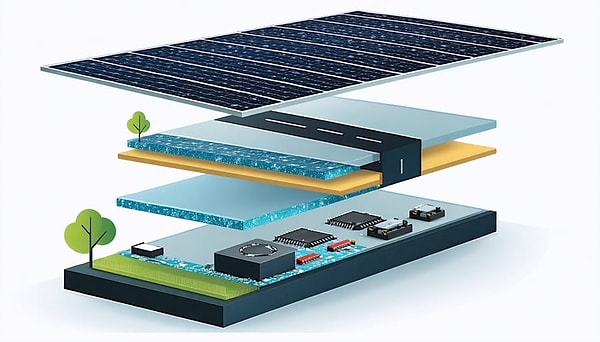
This integrated infrastructure approach, which aligns perfectly with the European Union's climate objectives, will not only reduce the carbon footprint; it will also serve as the lifeblood of self-sufficient smart cities that are shaping the autonomous and connected world of tomorrow.
Keşfet ile ziyaret ettiğin tüm kategorileri tek akışta gör!
 Test
Test
 Gündem
 Magazin
 Video
Video



Send Comment