


Revolutionary Steel Ball Cylinder Developed to Save Lives and Protect Existing Buildings


What happens if the high-tech systems protecting buildings during a severe earthquake lose power? A scientist from the University of Sharjah has developed a mechanical damper that operates wirelessly and without software, immune to cyber attacks or power outages. This patented new device aims to prevent the collapse of buildings even in the worst disaster scenarios, operating purely on the principles of physics.

The greatest challenge in earthquake engineering is not merely keeping the building upright; it's about neutralizing that lethal energy of swaying, spinning, and colliding which leads to the cracking of columns, the rupture of the infrastructure, and the collapse of walls.
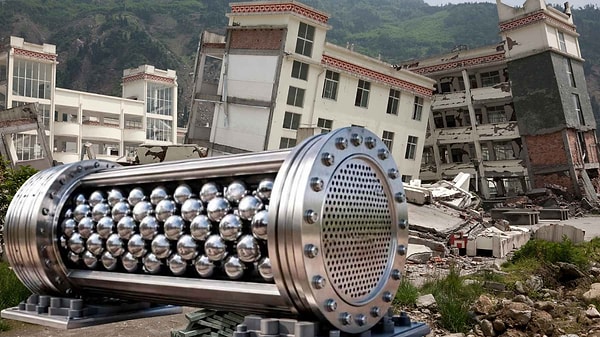
Professor Moussa Leblouba, a Civil Engineering professor at the University of Sharjah, has developed a surprisingly simple system that disrupts the norm, focusing precisely on this issue. This device, which requires no computers, sensor networks, or power source, draws its energy solely from movement and contact.
At first glance, this device doesn't seem like part of a smart building, but rather resembles a car shock absorber. At the heart of the system is a hollow steel cylinder filled entirely with solid steel balls, and a moving shaft that passes through this cylinder.
When the structure is set in motion by an earthquake tremor, fierce winds, or heavy train traffic, this central shaft begins to slide back and forth among the compressed steel balls.
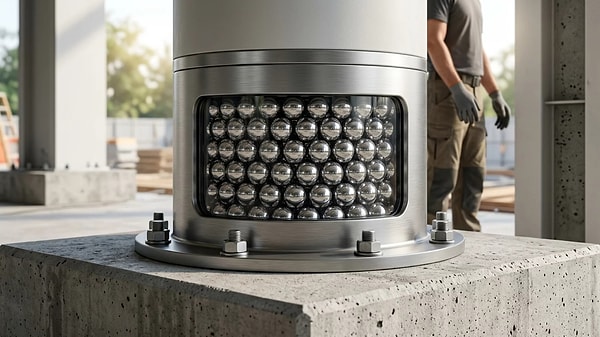
The short rods on the mill exert an immense pressure on the ball bearings. This mechanical friction created doesn't transfer the destructive shaking energy of the earthquake to the building's load-bearing columns. Instead, it transforms it into heat and controlled motion within the device, flinging it into the air.
Numerous major earthquake disasters often bring with them power outages, severed communication lines, and fires.

Thus, digital protection systems, which are in constant need of energy, can become the weakest link in the system at the most critical moment.
As stated in the official patent application, this steel ball system is a completely passive device. It requires zero electrical power to operate. Thanks to this feature, it provides a flawless shield for critical infrastructures such as hospitals, bridges, laboratories, and communication centers where the electricity supply must not be interrupted, or even if it is, protection must continue. In a nutshell, this device quietly carries on its duty, even when the world around it is experiencing its worst day.
One of the most thrilling claims about the invention is its ease of integration into existing buildings.
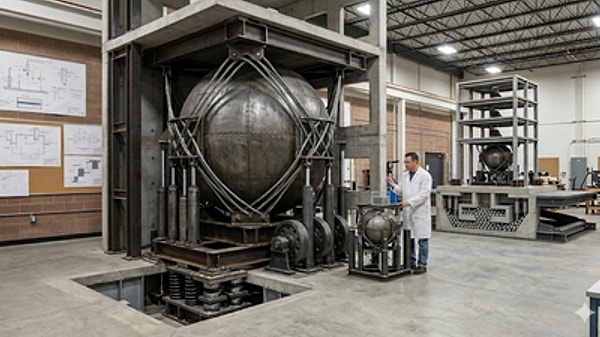
Thousands of old structures in earthquake-prone areas were built long before today's seismic regulations came into effect. Demolishing and rebuilding these buildings would entail a colossal cost.
The patented device, thanks to its detachable and portable structure, can be retrofitted to the structural elements of existing buildings. Moreover, as its components can be separated, there's no need to discard the entire unit in the event of earthquake damage; the system can be restored to its original state simply by replacing the damaged steel ball or shaft.
In the initial laboratory tests, the device was measured to have a vibration damping (energy elimination) rate of 14 percent.
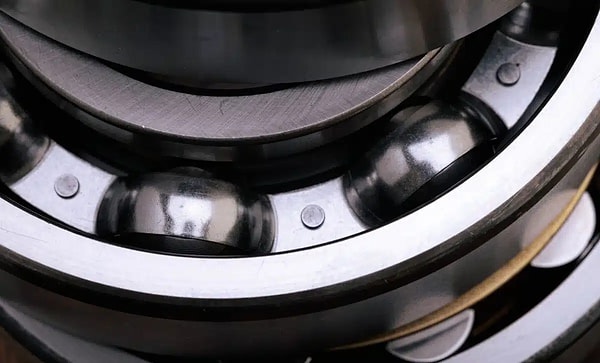
This is scientific proof that the device can reduce vibrations in a measurable manner. So far, the tests have employed very small movements, ranging from 0.04 to 0.2 inches.
Experts emphasize that this device cannot replace earthquake regulations, quality concrete, or proper architectural design on its own. However, it does provide a fantastic tool for engineers who are looking for a solution that doesn't require a lot of power, is easy to maintain, and is cost-effective. In the next phase of the project, large-scale tests will be conducted with real seismic loads on massive shake tables. If these tests are also successfully completed, it won't be high technology that saves our old buildings, but the pure physics of steel balls.
Keşfet ile ziyaret ettiğin tüm kategorileri tek akışta gör!
 Test
Test
 Gündem
 Magazin
 Video
Video



Send Comment