


Plastic Grass on the Ocean Floor: New Zealand's Bold Experiment Attracts Swarms of Fish


Seagrass meadows are rapidly disappearing worldwide, despite being vital nurseries and feeding grounds for young fish. To counteract this loss, scientists in New Zealand have come up with an unconventional solution: artificial seagrass made from plastic.
Here are the details...

Dr. Mark Morrison, a fisheries ecologist from NIWA, New Zealand's national institute for water and atmospheric research, emphasizes the significant reliance of coastal fish on shallow seagrass meadows for shelter and nourishment.
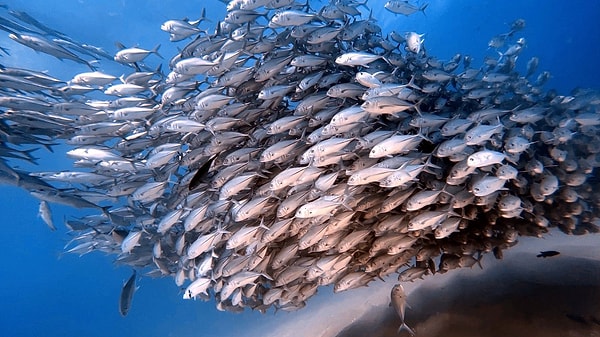
Over the past century, the sediment carried into the sea due to coastal development has wiped out a large portion of the seagrass meadows along the coast of New Zealand. The meadow area in Whangarei Harbour, which spanned 12 to 14 square kilometers in the 1960s, has virtually disappeared today. In contrast, Tauranga Harbour lost 90% of its shallow seagrass meadows between 1959 and 1996. Consequently, the production of young fish associated with these areas also vanished along with their habitat.
In 2009, under the leadership of Dr. Morrison, a team accomplished a first in New Zealand by establishing large-scale artificial seagrass beds in the Whangapoua estuary located on the Coromandel Peninsula.
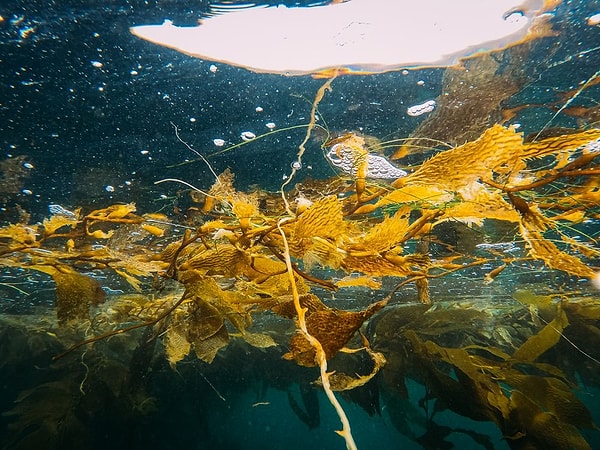
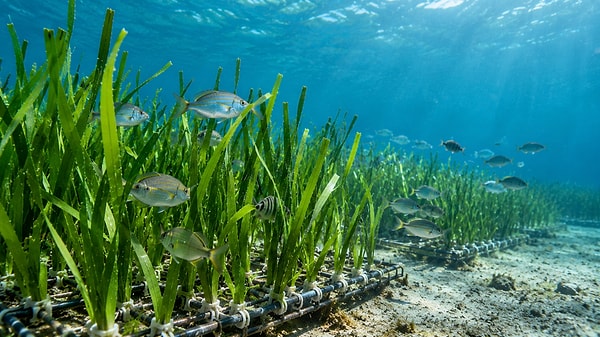
Artificial meadows were constructed from long plastic stems attached to wire frames. The team prepared mats at six different density levels, ranging from sparse to very dense, and measured how many fish each density attracted using special nets. The number of fish increased as the density of the meadow increased, but it plateaued at a certain point at the highest density. Morrison attributes this to nutrient limitation, as the fish form a feeding line in the direction of the current and prey on drifting microscopic crustaceans.
The study identified a total of 19 different fish species, primarily young grouper and trevally, within the artificial grasslands.
The research team is now gearing up for the next step: In the upcoming study led by Dr. Darren Parsons, some juvenile fish will be tagged and released into artificial seagrass beds. Months later, these fish will be re-examined to measure how their growth and survival rates have varied according to the density of the seagrass.
Keşfet ile ziyaret ettiğin tüm kategorileri tek akışta gör!
 Test
Test
 Gündem
 Magazin
 Video
Video



Send Comment