


How To Store Onions And Garlic: 11 Tips To Keep Them Fresh


Onions sprouting in the back of the pantry, garlic suddenly turning moldy... Sound familiar? Stored in the right place and the right container, these two vegetables can last for months. And if you keep garlic in oil, there is an important food safety warning below.


Pick a cool, dry, dark spot and let them breathe.
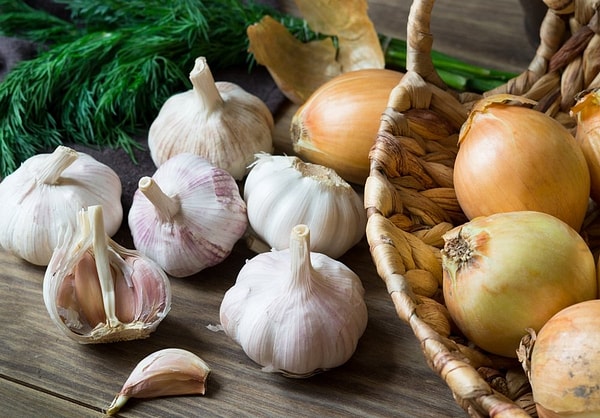
Choose a cool, dry and dark corner
According to the European Food Information Council (EUFIC), the ideal temperature is 7–12°C for onions and around 16°C for garlic. If you store them together, 10–15°C is a good middle ground. A ventilated pantry or an enclosed balcony out of the sun works well. In a warm kitchen of 20–30°C, sprouting and mold speed up.
Use a mesh bag or basket instead of a plastic bag
Onions and garlic need air. A wicker basket, a mesh bag or an open paper bag lets air circulate. In a closed plastic bag, moisture builds up and mold starts. If you keep them in a sack, do not put it directly on a cold, damp floor; place a wooden crate underneath.
Do not put them in the same basket as potatoes
This is the most common mistake. According to EUFIC, the moisture potatoes release speeds up the rotting of onions. Keep them in separate baskets, ideally away from each other. The strong smell of onions and garlic can also seep into nearby foods such as eggs.
Store garlic as whole bulbs
The skin of garlic is a natural protector. Store the bulbs whole and separate and peel the cloves just before cooking. According to EUFIC, under the right conditions garlic keeps for 3–5 months and onions for 1–2 months.
Whole onions stay out of the fridge, but cut onions belong in it.
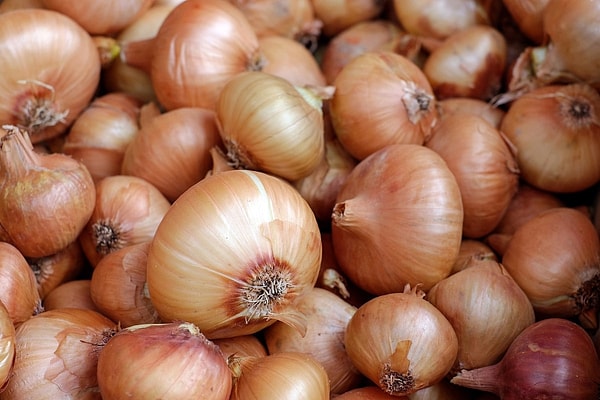
Do not put whole onions in the fridge
The humidity in the fridge causes mold and sprouting in unpeeled onions and garlic. For long-term storage, choose a cool pantry over the fridge.
Keep cut onions in a closed container in the fridge
Half-used or chopped onions are the exception: their place is the fridge. Put them in a sealed container or a zip-lock bag and use them within a week. A closed container also stops the smell from spreading to other foods.
You can chop and freeze them
Spread chopped onion in a single layer on a tray and transfer it to a freezer bag once frozen, so the pieces do not stick together. According to EUFIC, frozen onion keeps for up to a year, but its texture softens, so it suits cooked dishes better than salads. Garlic can also be frozen whole, chopped or grated in an airtight container for up to 3 months.
Do not throw sprouted onions away right away
If there is no mold and the inner layers are firm, you can remove the sprout and use the onion. For garlic, cut the clove in half and take out the green center. The taste may be slightly more bitter. Onions and garlic that are soft, dark-spotted, slimy or bad-smelling belong in the bin.
Never keep garlic in oil at room temperature.
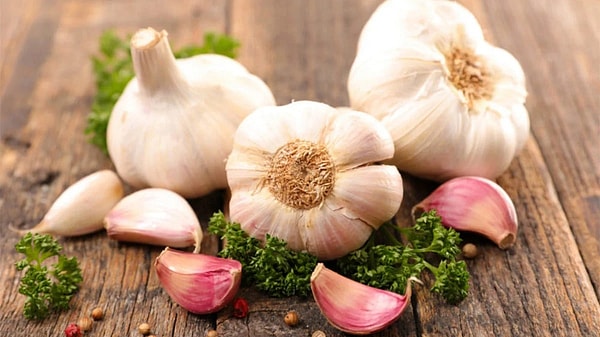
Do not store garlic in oil at room temperature
Recipes for garlic soaked in olive oil in a jar are everywhere, but there is a serious risk. According to Oregon State University's food safety guidance, low-acid vegetables like garlic can carry Clostridium botulinum, the bacterium that causes botulism. Because the space under the oil is oxygen-free, the bacterium can multiply and produce toxin at room temperature. Keep homemade garlic in oil in the fridge and use it within 4 days; freeze it if you want to keep it longer. Store-bought products are acidified against this risk.
Choose vinegar for long-term storage
According to the University of California's extension service, peeled garlic cloves can be covered in undiluted vinegar or wine and kept in the fridge. The acid in vinegar prevents the botulism bacterium from growing, so do not thin the vinegar with water. If you are pickling onions or garlic, stick to the measurements of a reliable, tested recipe.
Braid and hang your garlic
Braiding garlic dried on its stalks and hanging it in a cool, airy place is an old method familiar from village homes. In a braid, the bulbs get air without crushing each other, and they look nice in the kitchen too.
Keşfet ile ziyaret ettiğin tüm kategorileri tek akışta gör!
 Test
 Gündem
 Magazin
 Video



Send Comment