


15 Surprising Wedding Traditions From Around The World


Weddings make us think of a white dress, a cake and a dance floor, but in other corners of the world things work quite differently! In one place the bride cries for a month; in another, guests smash porcelain at the couple's door. Each of these customs carries its own lovely meaning. Here are 15 unusual wedding traditions from around the world. Let's take a look! 👇


In Scotland, the bride and groom get 'blackened' from head to toe before the wedding!

Scotland: the blackening
In the 'blackening' tradition of rural northeast Scotland, friends catch the bride, the groom or both a few days or weeks before the wedding and pour sticky mixtures of soot, flour, treacle and feathers over them. Folklorist Sheila Young of the University of Aberdeen traces the custom back to the 17th century and links it to an old feet-washing ritual. Today it is kept alive mostly around Peterhead and Fraserburgh. 🖤
Wales: the love spoon
In Wales, young men used to give the person they loved a 'love spoon' they had carved and decorated from wood. Every motif on the spoon, such as a heart, a chain or a key, carried its own message of love. A spoon dated 1667, held in the National Museum Wales collection at St Fagans, is the oldest known dated example. 🥄
Britain: Queen Victoria's white dress
Queen Victoria wore a white gown when she married Prince Albert in 1840. Some brides had worn white before her, but at the time most chose colored dresses they could wear again on other occasions. Once engravings of Queen Victoria's dress spread, white became the color of the wedding dress in the West. Because it was hard to keep clean, a white dress was also a sign of wealth. 👰
Among the Tujia people of China, the bride cries every evening before the wedding.
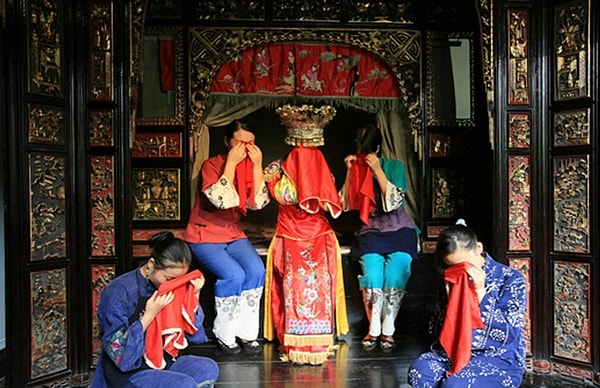
China: the crying marriage
In the 'crying marriage' tradition of the Tujia people, who live in mountainous areas of central China, the bride starts crying for about an hour every evening roughly a month before the wedding. After a while her mother joins her, then her grandmother and other female relatives. The crying is really a series of melodic laments expressing the bride's love and gratitude as she says goodbye to her family. 😢
India: hiding the groom's shoes
At weddings in northern India, the groom takes off his shoes as he enters the ceremony area. In the tradition called 'joota chupai', the bride's sisters and cousins hide them. The groom then has to bargain to get them back, and it usually ends happily with money or gifts. The game helps break the ice between the two families. 👟
South Asia: a name hidden in henna
At the mehndi ceremony held before weddings in India, Pakistan and Bangladesh, the bride's hands and feet are decorated with fine henna patterns. The henna artist often hides the groom's name or initials among the designs, and the groom's search for it is one of the couple's playful games. It is believed that the darker the henna turns out, the deeper the love will be.
Korea: catching chestnuts and jujubes
In the traditional Korean 'pyebaek' ceremony, the groom's family throws chestnuts and jujubes to the bride, who is dressed in a hanbok. Each one she catches in her skirt symbolizes a child the couple will have: chestnuts stand for sons, jujubes for daughters. The ceremony used to take place a few days after the wedding, but today it is mostly held on the wedding day.
Japan: three cups, nine sips
One of the most important moments of a Shinto wedding is 'san-san-kudo', meaning 'three-three-nine'. The bride and groom take three sips of sake each from three cups of different sizes, and then the families sip too, sealing the union of the two families. The meaning of the sips varies from source to source, but the ceremony is considered one of the oldest forms of the marriage vow.
In Sweden, if the bride leaves the table, the groom gets showered with kisses!
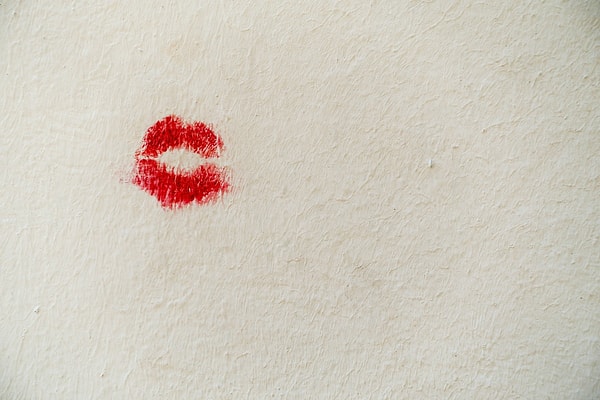
Sweden: the kissing rule
At Swedish weddings, when the bride leaves the table, female guests can line up to kiss the groom. If the groom gets up, it's the men's turn to kiss the bride. The kisses usually land on the cheek and are all in good fun. Some couples even ring a bell to announce that they are about to leave the table! 😄
France: the charivari
In the 'charivari' tradition, which dates back to medieval France, a crowd would gather in front of a newlywed couple's house and make noise for hours with pots, pans and bells. Things only calmed down once the couple came outside and offered drinks and food. The custom traveled to Canada and the US as the 'shivaree', but today it is largely forgotten.
Germany: Polterabend
In the 'Polterabend' tradition, guests gather the evening before the wedding and smash old porcelain plates and cups in front of the couple's door. The noise is believed to bring the newlyweds good luck. The bride and groom sweep up the pieces together, which counts as their first joint task in married life. Only porcelain is used, because breaking glass is considered bad luck. 🍽️
Italy: sugared almonds in odd numbers
Guests at Italian weddings receive 'confetti', sugar-coated almonds, always in odd numbers and usually packed in fives. Because an odd number can't be split in two, it is said to represent the indivisibility of marriage. In Sulmona, in Abruzzo, considered the capital of these sweets, their production goes back to the 15th century. 🍬
In Ireland, uninvited guests in straw costumes used to show up at weddings.

Ireland: the strawboys
In the west of Ireland, especially in Mayo, Leitrim, Galway and Roscommon, young men called 'strawboys' would hide their faces under pointed straw hats and turn up at the wedding house. This group, who danced and sang with the bride and the other women, was believed to bring the newlyweds luck, plenty and health. Everyone knew who was under the masks, but saying so was considered rude. The custom faded in the mid-20th century and is being revived in some places today.
Ireland: one foot on the floor
According to an old Irish folk belief, fairies love beautiful things, and brides most of all. If a bride lifted both feet off the ground while dancing, the fairies might carry her away. That's why Irish brides take care to keep at least one foot on the floor throughout the dance. 🧚
Norway: a cake made of almond rings
The must-have at Norwegian weddings is 'kransekake', a tower-shaped treat made of at least 18 rings of baked almond dough stacked on top of each other. As the story goes, when the couple lifts off the top tier, the number of rings stuck to it shows how many children they will have.
What's the most unusual wedding tradition you know?
Keşfet ile ziyaret ettiğin tüm kategorileri tek akışta gör!
 Test
 Gündem
 Magazin
 Video



Send Comment