


13 Mind-Blowing Geography Facts That Will Help You Understand Our World Better


We like to think we know the world like the back of our hand, but maps can still surprise us. A mountain that is 'higher' than Everest in one sense, a South American country that borders the European Union, an icy continent that counts as a desert... Here are 13 geography facts that will make you say 'No way!'

Mountains, ocean trenches and lowlands: Earth's extremes are not what you expect.
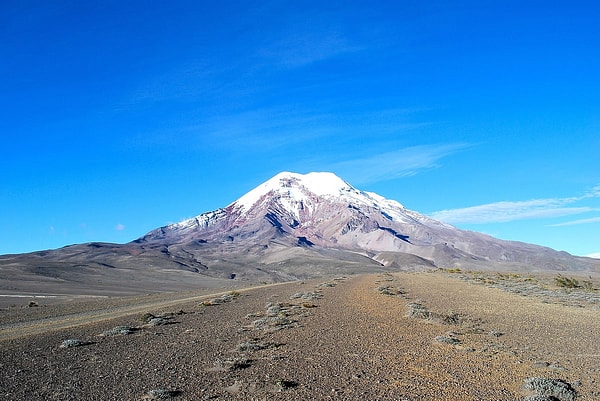
The summit farthest from Earth's center is not Everest but Chimborazo in Ecuador
Measured from sea level, Everest is still the world's highest mountain at 8,848.86 meters (2020 measurement). But Earth is not a perfect sphere; it bulges slightly around the equator. According to the US National Oceanic and Atmospheric Administration (NOAA), the summit of Chimborazo, just south of the equator, is about 2 kilometers farther from Earth's center than Everest's. That makes it the point on land closest to space.
The deepest known point in the ocean is the Challenger Deep in the Mariana Trench
For years a 1957 measurement of 11,034 meters was used for this trench in the western Pacific, but it later turned out to be somewhat exaggerated. According to a study published by NOAA researchers in 2021, the deepest point is about 10,935 meters. If you put Everest there, its summit would still be more than 2 kilometers under water. The first crewed descent was made on January 23, 1960, in the bathyscaphe Trieste.
The Maldives is the world's lowest-lying country
According to NASA Earth Observatory, more than 80 percent of the Maldives' roughly 1,190 coral islands sit less than 1 meter above sea level. A 2018 study by the US Geological Survey (USGS) suggested such low-lying islands could become uninhabitable around 2050 because of wave-driven flooding and freshwater shortages. NASA also notes that some islands have grown in recent years, so the picture is not one-sided.
A quarter of the Netherlands lies below sea level
About 26 percent of the country's land is below sea level. The lowest point, near Nieuwerkerk aan den IJssel, is around minus 6.7 meters. Even the name fits: Nederland means 'low lands'. For centuries the Dutch have held back the sea with dikes, canals and pumps.
Borders that look impossible on a map are real.
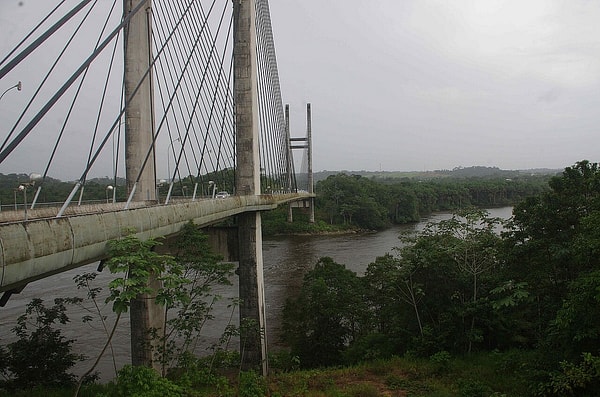
France's longest land border is not in Europe but with Brazil
French Guiana in South America is one of France's overseas regions and counts as part of the European Union. Its border with Brazil is about 730 kilometers long, France's longest land border with any country. In short, Brazil shares a border with the European Union. The only bridge linking the two sides crosses the Oyapock River.
Only one country lies between Norway and North Korea: Russia
It sounds strange, but the map does not lie. In the far north, Norway shares a border of about 196 kilometers with Russia. At the other end of Russia, there is a North Korean border of only about 17 kilometers along the Tumen River. A whole continent sits between them, yet on paper the two countries have just one neighbor in between.
China and Afghanistan are neighbors, but their clocks are 3.5 hours apart
The two countries share a short border at the tip of Afghanistan's Wakhan Corridor. Although China stretches thousands of kilometers from east to west, it officially uses a single time zone, Beijing time (UTC+8). Afghanistan is on UTC+4:30. Cross the border and your clock jumps 3.5 hours forward or back.
The US and Russia are only 3.8 kilometers apart
In the Bering Strait, Little Diomede belongs to the US and Big Diomede to Russia, with about 3.8 kilometers between them. The International Date Line runs right between the two islands, which is why they are also called 'Yesterday' and 'Tomorrow' islands. In winter an ice bridge can form between them, but crossing from one island to the other is not allowed.
Monaco and Vatican City together are smaller than New York's Central Park
Monaco covers about 2 square kilometers, and Vatican City, the world's smallest country, just 0.44. Together they come to roughly 2.5 square kilometers. Central Park is about 3.4 square kilometers, so you could fit both countries inside the park and still have space left over.
From Pluto to Point Nemo: facts that stretch all the way to space.
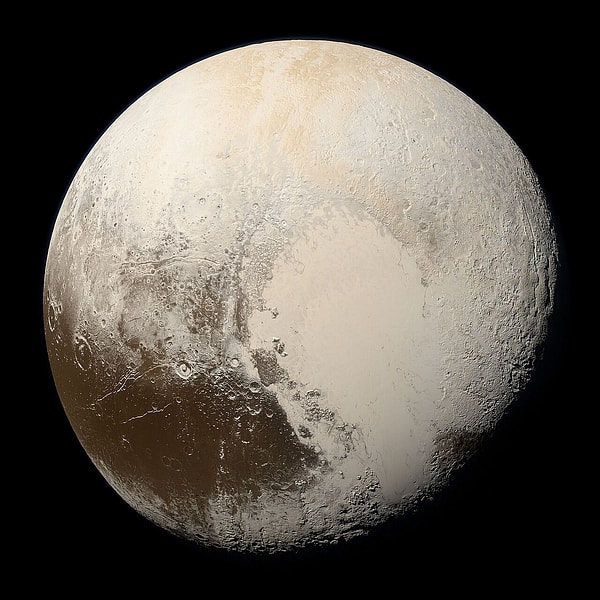
Pluto and Russia are almost the same size
For years this fact circulated as 'Russia is bigger than Pluto', but measurements from New Horizons in 2015 changed the picture. With the radius of about 1,188 kilometers given by NASA, Pluto's surface area comes out at around 17.7 million square kilometers. Russia covers 17.1 million. So the dwarf planet edges out the world's largest country by a whisker.
The largest desert on Earth is not the Sahara but Antarctica
We think of deserts as sand and heat, but the measure is precipitation. Places that receive less than 250 millimeters a year count as deserts, and the interior of Antarctica gets only about 50 millimeters a year. At roughly 14 million square kilometers, Antarctica easily beats the Sahara, which covers just over 9 million. The Sahara is the largest hot desert.
'Arctic' means 'bear', but not because of polar bears
The word Arctic comes from the Greek arktos, 'bear'. The bear in question is the Great Bear constellation that shines in the northern sky. Antarctica means 'opposite the bear'. Polar bears, by the way, live only in the Northern Hemisphere and almost all penguins in the Southern, so you are very unlikely to see them side by side in the wild.
Point Nemo, the ocean point farthest from land, is a spacecraft graveyard
Point Nemo in the South Pacific is about 2,688 kilometers from the nearest land. Because it is so remote, spacecraft at the end of their lives are brought down there in controlled reentries. Since 1971, the remains of about 300 spacecraft have ended up there, including the Mir station, deorbited in 2001. When the International Space Station, orbiting at about 400 kilometers, passes overhead, the closest humans to Point Nemo are astronauts. Under NASA's plan, the station itself is set to be brought down in this area at the end of 2030.
Keşfet ile ziyaret ettiğin tüm kategorileri tek akışta gör!
 Test
 Gündem
 Magazin
 Video



Send Comment