


11 Everyday Things About The US That May Surprise Newcomers


The United States can feel familiar long before you get there, thanks to films and TV shows. Once you actually move, though, the home, the bathroom, the power outlets and even the restaurant bill can come with surprises. We checked and gathered the everyday details that most often catch newcomers from Turkey off guard. Let's take a look! 👇


Rental homes often come with the basic appliances already installed.
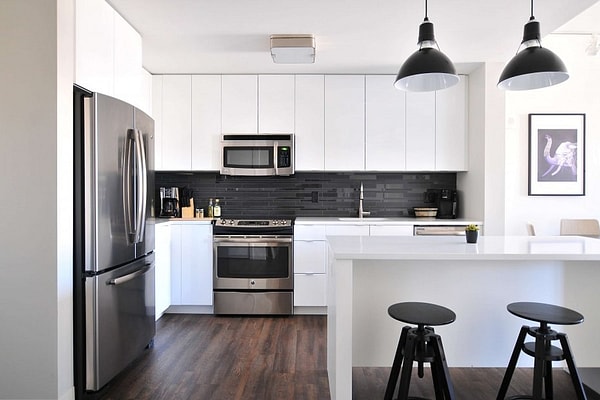
Fridge and stove included
In many rental apartments, the refrigerator and stove come with the unit. This isn't a legal requirement in every state, though; the lease decides what is included. If the landlord provided an appliance, repairing it when it breaks is generally the landlord's job. Saying 'I don't like it, I want a new one' is another story. 😊
Ceiling fans almost everywhere
According to the US Energy Information Administration's (EIA) 2020 residential survey, about 72 percent of homes have a ceiling fan. The share varies by state and drops to 44 percent in cooler Washington state. In hot states, fans with built-in lights are a classic fixture of every room. 🌀
Clothes live in built-in closets, and the outlets look nothing like Turkish ones.
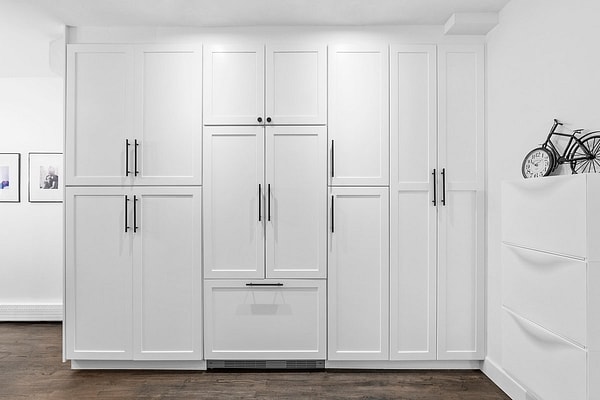
Closets instead of wardrobes
In American homes, clothes are mostly kept in closets built into the wall. Large walk-in closets are common in newer homes. This layout became widespread in the 1950s with the post-World War II housing boom. In Europe, freestanding wardrobes are still very common.
Two plug types
The US uses two plug types: Type A with two flat prongs, and Type B with a round grounding pin below them. That third pin isn't decoration; it grounds the device and protects against electric shock. Grounded outlets have been required in new buildings since the 1960s, but you can still find two-hole outlets in older buildings. Devices brought from Turkey need at least a plug adapter.
120 volts instead of 230
The US grid runs at 120 volts and 60 hertz, while Turkey's runs at 230 volts and 50 hertz. Not every device will be damaged, though! Most phone and laptop chargers say '100-240V' on the label and work fine with just a plug adapter. Single-voltage devices such as hair dryers or electric kettles need a voltage converter. It pays to check the label before plugging in. ⚡
Showers usually have a fixed head, and there is no bidet sprayer next to the toilet.
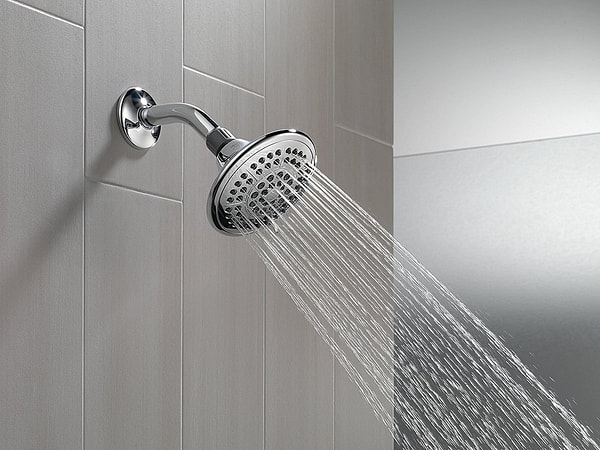
A fixed showerhead
The handheld shower on a hose, standard in Turkey, isn't the norm in American bathrooms. Water comes from a head fixed to the wall above. People who want a handheld shower can buy and install one, and that choice has been growing in recent years. In many parts of Europe, the hose shower is already the default. 🚿
Toilet paper only
The vast majority of toilets in the US have neither a bidet sprayer nor a separate bidet. There is no single reason for this. The most common explanations are that toilet paper caught on early, bathrooms weren't designed with bidets in mind, and simple habit. Interest in bidet seat attachments has risen in recent years, but they are still not widespread. 🚽
From restroom stalls to restaurant tips, daily life runs by its own rules.
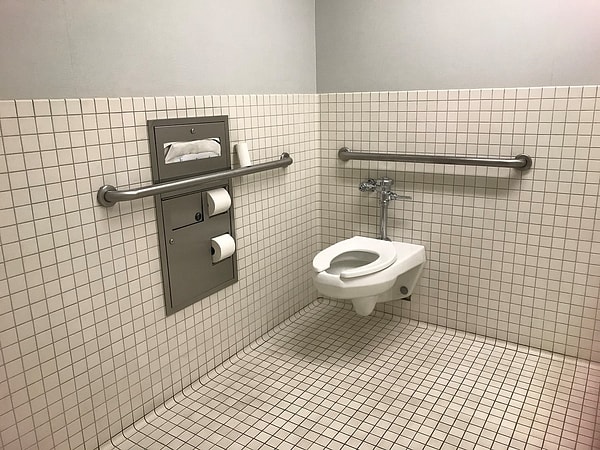
Gaps around restroom stalls
Public restroom stalls have big gaps underneath and along the sides. No federal law requires this; the reasons are practical. The most often cited are cost and cleaning: standard-size panels are cheap and the floor is easy to wash. The gaps help with ventilation and also make it easier to notice and reach someone who feels unwell inside.
Life built around the car
Outside the big cities, life is organized around the car. Drive-thru windows aren't just for burger places; they are also common at banks and pharmacies. Historians link this to postwar suburbanization, the highway network and car culture. Big supermarkets usually sit in shopping areas with large parking lots, and in many places walking there is almost impossible. 🚗
Prescription drug ads on TV
The US and New Zealand are nearly the only developed countries that allow prescription drugs to be advertised directly to the public. That's why drug ads come up often on TV, radio and online, ending with a long list of side effects. In September 2025, the US Food and Drug Administration (FDA) tightened oversight by sending a large number of warning letters about ads it found misleading.
Not tipping is almost rude
Federal rules in the US allow a much lower base wage for tipped workers, as long as tips make up the difference. That's why tips make up a big share of servers' income. According to a 2023 Pew Research Center survey, 92 percent of people who eat at sit-down restaurants always or often leave a tip. 57 percent say they tip 15 percent of the bill or less, while about a quarter tip 20 percent or more.
Keşfet ile ziyaret ettiğin tüm kategorileri tek akışta gör!
 Test
 Gündem
 Magazin
 Video



Send Comment