


Planted to Save Farmland, Invasive Kudzu Vine Devoured Entire Towns Across the US South


In the 1930s, the Asian-origin vine 'kudzu', which was encouraged to be planted in the USA as a measure against erosion and to protect farmlands, grew uncontrollably, virtually swallowing the entire region. This miracle plant, which can grow up to 30 centimeters a day during the summer months and covers more than 7 million acres in the Southern USA, has turned into a massive environmental crisis, destroying forests, houses, and electricity poles.

Introduced as an ornamental plant by Japan at the Centennial Exposition in Philadelphia in 1876, the kudzu vine has left its mark on one of the biggest ecological crises in American history.

During the Great Depression of the 1930s, the government encouraged the planting of a certain crop to prevent erosion, even paying farmers per plant. However, once this plant found the ideal climatic conditions in the Southeastern United States, it completely spiraled out of control.
Thriving in the climate of the Southeastern US, the kudzu plant has the ability to grow up to 30 centimeters per day during the summer months, and up to 18 meters annually. Its destructive growth rate allows it to envelop trees, electricity poles, and buildings, blocking sunlight in forests and obliterating biodiversity across thousands of acres.
Experts emphasize that it's virtually impossible to eradicate this plant, which lacks any natural predators.
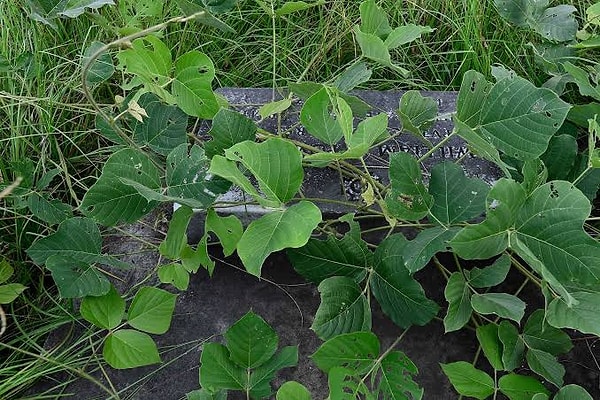
Dr. James H. Miller from the U.S. Forest Service discovered through 18 years of research that many agricultural pesticides proved ineffective against kudzu, with some even accelerating its growth. Consequently, the U.S. Department of Agriculture (USDA) officially declared this uncontrollable vine a 'noxious weed' in 1972.
When herbicides fell short in combating the plant, researchers turned to unconventional methods. Tuskegee University reported that grazing Angora goats on kudzu fields prevented the spread of the vines and, in turn, yielded milk and wool production.
On the other hand, those who desired to benefit from this immense, indestructible resource introduced the plant to industry and art.

While the local community started to manufacture baskets and papers from kudzu vines, deep-fried kudzu leaves, jams, and syrups began to emerge in kitchens.
The root of kudzu, which has been used in traditional Chinese medicine for 2000 years, is said to hold promise in the treatment of alcoholism. Laboratory research conducted by Harvard Medical School found that the compounds derived from the root were effective in reducing alcohol dependency.
Keşfet ile ziyaret ettiğin tüm kategorileri tek akışta gör!
 Test
Test
 Gündem
 Magazin
 Video
Video



Send Comment