


Ministry Announces Banned Foods: New Guidelines for "Novel Food" Products in Turkey


The Ministry of Agriculture and Forestry has put its signature to a new regulation in order to ensure public health and leave no room for ambiguity in food safety. Under the new legislation, absolutely no 'novel food' products containing insect and pig-derived components, which have been a subject of global debate in recent years, will be approved for the Turkish market. According to the regulation published by the Ministry, all food and beverages that have not been commercially sold in Turkey before December 31, 2025, and do not have widespread consumption, will be evaluated as 'novel food'.

A new era has commenced following December 31, 2025.
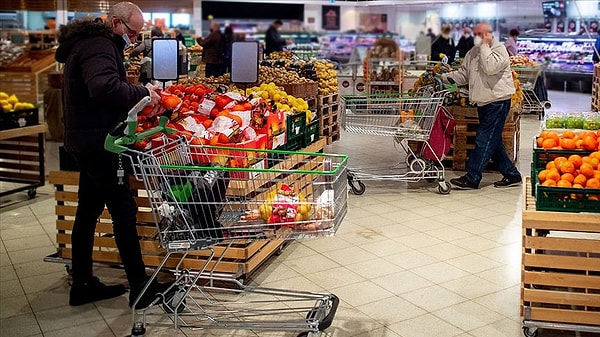
The 'Turkish Food Codex Novel Foods Regulation', which has been published in the Official Gazette and put into effect, introduces stringent controls for a wide range of products in Turkey, from lab-produced foods to alternative protein sources, that have not been previously offered for consumption. All food and beverages that have not been commercially sold in Turkey and do not have widespread consumption before December 31, 2025, will fall under the 'novel food' category. Products such as genetically modified organisms (GMOs), food enzymes, and existing additives that already have their own specific legislation will be exempt from this regulation. However, all artificial foods emerging with technological advancements will now have to pass through this new filter.
The Ministry stipulates three fundamental conditions for a product to be able to hit the shelves in Turkey:
Demonstrating scientifically that it poses no risk to human health,
Ensuring that it is not misleading when offered as a substitute for a similar product,
Not being inferior in nutritional value compared to traditional foods.
What qualifies as "New Food"? Prohibited foods for sale have been announced.
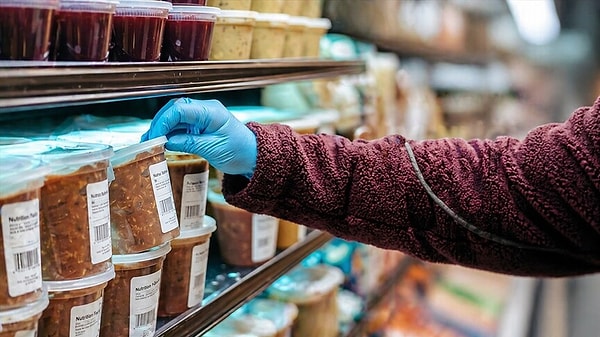
Absolutely no 'novel food' products containing components derived from insects or pigs will be granted approval for the Turkish market. Applications from companies wishing to sell such products will be outright rejected by the Ministry, and these foods will definitively not be included in the 'permitted products list'.
The criteria for 'novel food', which are likely to enter our kitchens with the advancement of food technology and are legally defined by regulations, are listed as follows:
- Artificial meat and similar products produced from cell or tissue culture in a laboratory environment,
- New foods obtained from fungi, algae (seaweed), or microorganisms,
- Foods produced with 'nanomaterial' technology of unobservable size,
- New molecular components whose structure has been deliberately altered,
- Substances that were previously sold only as dietary supplements or vitamin pills, but are now planned to be incorporated into regular foods.
How will the approval process unfold? A Scientific Committee is being established.
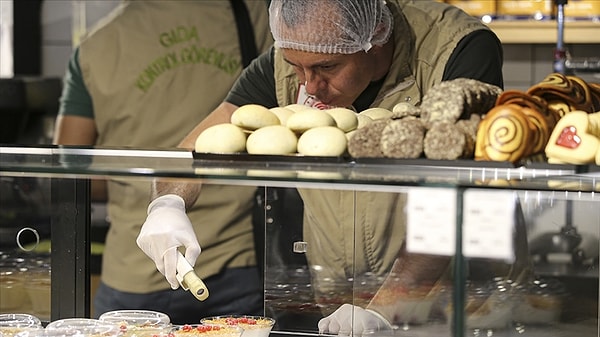
Under the new regulation, food companies wishing to introduce products to the market are being burdened with heavy responsibilities. These companies will be obligated to determine for themselves whether the product they wish to produce or import falls under the category of a 'novel food'. In cases of doubt, an application will be made to the General Directorate of Food and Control.
Following the official application, the Ministry will examine the documents and their compliance with the rules within 45 business days. Files that pass the initial approval will be referred to the 'Scientific Commission', composed of experts in the field. In order to protect public health, the Commission will scrutinize the product in both a laboratory setting and theoretically down to the finest detail for a full nine months, preparing a safety report.
Keşfet ile ziyaret ettiğin tüm kategorileri tek akışta gör!
 Test
Test
 Gündem
 Magazin
 Video
Video



Send Comment