


Historic Event to See with Naked Eye: Giant Asteroid Apophis to Skim Past Earth!


The countdown has begun for the moment when the asteroid will skim past Earth. Astronomers have traced the path of this rare space event in human history, second by second. On April 13, 2029, the massive asteroid '99942 Apophis' will pass at a distance even closer than our communication satellites in orbit around the Earth. Moreover, billions of people will be able to watch this passage with the naked eye, without the need for any telescope.
Here are the details:

It Will Pass Even Closer Than Satellites!
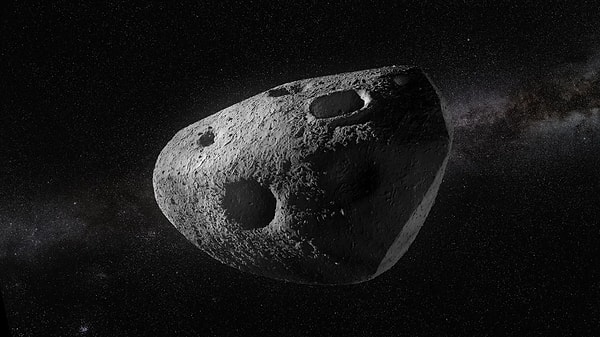
When Apophis was discovered in 2004, it created a brief wave of concern in the scientific world about the possibility of it colliding with Earth. However, NASA's precise observations over 20 years have allowed us to leave this worry behind. After all, this giant space rock does not pose a threat to our planet for at least the next century.
As experts from the Massachusetts Institute of Technology (MIT) have also pointed out, humanity will have the chance to calculate and observe the passage of such a large space rock for the first time with such accuracy. Moreover, Apophis will be seen as a bright, star-like point moving gently across the sky for hours, rather than a meteor that suddenly flashes and fades.
90% of the World Population Will Be Able to Watch
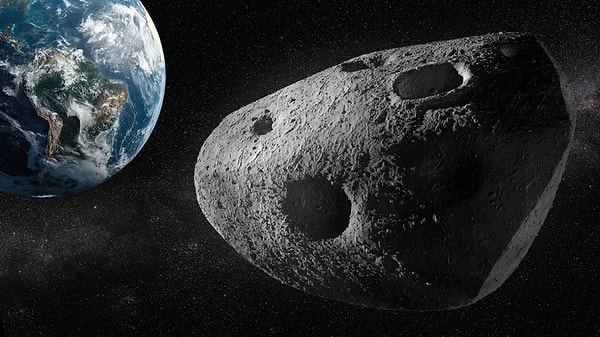
According to the maps presented at the recent scientific workshop held in Italy, 90% of the world's population will be able to watch the meteor in real time, provided the weather conditions are clear.
Where Will the Meteor Be Watched From? Will It Be Visible to the Naked Eye?
The visual feast that will begin in the skies of Australia on April 13, 2029, can be observed in a wide strip extending to Asia, parts of Europe, Africa, and South America. It is expected that Apophis will reach its brightest position while it is over the continent of Africa. So, we will be able to watch this historic event with the naked eye.
Not Just a Visual Show: A Rare Opportunity
The strong gravitational force of the Earth is expected to bend the orbit of Apophis during this tangential passage and even cause small space tremors (landslides) on the surface of the meteor. In other words, this unique approach will provide astronomers with a rare opportunity to understand the mysterious structure of this stone, which dates back to the early periods of the Solar System.
Keşfet ile ziyaret ettiğin tüm kategorileri tek akışta gör!
 Test
Test
 Gündem
 Magazin
 Video
Video
Read More





Send Comment