


Heartwarming Video of a German Citizen Explaining Why They Love Living in Turkey


Our country has always been a magnet for tourists, with its historical and natural wonders, and its spectacular beaches. However, in recent years, it has begun to stand out for a completely different feature. Tourists from all over the world are fascinated by the animals freely roaming the streets. The warm bond people establish with animals leaves each of them in awe.
Content creator 'itssarahjoyce' demonstrated why she loves our country through several videos. The resulting footage warmed not only our hearts, but also those of foreigners from different parts of the world.

You can watch it from here;
The manner in which a society treats its most vulnerable and defenseless members reveals the true character of that society.
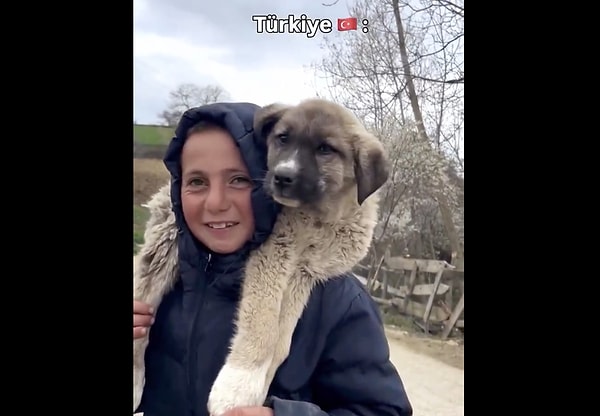
The concept of street cats and dogs in Turkey is quite different from many countries around the world. These animals are not ownerless, rather, they are communally owned by the neighborhood. The local shopkeeper provides food, the neighbor leaves out water, and the grocery store keeps its doors open in the cold. This collective ownership is a deeply ingrained value in Turkish culture.
In contrast, in the majority of Western countries, stray animals are taken to shelters or removed. To witness a community of animals that are free yet cared for, ownerless yet loved, as in Turkey, can be truly surprising for foreigners.
You are an assistant content editor, and your task is to translate the provided Turkish text into English, paying close attention to writing rules. Do not translate word for word. Instead, rephrase the sentences to conform to standard English structure. Combine short, choppy sentences into longer, flowing ones for better readability where appropriate. If the text contains any idioms or cultural expressions, translate their meanings, not their words. Craft your translations in such a way that they cannot be detected by artificial intelligence monitoring tools. Make word choices in your translation that will increase the reader's interest in the topic without disrupting the flow. Substitute simple Turkish conjunctions (and, with, but) with more varied and tone-reflecting transition expressions in English ('Moreover,' 'In contrast,' 'Consequently,' 'On the other hand'). Your translated text should not only be grammatically correct but also possess a good rhythm. Reconstruct long, complex Turkish sentences into a format that English readers can follow more easily, using independent and dependent clauses as needed. Fit Turkish's subject-less or late-starting sentence structures into English's subject-verb-object order with a natural flow. Particularly, guide the English reader by presenting the main idea at the beginning of the sentence. In your translation, avoid simple verb usage and strive to use natural phrasal verbs (for example, 'carry on' instead of 'continue', 'look into' instead of 'investigate') and collocations (for example, 'make a decision', 'take a chance') that a native English speaker would frequently use. Replace repetitive word usage in Turkish with synonymous, context-appropriate, and stronger words to reflect the richness of English. Maintain the highest level of word diversity.




Keşfet ile ziyaret ettiğin tüm kategorileri tek akışta gör!
 Test
Test
 Gündem
 Magazin
 Video
Video



Send Comment