


Hidden Science of Snacks: Why Popcorn Kernels Work Exactly Like Pressure Cookers


The process of making popcorn involves a perfect ballet of pressure and heat. So why do corn kernels pop instead of just drying out like other grains?

Each kernel of corn actually functions much like a miniature pressure cooker.
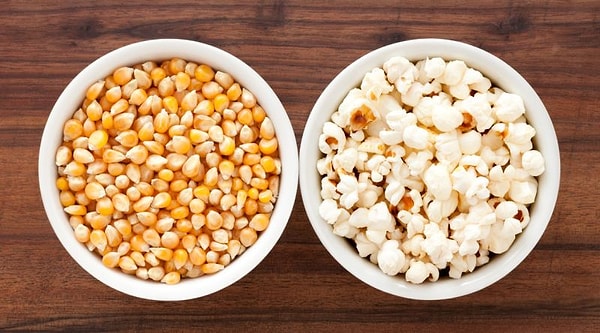
The moisture content in a kernel of corn is roughly 13-14%, which is tightly trapped by a hard outer shell. According to research in food engineering at Iowa State University, this hard shell, known as the pericarp, plays a pivotal role by preventing moisture escape, thereby increasing internal pressure.
The moisture within the corn kernel is not evenly distributed. Water molecules are predominantly found between starch granules and within protein structures. This distribution ensures that the popping occurs in a uniform manner.
When corn is heated, the internal temperature begins to transform moisture into steam once it reaches 100°C.
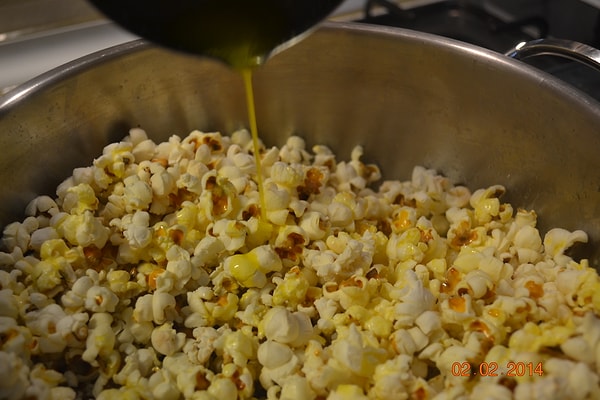
Under normal circumstances, water would evaporate at this temperature, but the hard shell of the corn kernel prevents this steam from escaping. The pressure continues to build up, reaching a critical point between 135 and 170°C.
At this stage, the internal pressure escalates to approximately 9-10 atmospheres. According to findings by researchers at Purdue University, this level of pressure exceeds the maximum limit that the hard shell can withstand, resulting in a sudden explosion.
During the explosion, the hot steam inside rapidly expands, causing the starch structure to inflate.

This process is completed in a matter of milliseconds. The starch granules inside undergo gelatinization due to the high temperature and humidity, and then abruptly cool down, transforming into a hard, brittle structure.
Following the explosion, the corn kernel can expand up to 2050 times its original volume. This expansion occurs as a result of changes in the molecular structure of the starch and the sudden expansion of steam. Consequently, the resulting 'flake' structure forms a texture that is air-filled on the inside and crispy on the outside.
During this transformation, the protein structure of the corn kernel also undergoes a change.

High temperatures cause proteins to denature, which contributes to the distinctive taste of popcorn. Moreover, a process known as the Maillard reaction results in the formation of brownish color and unique aromatic compounds.
Corn kernels with a very low moisture content do not pop, as they fail to generate sufficient steam pressure. Similarly, kernels with damaged hulls do not fully pop due to premature steam escape.
Keşfet ile ziyaret ettiğin tüm kategorileri tek akışta gör!
 Test
Test
 Gündem
 Magazin
 Video
Video



Send Comment