


Revolutionary Water-Linked Bricks Eliminate the Need for Mortar in Construction Industry


The new generation of industrial bricks, which are starting to become widespread in China and bond together upon contact with water, are gearing up to radically transform traditional construction methods. But can this futuristic technology truly eliminate the need for mortar altogether?

The construction industry is abuzz with one of the most striking innovations of recent years, aimed at boosting efficiency and reducing costs: water-bonded modular bricks.
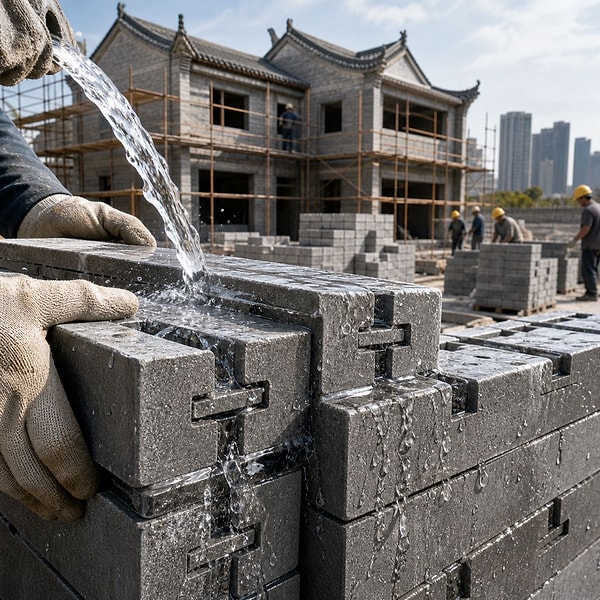
This system, which has begun to make its presence felt particularly in housing projects in China, is transforming construction sites into something more akin to a giant 'lego' set.
The videos of 'building walls by just pouring water', which have garnered significant attention on social media, are merely the tip of the iceberg. Experts emphasize that these bricks do not create a miracle with just water. Behind them lies a serious mechanical interlocking and a special material technology that responds to humidity.
In this system, bricks are produced with millimetric precision that minimizes the use of traditional mortar. Water enables a highly precise wall alignment either by activating the chemical binders between the bricks or by facilitating the interlocking of special channels.
There are three primary reasons underlying the industry's shift towards this technology:
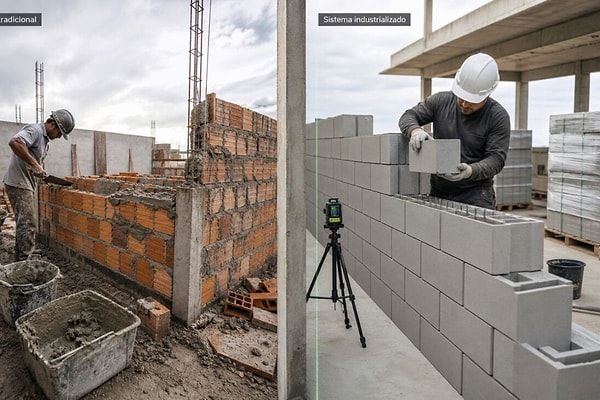
Thanks to the elimination of the traditional mortar's drying time and application hassle, walls are being built much faster.
Construction sites are kept much cleaner as issues like mixing, transporting, and spilling of mortar are no longer a concern, significantly reducing the amount of rubble.
Standardized industrial production ensures perfect vertical and horizontal alignment of the walls, thus cutting down on the costs of future adjustments.
No matter how advanced the new generation of bricks may become, professionals issue a warning on one matter: This isn't magic, it's a system.
While bricks may simplify the process of wall construction, traditional concrete and steel structural elements are still required for foundations, columns, beams, and static calculations. The critical question for the safety of the project is whether these bricks serve as 'load-bearing' elements or merely 'filler/insulation' materials.
Despite its economic and speedy nature, the success of this system hinges on skilled labor and the right choice of materials. Compliance with Brazilian and other global standards, resistance to local climate conditions (extreme rainfall or frost), and material certification are still significant hurdles to overcome.
Experts suggest that the transformation of this technology from merely an 'internet curiosity' to a new standard depends on the technical support capacity of manufacturers and the speed at which professionals can adapt to this new assembly logic.
Keşfet ile ziyaret ettiğin tüm kategorileri tek akışta gör!
 Test
Test
 Gündem
 Magazin
 Video
Video



Send Comment