


Global Aviation Faces New Crisis Following Military Strikes on Iran


The EK10 flight operated by Emirates, departing from London and destined for Dubai, received information about a drone attack on Dubai while progressing through Saudi Arabian airspace.
In response to this, the plane altered its course and returned to Gatwick Airport. Flight data revealed that a round trip of approximately 9,100 kilometers was made in total.
According to Reuters, around 30 Emirates flights heading to Dubai International Airport were similarly either turned back or redirected to alternative routes due to drone attacks originating from Iran.
Source: Reuters

Following the attack on Iran by the United States and Israel, a crisis of "vanishing into oblivion" has surfaced.
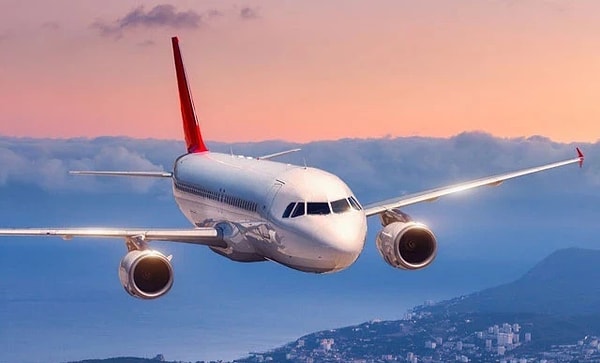
This phenomenon, referred to as 'flights to nowhere' on social media, has become one of the most striking reflections of the escalating US-Israel-Iran tension on the aviation industry since February 28th.
Alongside rising fuel costs, passengers stranded at airports, and constantly changing flight routes, such turn-backs significantly increase the operational pressure on airline companies.
Emirates, on the other hand, confirmed that some flights have returned to their departure points or nearby hubs, but refrained from sharing detailed information about the incidents.
Thousands of passengers are unable to reach their destinations.

In the initial days of the conflict, the majority of the Gulf airspace was closed, bringing flight traffic in the region to a near standstill. Although airlines such as Emirates, Etihad Airways, Qatar Airways, and flydubai have gradually resumed their services, unexpected route changes continue to occur due to threats from drones and missiles.
The United Arab Emirates, for instance, temporarily closed its airspace again on Tuesday.
On Monday, between GMT 01:40 and 02:00, several Emirates flights originating from Europe and India and destined for Dubai, made the decision to turn back while over Saudi Arabian airspace or the Sea of Oman.
Under normal circumstances, a flight departing from London would reach Dubai in less than 7 hours. However, after spending a total of 11.5 hours in the air, one such flight returned to its point of departure.
Some flights were redirected to cities such as Madrid, Lisbon, and Paris.
Approximately 30,000 flights have been cancelled.

In order to maintain its operations, Emirates has redirected many of its flights to alternative locations such as Dubai World Central, Al Ain, Abu Dhabi, and Muscat, instead of Dubai International Airport.
Moreover, regional hubs like Jeddah, Cairo, and Medina have also been brought into play. It's reported that since February 28, Emirates has cancelled over 2,000 flights, which accounts for approximately 54% of planned flights.
During the same period, cancellation rates reached 93% for Qatar Airways and 79% for Etihad Airways.
According to the data, as of March 17, approximately 30,000 flights directed to airports across the Middle East have been cancelled. Experts emphasize that if conflicts in the region persist, disruptions in air traffic will deepen and the pressure on the global aviation sector will further increase.
Keşfet ile ziyaret ettiğin tüm kategorileri tek akışta gör!
 Test
Test
 Gündem
 Magazin
 Video
Video



Send Comment