


Flying for the Price of a Bus Ticket: $5 Electric Plane Test Starts Low-Cost Air Travel


Are bus journeys becoming a thing of the past? The world's largest electric plane has successfully completed its first test flight, with the electricity cost of the initial flight amounting to a mere 5 dollars. This technology, which is set to reduce operating costs by more than 40%, is gearing up to drastically slash intercity travel prices in the future.
Here are all the details of this revolutionary development that is poised to reshuffle the deck in the aviation industry...

The prototype aircraft, named "Heart X1", developed by the Swedish aviation company Heart Aerospace, took off from Plattsburgh International Airport in New York.

The test flight, conducted under the supervision of the American Federal Aviation Administration (FAA), lasted for 27 minutes and the aircraft reached a height of 1,100 feet (approximately 335 meters).
The aircraft, which operates entirely on battery power, completed take-off, climb, and landing maneuvers flawlessly with an electric propulsion system generating over 1 megawatt of power.
The fact that the cost of the electricity used in the first test flight was approximately 5 dollars stands as the most concrete evidence of the significant shift that the aviation economy is about to experience.
In a climate where global jet fuel prices have soared to $3.50 per gallon and fuel costs have spiked by 63% in the past year, electric airplanes are set to provide a breath of fresh air for airline companies.
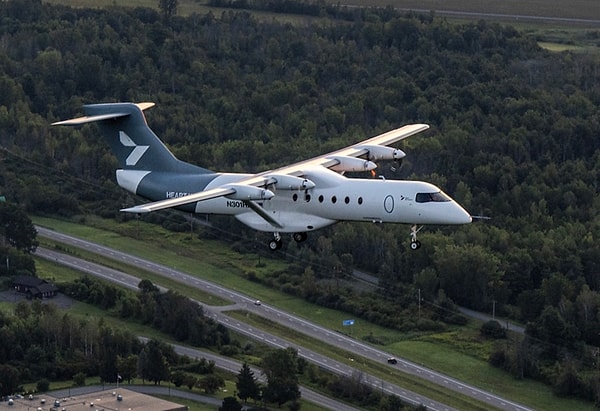
Anders Forslund, the CEO of Heart Aerospace, emphasized that this flight has proven the feasibility of electric flight on a commercial passenger aircraft scale, and it will significantly reduce travel costs. The company's commercial model, the ES30, which can accommodate 30 passengers, is expected to reduce operating costs by more than 40% compared to traditional regional aircraft. This could potentially usher in an era of flight tickets priced similarly to bus tickets.
The project is not just on paper; aviation giants are lining up for the revolution. Michael Leskinen, the CFO of United Airlines, expressed his eagerness to integrate the ES30 model into their flight network. He stated that electric commercial aircraft will not only enhance the passenger experience but also lower costs.
While electric aviation offers tremendous potential, it faces hurdles such as battery weight, range, payload capacity, and the need for high-powered charging infrastructure at airports.
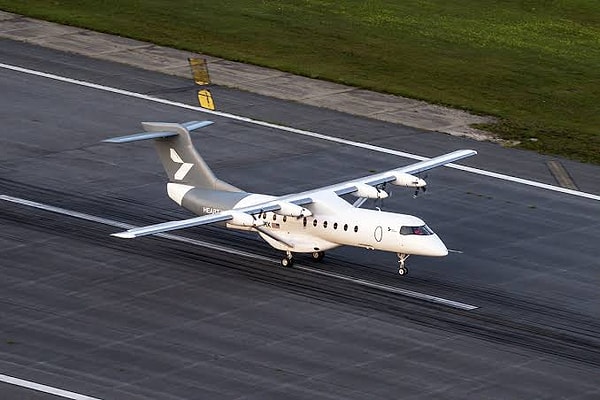
The company's roadmap is as follows:
2028: The initial flight tests of the ES30, the pre-production model, will commence.
2031: Electric passenger airplanes will officially start commercial flights and passenger transportation.
Keşfet ile ziyaret ettiğin tüm kategorileri tek akışta gör!
 Test
Test
 Gündem
 Magazin
 Video
Video



Send Comment