


Dumped 62,000 Liters of Soda Into the Ocean: What Happened to Marine Life During Carbon Test?


Scientists have tested a notable method in the fight against climate change under real sea conditions. 62,000 liters of sodium hydroxide were released into the ocean. The aim was to make the sea absorb more carbon dioxide from the atmosphere and to measure the effects of this method on the environment.
So, what happened to the thousands of liters of sodium hydroxide (caustic soda) poured into the ocean? Did it work? Here are the details.

Project Changing the Chemistry of the Ocean: LOC-NESS
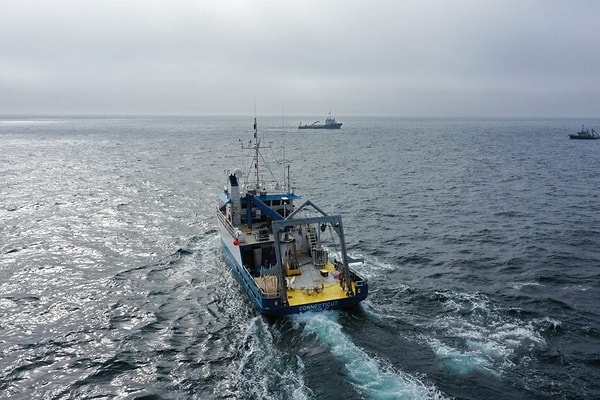
While the main goal in combating climate change is to reduce greenhouse gas emissions, extraordinary solutions are being developed to clean up the carbon that has already accumulated in the atmosphere. The LOCNESS project, run by the Woods Hole Oceanographic Institution (WHOI), is based on the method of 'increasing ocean alkalinity'.
Where Was 62 Thousand Liters of Sodium Hydroxide Dumped?
Researchers who wanted to test this theory in the field designated a special area about 61 kilometers off the shores of Cape Cod in the state of Massachusetts, USA. During an operation conducted in the Wilkinson Basin in the Gulf of Maine in 2025, approximately 62 thousand liters of purified sodium hydroxide solution was released into the sea water.
A red tracer dye was also added to the mixture to clearly track the movement of the chemical in the water.
The aim was to measure how sodium hydroxide mixed with sea water, how long the alkalinity field it created lasted, and how much carbon was drawn into the ocean during this process.
High-Tech Tracking in the Middle of the Sea
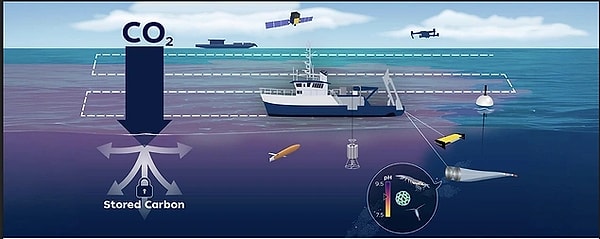
Dumping tons of chemical substances into the sea was not a random process, as it could carry serious ecological risks.
The alkalinity area created by the solution released into the water was tracked with autonomous underwater vehicles, gliders, marine sensors, drones, and satellite images. Scientists also measured numerous variables such as pH, alkalinity, dissolved gases, oxygen, temperature, and salinity.
The area was monitored for approximately five days to observe how the chemical change dispersed in the ocean and how it decreased over time.
2026 Preliminary Results: Did the Method Work?
The initial data released by the researchers showed that the experiment proceeded as planned. The movement of the created alkalinity area largely coincided with the predictions of computer models.
The more striking result, however, emerged on the carbon side.
According to measurements, approximately 10 tons of carbon entered the ocean during the experiment. According to the researchers' models, the effect of this small-scale experiment showed a potential equivalent to the removal of about 50 tons of CO₂ from the atmosphere over a period of about one year.
What Happened to Marine Life?
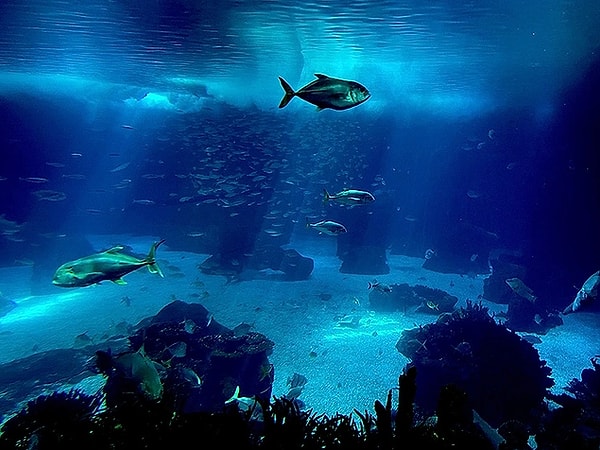
Researchers closely monitored the experiment's impact on the ecosystem. No significant changes were detected in the organisms studied, ranging from bacteria to phytoplankton, zooplankton, fish, and lobster larvae.
The pH value of the sea water and the levels of trace substances also returned to their initial values as the experimental area dispersed. However, the long-term effects on adult fish, marine mammals, and fisheries are still unknown.
Could It Be a Solution Against Climate Crisis?
Initial results show that the method can be applied in a controlled manner and has the potential to increase the ocean's carbon sequestration capacity. However, there is a big difference between applying a 62,000-liter experiment on a much larger scale.
Therefore, LOCNESS is currently not considered a commercial solution, but a scientific test. Researchers are trying to understand the limits within which marine ecosystems can be protected while increasing carbon sequestration.
Keşfet ile ziyaret ettiğin tüm kategorileri tek akışta gör!
 Test
Test
 Gündem
 Magazin
 Video
Video
Read More





Send Comment