


Caught in Fisherman's Net: 2,000-Year-Old Bronze Statue Uncovered From 120 Meters Deep in Aegean


An ordinary fishing trip in the Aegean Sea turned into one of the most remarkable discoveries in the history of archaeology in 1994. A bronze statue of a woman, approximately 1.98 meters tall, was caught in the nets of fishermen off Kalymnos and was brought up from a depth of 120 meters. This artifact from the Hellenistic period changed the history of archaeology.
Here are the details.

Fishermen's Net Suddenly Became Heavy
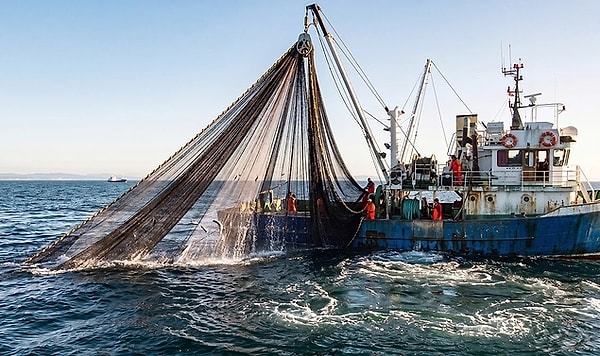
It was the year 1994. A fishing boat fishing in the waters between the islands of Kalymnos and Pserimos found its net much heavier than usual when it started to pull it in. The crew initially didn't know what was in the nets. However, it was soon understood that what was brought up from the sea was not an ordinary rock. It was a bronze statue of a woman, approximately 2,000 years old, that got caught in the nets.
However, the Aegean was not willing to surrender this priceless treasure so easily.
As the statue was being pulled up from the depth of 120 meters of the sea, the resistance of tons of water and the two-thousand-year fatigue of the bronze material started to strain the nets. In those tense moments when it was completely lifted from the water, a great tragedy occurred as it was being taken onto the boat; the head of the artifact broke off from the neck and sunk back into the dark waters of the Aegean.
During this tough struggle, the foot parts of the statue also suffered serious damage due to friction with the nets. Despite all these dramatic moments and being left headless, the artifact, approximately 1.98 meters tall, managed to take the breath away of archaeologists from the moment it was discovered.
From the Hellenistic Period to the Present: "The Lady of Kalymnos"
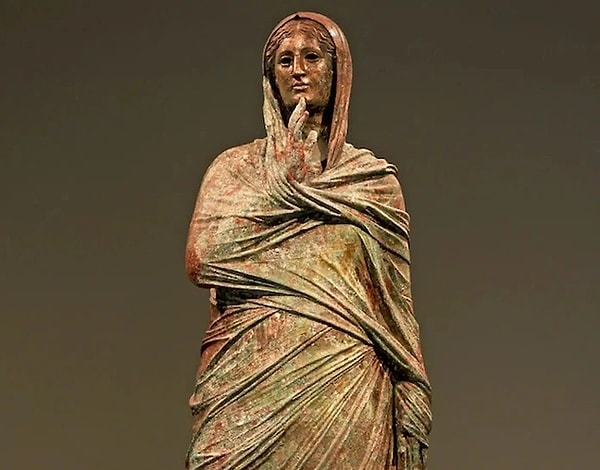
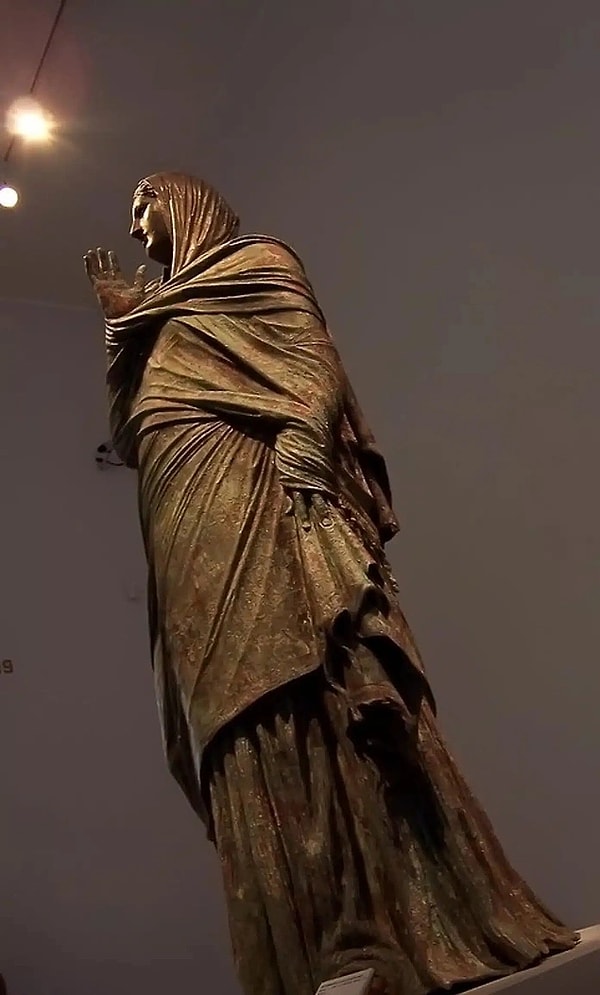
The statue is dated to the Hellenistic period and most likely the 3rd century BC. The female figure is depicted with a long dress and a himation she has taken over it. The folds of the cloth on the body, the details of the hair, and the posture of the figure reveal the understanding of the Hellenistic art of realistically reflecting the human body and clothes. However, the identity of the statue is still not known for certain.
Initial comments suggested that this could be Demeter. However, experts are also considering that the work could be a depiction of a high-status woman, a queen, or a goddess. The statue is associated with figures of the 'Great Herculaneum Woman' type in art history.
Perhaps A Portrait Of A Queen
One of the most striking comments about the statue was put forward by archaeologist Olga Palagia. Palagia suggests that the figure could be Arsinoe III from the Ptolemaic Dynasty in Egypt. This possibility is based on comparisons made with the facial features of the statue and other works of the period. However, this interpretation has not yet been confirmed. Therefore, who the headless female figure, which stands in the museum today and is approximately 2,000 years old, actually represents is still an archaeological mystery.
Why Was It Found at the Bottom of the Aegean?
The statue does not necessarily have to have been made in Kalymnos. One of the possibilities experts focus on is that the work may have fallen into the sea while being transported by ship from another region. The fact that Kalymnos was located on one of the important sea routes between the Aegean and the Eastern Mediterranean in ancient times strengthens this possibility. However, it is unknown which ship carried the statue, where it was going, and exactly where the statue was taken from.
That's why the Lady of Kalymnos is seen not just as a statue, but as one of the biggest clues left behind from a lost ancient journey.
The real surprising development occurred after the discovery.
The finding of the Lady of Kalymnos drew attention to the existence of ancient bronze artifacts in the region. In the following years, other bronze statue pieces were unearthed around Kalymnos. Among these were a bronze head of a ruler from the Hellenistic period, parts of an equestrian statue, and various bronze artifacts.
Some pieces were directly retrieved from the sea, while others had been in the hands of the islanders or in storage for years.
Why is the Lady of Kalymnos So Valuable?
Large bronze statues were extremely valuable in the ancient world. However, because bronze could be melted down and reused, a large majority of these works did not survive to the present day. Therefore, large bronze statues from the ancient period are much rarer compared to marble statues.
Despite being headless, the Lady of Kalymnos maintains her majesty and the fact that a large part of her has survived to this day makes her an extraordinary work. The Getty Research Institute describes the work as the most monumental bronze statue recovered from the sea.
Today's Most Important Piece in the Museum
After years of conservation and restoration work, the Lady of Kalymnos is now displayed as one of the most important pieces in the Kalymnos Archaeological Museum. However, despite decades passing since the discovery, the mystery has not been completely solved.
Keşfet ile ziyaret ettiğin tüm kategorileri tek akışta gör!
 Test
Test
 Gündem
 Magazin
 Video
Video
Read More




Send Comment