


Breakthrough Material Cools Surfaces by 12.9°C Without AC or Electricity


Researchers at the Micro and Nanotechnology Institute (IMNCNM) under the Spanish National Research Council (CSIC) have developed a groundbreaking nanomaterial that could potentially solve the global cooling crisis. This polymer nanostructure, which radiates heat into space using only solar radiation without the need for electrical energy, aims to reduce dependency on air conditioning in buildings, vehicles, and electronic devices.

The research, conducted by the Functional Nanoscale Energy Devices (FINDER) group and published in the Nanophotonics journal, is based on the technique of "daytime passive radiative cooling".
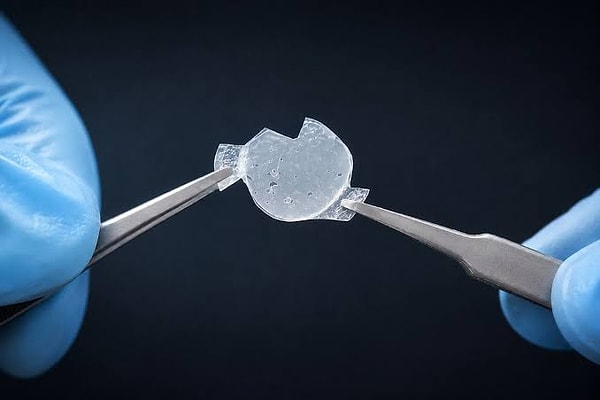
There exists a window in the world's atmosphere where heat escapes directly into space without being trapped, specifically within the infrared spectrum's 8 to 13 micrometer band. The developed material manages to remain cooler than the surrounding air without the use of any motor or compressor, by efficiently radiating heat in this range and reflecting a high proportion of sunlight.
The research team opted for the polyvinylidene fluoride (PVDF) polymer, known for its high heat radiation properties in the infrared spectrum. Project leader Cristina Vicente pointed out that this material is resistant to ultraviolet radiation, offers self-cleaning properties by repelling water, and demonstrates resilience against external factors.
The fundamental secret to advancement lies in the design of the material at the nanometer scale.
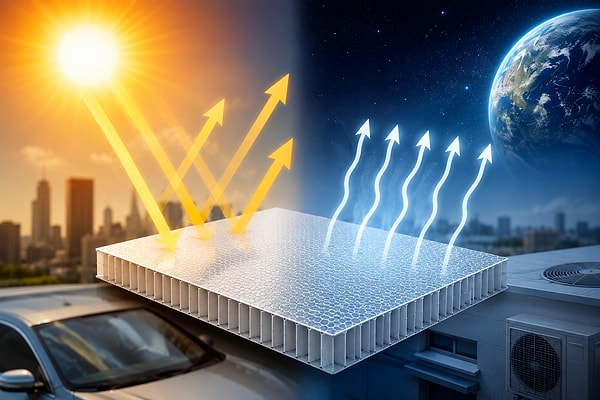
Three-dimensional bespoke nanostructures have been crafted by applying polymer to annotated aluminum oxide templates. This newly optimized material exhibits the following properties:
It reflects an average of 82.4% of solar radiation.
It emits 96.7% of heat into space within the infrared band of 813 micrometers.
It provides a cooling capacity of 182.3 watts per square meter.
During the open-air trials conducted on the rooftop of the Tres Cantos facilities in Madrid, the material remained up to 12.9°C cooler than the uncoated surface on the hottest and sunniest days, following exposure to ultraviolet light treatment.
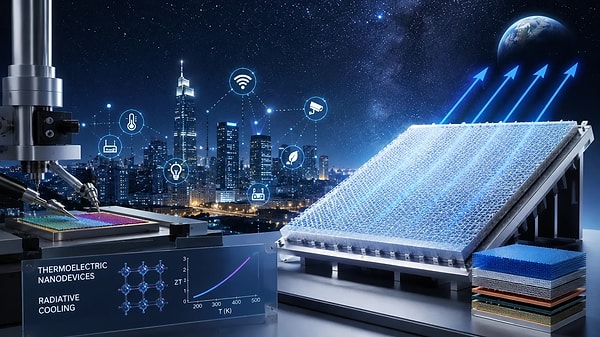
Scientists, who point out that the production process is both inexpensive and compatible with existing industrial infrastructure, emphasize that this technology could be utilized in a wide range of areas, from building facades to vehicles, personal cooling systems to electronic devices.
The goal is to significantly reduce cooling costs, which currently account for about 20% of global electricity consumption, using this method.
Keşfet ile ziyaret ettiğin tüm kategorileri tek akışta gör!
 Test
Test
 Gündem
 Magazin
 Video
Video



Send Comment