


Why Do Foods Smell “Amazing” When They're Roasting?


From the fragrant brown shell of a coffee bean to the crispy exterior of a steak, from the golden edges of bread to the sweet aroma of caramelized onions, all these flavors share a common chemical process.
This reaction, discovered by French chemist Louis Camille Maillard in 1912, forms the backbone of modern cuisine.
Source

How Does the Maillard Reaction Work?
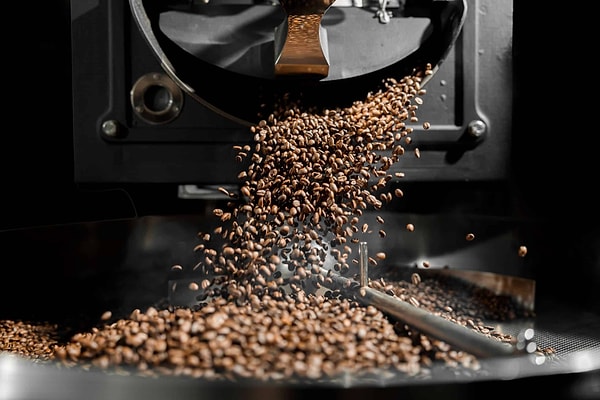
The Maillard reaction is a complex chemical process that begins when amino acids come into contact with reducing sugars at temperatures above 140°C. This reaction results in the formation of compounds known as melanoids, which give food its characteristic brown color.
According to research conducted by the Food Science Department at Harvard University, this process generates more than 400 distinct aroma compounds. Each compound contributes uniquely to the taste and aroma profile of the food. For instance, the furans and pyrazines that form in coffee beans are the building blocks of that familiar coffee aroma.
Is It the Same Thing as Caramelization?
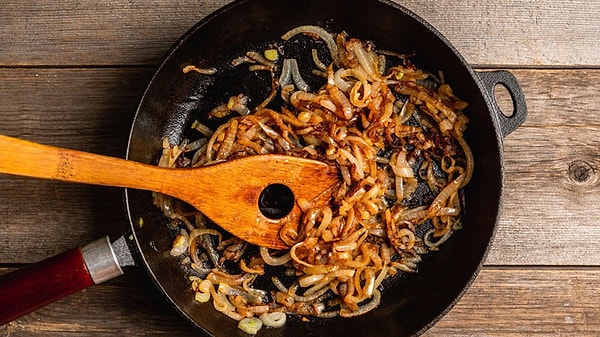
Many people often confuse the Maillard reaction with caramelization, but these are entirely distinct chemical processes. Caramelization occurs solely when sugars are heated on their own, starting at approximately 160°C. On the other hand, the Maillard reaction is triggered at lower temperatures in the presence of amino acids in protein-rich foods.
As noted in the research of Dr. Gregory Stephanopoulos, a professor of Chemical Engineering at MIT, what we commonly refer to as the 'caramelization' of onions is predominantly a Maillard reaction. The natural sugars and amino acids in onions combine to produce those sweet, complex flavors.
So, how is the Maillard Reaction Utilized in the Kitchen?
Professional chefs skillfully employ the Maillard reaction using a technique known as 'searing'. Quickly searing meat at high temperatures creates optimal Maillard conditions on the protein surface. This technique not only enhances visual appeal but also releases intense umami flavors.
According to data from the Culinary Institute of America, the Maillard products formed on the crust during bread baking create a dramatic contrast with the soft texture inside. This reaction intensifies on the outer surface where the oven temperature is around 200°C, while the interior retains lower temperatures due to moisture.
In the modern world of gastronomy, the Maillard reaction has evolved from being a mere incidental result to an art form consciously controlled. Achieving the right balance of temperature, time, and humidity is seen as the key to maximizing layers of flavor.
Keşfet ile ziyaret ettiğin tüm kategorileri tek akışta gör!
 Test
Test
 Gündem
 Magazin
 Video
Video



Send Comment