


What Was Auto-Tune Originally Invented For? The Answer Starts in the Oil Industry


Auto-Tune is in a large share of the songs we hear on the radio and on streaming platforms. Singers use it to fix the notes they miss and to smooth over flaws in a vocal take. The idea behind it, however, did not come from the music world. It came from an engineer who spent years listening to echoes from under the ground.

It all starts with Andy Hildebrand, an engineer who studied seismic data for oil companies.
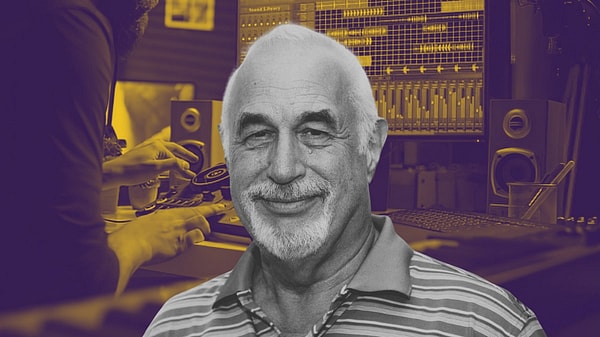
In the 1970s and 1980s, Andy Hildebrand worked for major oil companies as a geophysical engineer specializing in signal processing. His job was to send sound waves beneath the ground or the ocean floor and analyze the echoes that came back.
Sound Waves Sent Underground
To find oil, sound waves are sent into the earth, sometimes with dynamite, and they bounce back after hitting layers of rock. Andy Hildebrand worked with a mathematical method called autocorrelation to analyze these complex reflections and map what lay underground.
That same math would later become the foundation of Auto-Tune.
A joke at a dinner table pushed Andy Hildebrand to try the idea on the human voice.

In 1989 Andy Hildebrand left the oil business and founded Antares Audio Technologies to make music software.
One day he was having a meal with a business partner and the partner's wife. She joked, 'Why don't you make a box that fixes my off-key singing too?' Everyone at the table laughed. Andy Hildebrand realized that the math he had used to search for oil could also be applied to the human voice.
From Rock Layers to Vocals
Andy Hildebrand adapted his algorithm to singing. The software analyzed the sound coming from the microphone in real time. If the singer drifted slightly from the right note, it pulled the voice to the nearest correct note within milliseconds.
The software was released in 1997 under the name Auto-Tune.
A setting meant to stay at zero only in theory became the best-known vocal effect in pop.

Auto-Tune was designed to make corrections so natural that listeners would never notice them. But Andy Hildebrand also added a control called Retune Speed, which sets how fast the voice is corrected. When it is set to zero, the software wipes out all the natural slides between notes and turns the voice into something mechanical and robotic.
Cher's 'Believe'
At first, producers treated the program as a studio secret for rescuing weak vocal takes. That changed in 1998 with Cher's song 'Believe'. Instead of hiding the zero setting, the song's producers pushed it to the extreme. The song became a global hit, and that robotic sound came to be known as the 'Cher effect'.
An Instrument in Its Own Right
In the 2000s, T-Pain and Kanye West followed the path Cher had opened. On his album '808s & Heartbreak', Kanye West used Auto-Tune less to correct his voice than as an instrument that conveyed loneliness and coldness. Today artists from Travis Scott to Charli xcx build their signature sound on it.
So a joke at a dinner table and an algorithm built to search for oil ended up changing how popular music sounds.
Keşfet ile ziyaret ettiğin tüm kategorileri tek akışta gör!
 Test
 Gündem
 Magazin
 Video



Send Comment