


What Is Synesthesia? Inside The World Of People Who See Sounds As Colors And Taste Words


Synesthesia is when a stimulus to one sense also produces a perception in another. Seeing colors while listening to music, linking letters or the days of the week with specific colors, or feeling a taste in the mouth on hearing a word are all examples. Research suggests that roughly one in 23 people may have some form of it.


Daniel Tammet sees numbers as landscapes with colors and shapes.
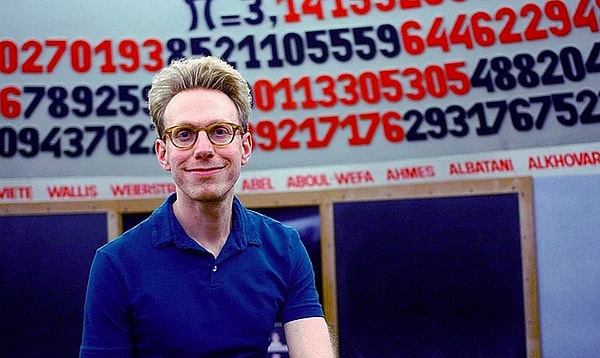
British writer Daniel Tammet is one of the best-known examples of synesthesia. Daniel Tammet says that each number carries its own color, texture and shape in his mind. To him, numbers are less like symbols and more like small landscapes, and when he multiplies he reads the new landscape that forms as two of them merge.
On March 14, 2004, in Oxford, Daniel Tammet recited pi to 22,514 digits without an error, a feat that took about five hours. In a documentary released in 2005 he learned Icelandic in about a week and gave an interview on the country's television. Daniel Tammet described these experiences in his book Born on a Blue Day.
About 4.4 percent of people may have some form of synesthesia.

The word comes from the Greek syn, meaning together, and aisthesis, meaning perception. In a synesthete, something that stimulates one sense automatically and involuntarily creates an experience in another. These links do not come from imagination or conscious effort, and they stay largely the same over the years.
According to a study of 500 people in Scotland, published in the journal Perception in 2006, about 4.4 percent of the population has some form of synesthesia. The researchers confirmed participants' reports with objective tests. Letter-color synesthesia was found in about 1.4 percent.
The Main Types
Letter-color: each letter, digit or day of the week comes with a specific color. The colors differ from person to person, so there is no shared color chart.
Word-taste: a rarer type. Hearing or saying a word brings a particular taste, usually tied to the sound of the word rather than its meaning.
Sound-color: a note, a chord or a sound appears as colors, moving light or shapes.
Mirror-touch: seeing someone else being touched is felt on one's own body.
There is no settled explanation, and synesthesia is not considered an illness.
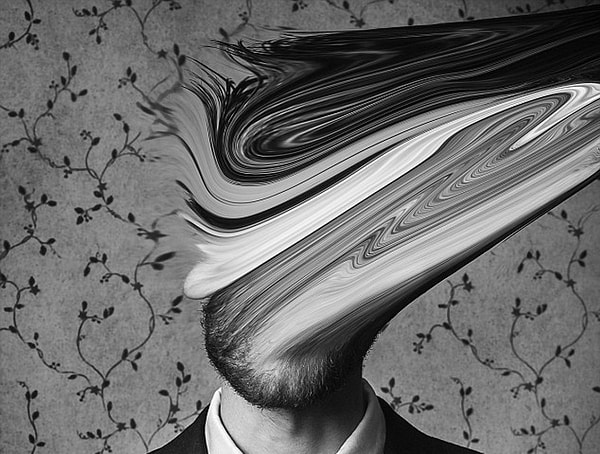
Two main hypotheses are put forward. According to one, babies are born with many connections between the sensory areas of the brain. In most people these are pruned back while growing up, whereas in synesthetes some are thought to remain. The other hypothesis points to extra connections between neighboring brain regions, such as the area that recognizes letters and the area involved in color perception. Synesthesia also tends to run in families, which suggests there may be a genetic component.
Synesthesia is not defined as a condition that requires medical treatment; it is regarded as a neurological difference. To tell it apart from imagination, researchers usually use consistency tests: a person is asked to name the colors of the same letters or sounds weeks or months apart, and synesthetes generally give the same pairings.
Artists And Scientists
Vladimir Nabokov wrote in his memoir Speak, Memory that he saw letters and sounds in color. Physicist Richard Feynman said he saw the letters in equations in color. French composer Olivier Messiaen described seeing chords in color, and by their own accounts Pharrell Williams and Billie Eilish experience music as color. Painter Wassily Kandinsky wrote that colors made sounds as he mixed them on the palette; some art historians read this as genuine synesthesia, while others think he developed it as a deliberate theory of art.
Source: Simner et al., Perception, 2006
Keşfet ile ziyaret ettiğin tüm kategorileri tek akışta gör!
 Test
 Gündem
 Magazin
 Video



Send Comment