


What Would Earth Be Like Without The Moon? 6 Big Changes Researchers Describe


According to NASA, the Moon formed about 4.5 billion years ago when a body called Theia slammed into the young Earth, and it has been shaping our planet's spin, its oceans and its night sky ever since. Research cited by Royal Museums Greenwich, Scientific American and NASA suggests that without the Moon, tides would shrink to about a third of their current size, days would be far shorter than 24 hours, and Earth's tilt and seasons could swing much more widely. Darker nights, the timing of coral spawning, eclipses and a hypothesis about the origin of life in tidal pools are also part of the picture.

Without the Moon's braking effect, a day on Earth would be far shorter than 24 hours.
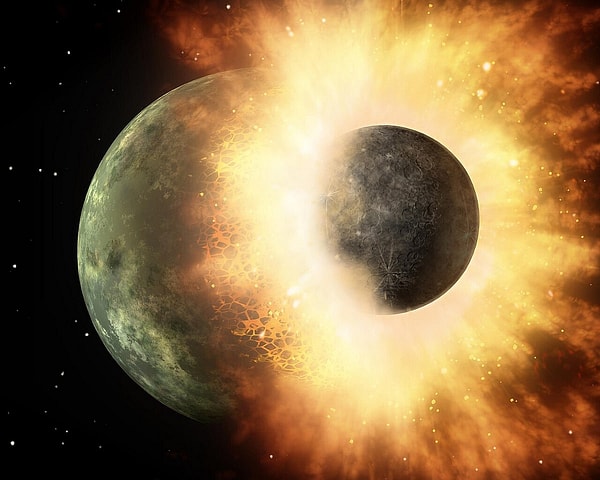
According to NASA, the Moon formed about 4.5 billion years ago from molten and vaporised material thrown into space when a Mars-sized body, or a series of bodies, hit the young Earth. Scientists named that body Theia, after the Titan who in Greek mythology was the mother of the Moon goddess Selene. The 382 kilograms of samples brought back by the Apollo missions showed that the Moon's mantle rocks are strikingly similar to Earth's.
The tides raised by the Moon slowly brake Earth's rotation. Laser measurements using reflectors left on the Moon by Apollo astronauts show that the Moon is drifting away by about 3.8 centimetres a year. The energy the Moon gains comes from Earth's spin, which is why our days are getting longer. In an article for Scientific American, astronomer Neil F. Comins wrote that a day on the young Earth lasted between 5 and 10 hours.
Neil F. Comins calculates that if the Moon had never formed, Earth, slowed only by solar tides, would today spin with days of 7 to 12 hours. Inside Science, published by the American Institute of Physics (AIP), puts a Moonless day at 6 to 12 hours and says a year could stretch to more than a thousand days.
Without the Moon, tides would shrink to about a third of their current size.
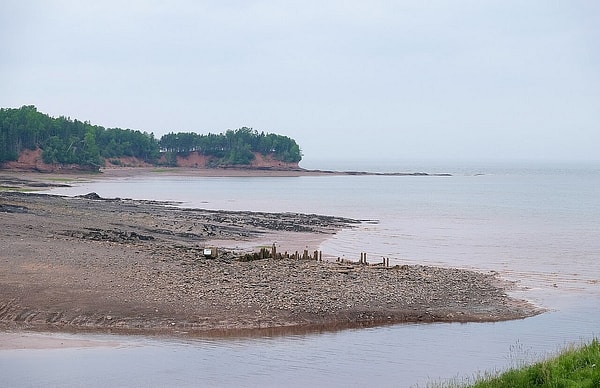
According to NASA, the Moon is the main cause of Earth's tides. Its gravity pulls the oceans into a bulge both on the side facing the Moon and on the opposite side, which is why most coasts see two high tides and two low tides a day. The Sun, about 27 million times more massive than the Moon, also raises tides. But because it is about 390 times farther away, its tide-raising power is a little under half of the Moon's.
Royal Museums Greenwich says that if the Moon disappeared, ocean tides would be about a third of what they are today. AIP's Inside Science gives the same ratio. Tides would not vanish completely, because the Sun's effect would remain.
The museum points out that tides stir up material in the ocean and feed coastal ecosystems. Creatures such as crabs, mussels, starfish and snails depend on tides to survive. According to Royal Museums Greenwich, a collapse of coastal ecosystems could affect both land and sea animals and lead to mass extinctions. Currents driven by tides also spread warm water around the world, helping to balance the climate.
Without the Moon's steadying pull, Earth's tilt and seasons could swing far more, and there would be no eclipses.
Tilt and seasons
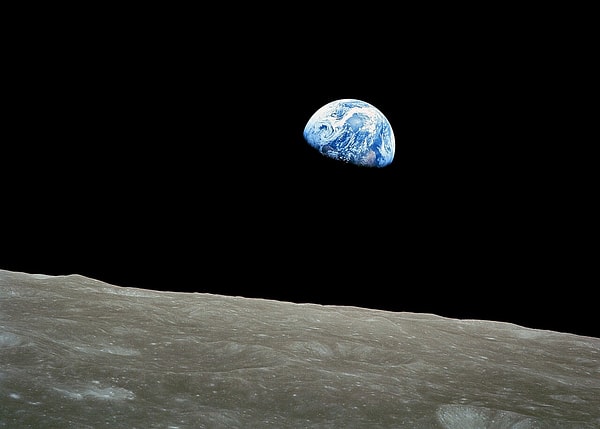
Earth's axis is tilted about 23.5 degrees relative to its orbit around the Sun, and this tilt is what creates the seasons. According to Royal Museums Greenwich, it is the Moon's gravity that keeps the planet at this angle. The museum writes that without the Moon the tilt could change drastically, from no tilt at all, meaning an Earth without seasons, to a large tilt that could bring extreme weather and ice ages.
This view rests on a 1993 study by Jacques Laskar and his team. Their frequency map analysis suggested that a Moonless Earth's tilt could swing between 0 and about 85 degrees.
More recent simulations soften this picture. Models running up to 4 billion years by Jack Lissauer and his team at NASA's Ames Research Center show that a Moonless Earth's tilt wobbles much more than today over short periods, but generally stays in a range of 20 to 25 degrees over hundreds of millions of years. The team concludes that a large moon to stabilise the tilt may not be essential for complex life. Astrophysicist Paul Sutter has noted in Live Science that by slowing Earth's spin, the Moon may in the long run make it more exposed to the influence of the outer planets.
Eclipses
According to NASA, a total solar eclipse is the product of a cosmic coincidence. The Moon is about 400 times smaller than the Sun but also about 400 times closer to Earth, so the two look almost the same size in the sky and the Moon can cover the Sun completely.
A lunar eclipse happens at full Moon, when Earth passes between the Sun and the Moon. NASA says Earth's shadow then falls on the Moon's surface and darkens it, sometimes turning it red for several hours. Without the Moon there would be nothing to cover the Sun or to pass into Earth's shadow. AIP also notes that a Moonless Earth would see neither kind of eclipse.
Because the Moon drifts about 3.8 centimetres farther away every year, total solar eclipses will one day come to an end. According to NASA, once the Moon's orbit widens by about 23,500 kilometres, the Moon will be too far away to cover the Sun completely. The agency stresses that this will happen a very long time from now.
Without the Moon, nights would be much darker and corals could miss their spawning time.
Darker nights
According to AIP's Inside Science, the full Moon is about 2,000 times brighter than Venus at its brightest. Venus, the brightest object in the night sky after the Moon, is not enough to light up the night.
Royal Museums Greenwich notes that predators rely both on darkness and on a small amount of moonlight when hunting at night. According to the museum, if nights were completely dark, predators would struggle to see their prey, prey animals would multiply, and some predator species could be pushed towards extinction.
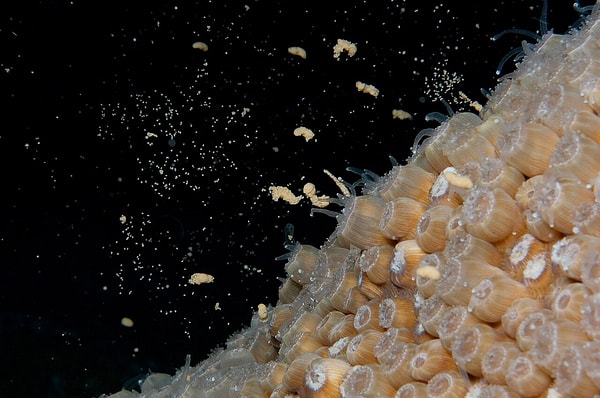
Moonlight also works as a clock under the sea. In 2007 a team led by Oren Levy of the University of Queensland reported in Science that a light-sensitive gene, Cry2, plays a role in the mass coral spawning that takes place shortly after the full Moon across an area of about 300,000 square kilometres of the Great Barrier Reef. In an experiment published in eLife in 2015, only Acropora millepora corals that received natural moonlight spawned. No spawning was seen in groups whose moonlight was blocked or that were exposed to artificial light at night. The researchers describe moonlight as an important external cue for synchronised mass spawning.
The origin of life
According to Scientific American, 4 billion years ago the Moon was perhaps half as far from Earth as it is today, so ocean tides were much stronger. Planetary scientist Kevin Zahnle of NASA's Ames Research Center says many of the reactions behind the origin of life require getting rid of water. One way to concentrate a solution, according to Kevin Zahnle, is to throw water onto a hot rock and wait for it to recede and evaporate.
Molecular biologist Richard Lathe in Edinburgh argues that the fast tidal cycles created by the Moon about 3.9 billion years ago allowed the first nucleic-acid-like molecules to form. According to Richard Lathe, on a 12-hour day high tides came a little more often than every six hours and pushed kilometres inland. At low tide, as salinity rose, molecules paired up; at high tide, as salt levels dropped, they separated. Richard Lathe believes that without the Moon's tides nucleic acids would have been far less likely to form on Earth.
Not everyone agrees. Biogeochemical oceanographer James Cowen of the University of Hawaii says that if life began at hydrothermal vents in the deep ocean, the Moon's tides played only a small role. In a 2001 review in the journal Earth, Moon and Planets, astronomer C. R. Benn examined proposed links between Earth hosting life and having a large moon under two headings: the stabilisation of the tilt and the tides.
Source: Royal Museums Greenwich
Keşfet ile ziyaret ettiğin tüm kategorileri tek akışta gör!
 Test
 Gündem
 Magazin
 Video



Send Comment