


Warning from Physical Therapists: Sitting in a “W” Position Affects Your Child's Health


As a parent, one of your favorite sights might be your child quietly playing with their toys on the floor. However, regardless of how comfortable and innocent some positions children choose while playing, watching television, or drawing may seem from the outside, they can be extremely critical for their health.
In recent years, there's a subject that pediatric physiotherapists have been frequently warning parents about, and that parents often discuss: the W-sit. The W-sit is a position in which a child sits on their buttocks, bends their knees, and spreads their legs and feet backwards. When viewed from above, the child's legs form a perfect 'W'. Children generally love this position because it provides them with tremendous trunk stability.
So, is this W-sit harmful for children? How can the W-sit be corrected?
Source

Most kids absolutely adore sitting in a "W" shape!
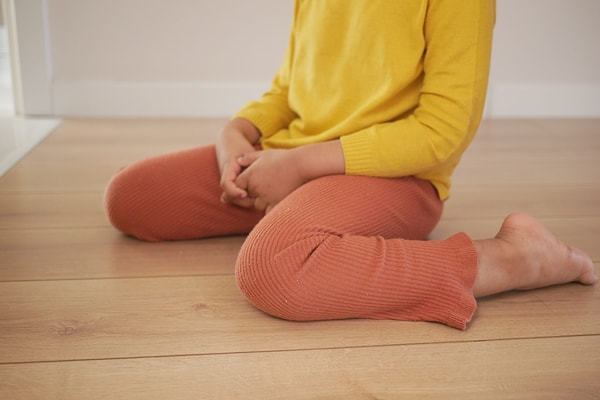
The primary reason for the popularity of the W-sitting position among children is the comfort it provides to their still-developing anatomical structures. Children's hip joints are considerably more flexible than those of adults, and their bone structures have not yet fully hardened. This flexibility allows them to comfortably bend their legs backward.
However, when this flexibility is combined with the W-sitting position, it significantly increases the risk of the hip joint dislocating. As the hip bones rotate excessively inward, the knees and ankles also experience pressure beyond their normal limits.
If a child remains in this position for extended periods, it can lead to shortening and tension in the leg muscles. The muscle groups most adversely affected by this are the hamstrings, known as the rear leg muscles, and the hip rotators. When muscle imbalance begins in these areas, the child tends to swing their legs inward while walking or running. This gait disorder, commonly referred to as 'pigeon-toed' walking, is often a legacy of this seemingly innocent sitting habit during childhood.
Is the W sitting position harmful?
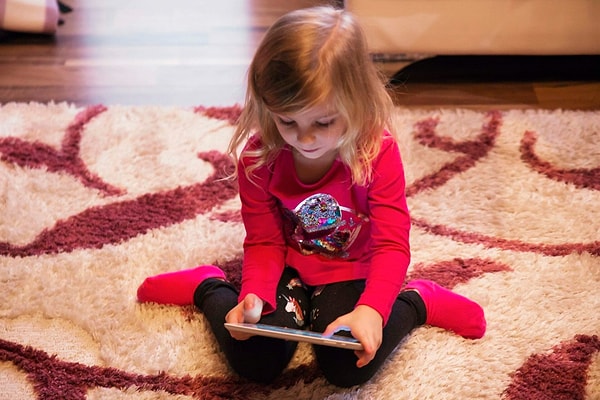
While the W-sitting position may not cause immediate harm to a child, it can be detrimental in the long run. It has the potential to slow down the development of the child's core muscles. In a standard cross-legged or legs-forward sitting position, the child must constantly engage their abdominal and back muscles to maintain balance. However, in a W-sitting position, the base becomes so wide that the body can remain balanced without exerting any muscular effort. This can lead to the laziness of the muscles that help the child stand upright, setting the stage for posture disorders and even spinal curvatures like scoliosis in the future.
Moreover, this position adversely affects the child's motor skills and coordination. A child sitting in a W shape struggles to turn their torso to the right or left. They are unable to pick up a toy on their right with their left hand, and vice versa, meaning their ability to cross the midline of the body (bilateral coordination) cannot develop.
So, what happens if it doesn't develop?
In the long run, this could result in the child lagging behind their peers in tasks that require synchronized use of both hands and body coordination, such as writing, catching a ball, or using scissors.
Is the 'W-sitting' position in children a sign of autism?
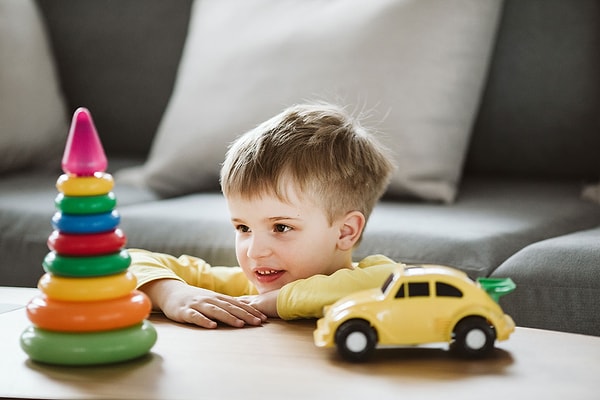
One of the greatest fears that the misinformation on social media and the internet instills in parents is precisely this. Numerous mothers and fathers, who have searched for 'W sitting' on Google, are thrown into a state of panic due to some of the articles they come across.
So, how accurate is this claim?
W sitting alone is not a symptom or sign of autism. Millions of children with completely normal development, who have no issues with their social and cognitive skills, may choose to sit in this position simply because they find it comfortable. Therefore, you don't need to stress yourself out by immediately assuming the worst scenario just because your child is sitting on the floor in a W shape.
However, it's worth noting this point: Children with neurodevelopmental differences (such as autism spectrum disorder, Down syndrome, or cerebral palsy) typically have lower muscle tone (the tension and strength of the muscles). These children, whose muscles are more relaxed and weak, often choose W sitting as an escape route because they struggle to maintain an upright posture and balance. Therefore, W sitting does not cause autism or directly indicate autism; however, it is a haven frequently sought by children with low muscle tone.
Should you be worried?
If your child avoids making eye contact, does not respond to their name, experiences delays in speech, has repetitive movements (like flapping hands, spinning around, etc.), or does not socialize with their peers in addition to W sitting, then it's time to consult a pediatrician or child psychiatrist. However, if none of these symptoms are present, the situation you're dealing with is merely a bad habit that affects the musculoskeletal system, and it can easily be resolved with physiotherapy approaches.
There are several different methods to correct your sitting posture.
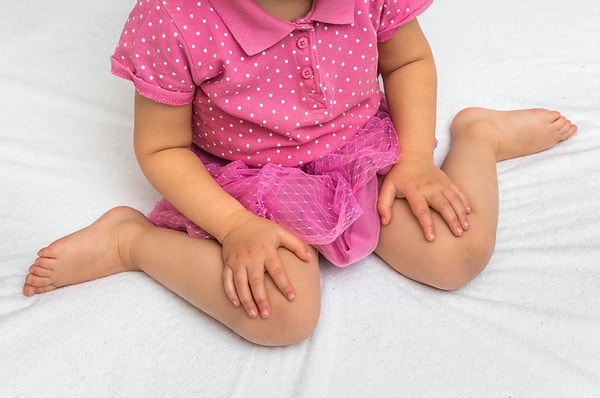
If you've noticed your child consistently sitting in this position, the first thing you need to do is avoid panicking, followed by exercising patience. Remember, this is a comfort zone and a habit for them. Constantly scolding your child, shouting 'Sit properly' or punishing them will not only be ineffective but also damage your relationship. Instead, the best strategy is to turn the situation into a game and offer alternative, healthier ways of sitting.
As a first step, gently warn your child whenever you see them sitting in a 'W' shape. Give them directions like 'Let's stretch our legs out in front, let your legs rest a bit'. Sit on the floor with them while playing games and model how they should position their legs. If they struggle a lot while sitting on the floor and keep reverting to their old position, consider getting them a small child's chair or cushion to lean against. When their hips are higher than their knees, it will anatomically be harder for them to fold their legs into a 'W'.
Moreover, guide your child towards fun activities that will strengthen their abdominal, back, and hip muscles. Setting up small obstacle courses at home, climbing bars, yoga movements, doing somersaults, hopping like a frog, or having crawling races can incredibly strengthen their core muscles.
As their muscles strengthen, they will no longer need the artificial support of the 'W' sitting position to maintain an upright posture.
On the other hand, if your child persists in this sitting habit despite all your efforts, if they often trip and fall while walking, or if they complain of pain in their legs, you should definitely seek professional help from a pediatric orthopedist or a pediatric physiotherapist.
Taking a small step in the early stages will ensure your child grows into a healthy adult in the future.
Keşfet ile ziyaret ettiğin tüm kategorileri tek akışta gör!
 Test
Test
 Gündem
 Magazin
 Video
Video



Send Comment