


Books were Purchased to Train Artificial Intelligence, Then Destroyed


You must have noticed the recent advancements in artificial intelligence chat tools. Now, AI chatbots do not merely respond to you, but they also interject at appropriate moments while you're speaking. It's almost impossible to distinguish their responses from those of a human.
So how did this become possible?
It was made possible by training artificial intelligence with books written by humans.
Anthropic, under the scope of 'Project Panama', bought millions of printed books to train Claude. They scanned the books and destroyed them once the job was done.
Source

The rapid advancement of artificial intelligence owes its success to books.

Human intelligence evolves by assimilating, combining, and forwarding information in new forms. Artificial intelligence is based on the same principle. These systems, designed to respond to everything, everywhere, and simultaneously, require access to the most extensive and reliable record of human thought.
Books have been our most reliable and enduring source of knowledge for centuries. Through books, our ideas and accumulated knowledge are passed down generations. Recognizing this, artificial intelligence companies found the gem they were looking for in books.
Anthropic, in a project named the Panama Project, purchased millions of printed books to train its artificial intelligence robot, Claude. The aim of the project was to create as large a knowledge library as possible. However, they encountered a problem: copyright.
Anthropic wanted to quickly obtain the texts needed to train its artificial intelligence model. But negotiating a separate copyright agreement with each author would have been both time-consuming and costly. Therefore, the company chose to buy the books in bulk.
The books were collected from second-hand bookshops.

According to court documents accessed by The Washington Post, the process was executed with remarkable systematic precision. Pages of books were neatly sliced and swiftly scanned into the system. The books were collected from second-hand bookstores. A bookseller in Germany reported a series of seemingly automated orders coming in one after the other.
Supplier offers and court records indicate that Anthropic scanned between 500,000 to 2 million books within approximately six months. The books that were scanned were later destroyed by the company. Authors have reacted strongly to this information, pointing out that artificial intelligence companies are benefitting from their creative works without permission or compensation.
Anthropic is not the only company employing this method. Court records from other lawsuits reveal that Meta also has a sizable library. In the past, OpenAI admitted to downloading similar data sets and later deleting them.
Are you familiar with the book Fahrenheit 451?
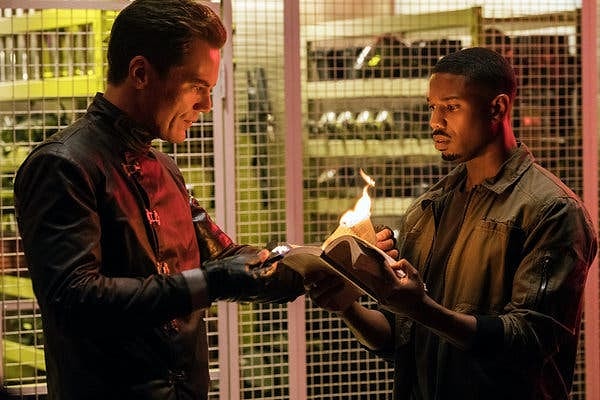
Ray Bradbury's dystopian masterpiece from 1953, Fahrenheit 451, depicts a future where books are outlawed and burned by 'firefighters'. Today, however, tech giants in the field of artificial intelligence are buying physical books to avoid copyright lawsuits or for swift scanning, cutting their bindings, scanning them at high speed (a process known as destructive scanning), and then destroying them. In the dystopian novel Fahrenheit 451, books are physically burned because the depth between the pages leads to human questioning. The state feeds people with wall-sized television screens ('family in the parlor') and earpieces ('seashells').
In AI training, physical books are purchased, their bindings are cut and shredded, scanned, and the remaining papers are sent for recycling (i.e., destruction). The millennia-old physical library accumulation of humanity is replaced by pixels and algorithms stored on the servers of large technology companies. To access information, we no longer need a physical object, but an interface and artificial intelligence.
In the fictional novel, the process of burning books is not only initiated by state oppression; it is the people themselves. People didn't want to read long books, classics were first reduced to 15-minute summaries, then to two-line dictionary entries. In the end, deep thought has completely disappeared.
AI models read (gulp down) millions of books and present us with their essence, summary, or average. Instead of reading the original author directly, we start to consume the 'synthesized' pill information that AI has filtered from that author.
The point we have reached today is precisely what Bradbury predicted: a 'depthless, fast consumption society', isn't it?
Keşfet ile ziyaret ettiğin tüm kategorileri tek akışta gör!
 Test
Test
 Gündem
 Magazin
 Video
Video



Send Comment