


Vinegar, Baking Soda, or Tap Water: The Best Way to Clean Produce Revealed


Soaking fruits and vegetables in vinegar-infused water is a commonly used cleaning method at home. Scientists have tested the effect of vinegar on bacteria using lettuce as a subject; in contrast, for the pesticide residues on apples, water with baking soda yielded better results than tap water.
More details in our news.

Diluted vinegar significantly reduced the presence of E. coli bacteria on lettuce leaves.
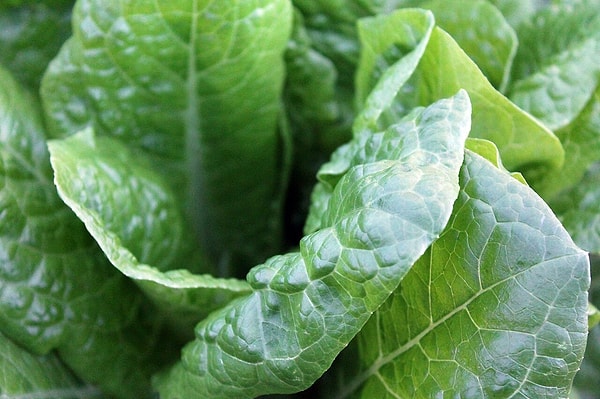
Researchers from North Dakota State University conducted an experiment on lettuce using diluted solutions of apple cider vinegar, white vinegar, bleach, and lemon juice. The most effective result was achieved with the white vinegar solution, which contained 1.9% acetic acid.
When the lettuce was immersed in this solution and stirred for 5 minutes, the E. coli count was reduced to one in a hundred thousand. Without stirring, the same result required 10 minutes.
However, the lettuces that remained in the vinegar for 10 minutes turned sour and slightly wilted.
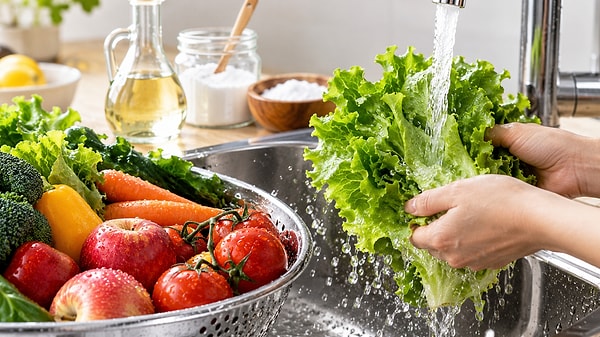
Researchers also put the washed lettuces through a taste test, rating them on a 9-point scale. There was no difference in the preference for samples washed with methods other than white vinegar.
Despite this, all samples, including those washed with white vinegar, received acceptable scores from consumers.
Carbonated water is the most effective in cleaning pesticide residues on apples.
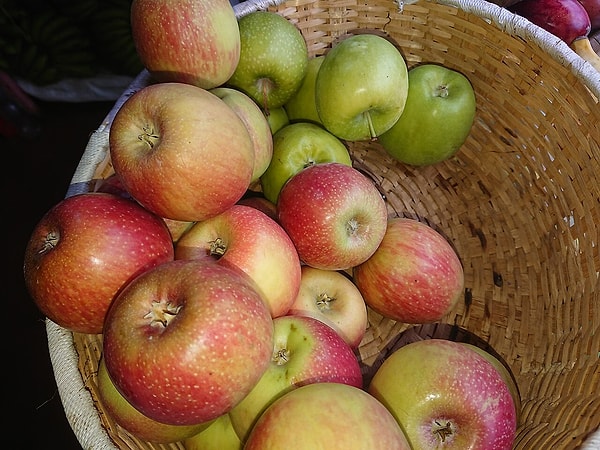
In a study published by the University of Massachusetts Amherst in 2017, tap water, bleach water, and bicarbonate water were compared on apples. Vinegar was not included in this experiment. Water with 10 grams of bicarbonate per liter completely cleaned the surface of tiabendazole residue in 12 minutes and fosmet residue in 15 minutes.
However, within 24 hours, 20% of the tiabendazole and 4.4% of the fosmet had penetrated into the peel and this part could not be removed by washing. The researchers pointed out that peeling the skin could be more effective for the residue that had penetrated inside, but in this case, the beneficial components in the peel would also be lost.
The FDA recommends washing fruits and vegetables by simply rubbing them under running water.
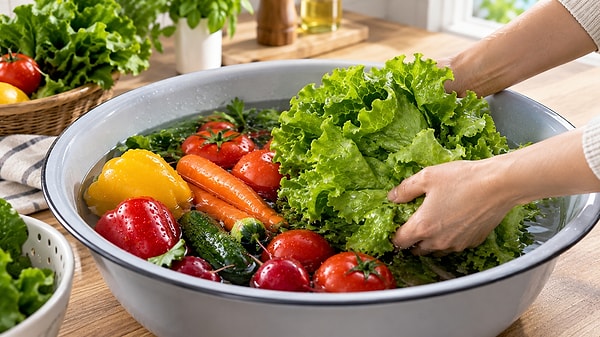
The US Food and Drug Administration suggests that there is no need to use soap or a special vegetable cleanser. It is recommended to wash the products before peeling their skin, thus preventing the knife from carrying dirt and bacteria into the fruit.
Hard-shelled produce like melons and cucumbers can be scrubbed with a clean brush. Drying the washed product with a clean cloth or paper towel helps to reduce the remaining bacteria, while the outermost leaves of lettuce and cabbage are discarded.
Keşfet ile ziyaret ettiğin tüm kategorileri tek akışta gör!
 Test
Test
 Gündem
 Magazin
 Video
Video



Send Comment